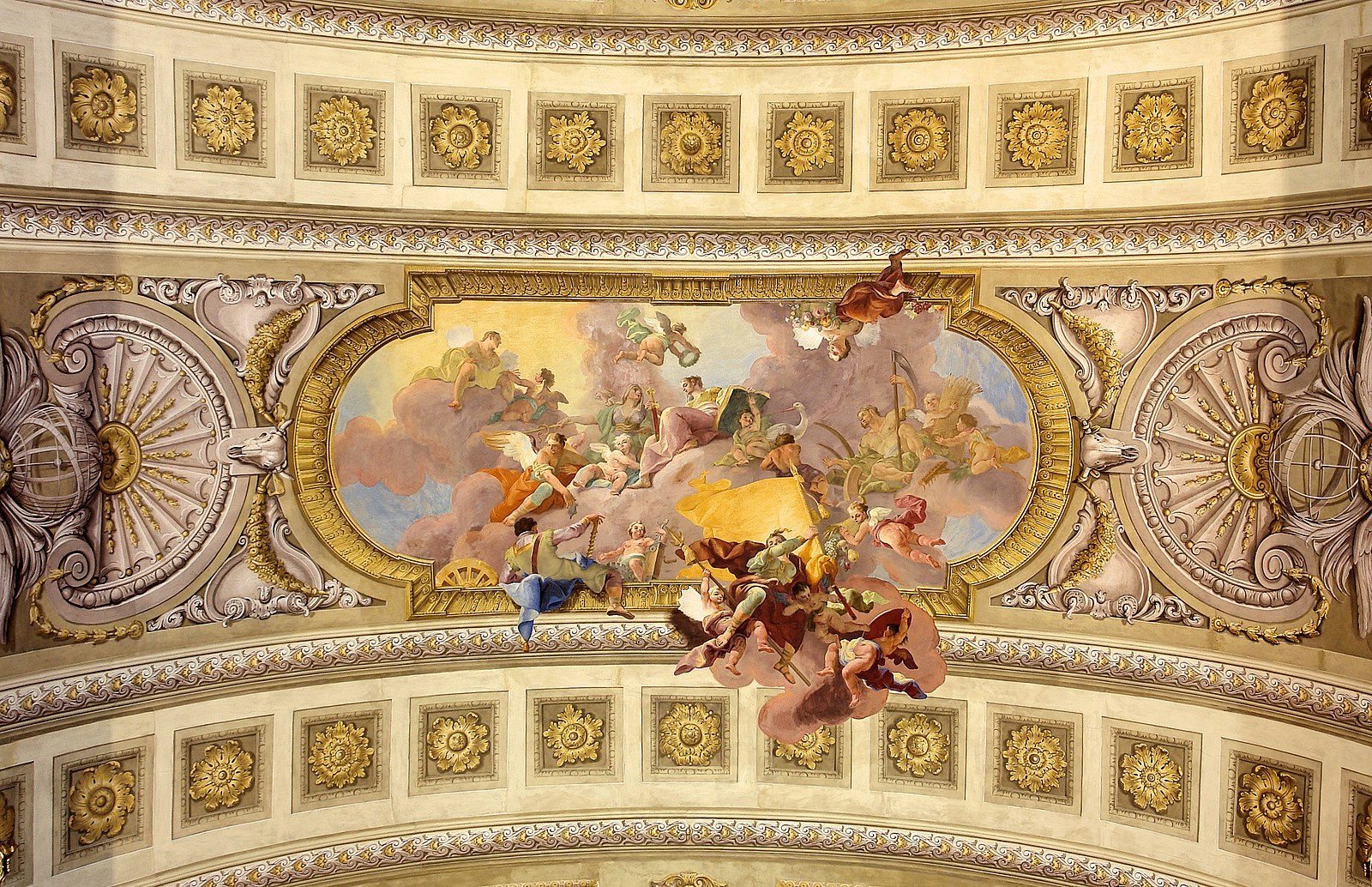
The Christianity states decisively that There is only one Godand for this reason it is universally classified among the monotheistic religionstogether withJudaism and toIslam. However, some tensions emerge at a more careful look. The heart of the Christian faith revolves around a theological paradox: the Trinityaccording to which God is one but there is three “people” (Father, Son and Holy Spirit), and it is precisely at this level that the question becomes complicated. It is just behind this dogma that the question lurks: Christianity is truly one monotheistic religion?
The heart of the problem: the unity and the Trinity of God
The doctrine of the Trinity It is central to Christianity, but it is not explicitly present in biblical texts. It is the result of centuries of reflection and theological disputes within the primitive Church. THE Gospels speak of the Father and the Son, and the Acts of the Apostles They describe the action of the Holy Spirit. However, the idea that these three figures are distinct people but a single substance is one rear theological constructionformulated in the 4th century in Councils of Nicea (325 AD) and Constantinople (382 AD).
According to this doctrine, God is one in essencebut three-personal in its event: the FatherThe Son (Jesus Christ) and it Holy Spirit cone co-eternal, co-dual and inseparable, but distinct. Christian theology strongly underlines that it is not about the three of the affirmation that would confirm polytheism, but of One God in three people.
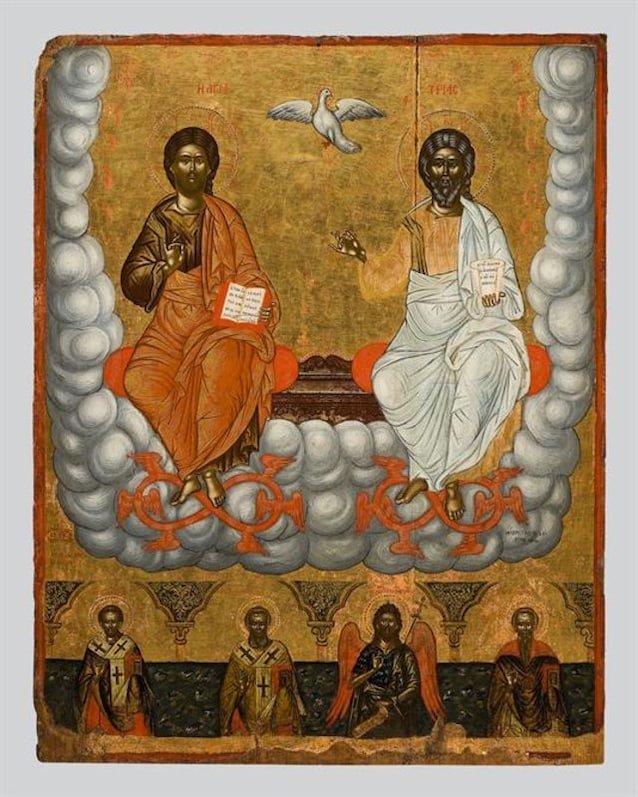
Orthodox Christianity in fact, in an attempt to maintain The balance between the unity of God and the distinction of divine people has developed a Trinitarian monotheismwhich many theologians call “paradoxical but consistent within the faith”. Yet, from an external point of view, perception can be different. The difficulty arises precisely from this apparent contradiction between units and multiplicity. For some religions, such as theIslamthe trinitarian doctrine is seen as a form yes shirkthat is to associate others with God, one of the most serious sins in the Koran.
The Jewish roots and the comparison with Islam
The Origins of Christianity they sink intoJudaismreligion that proclaims forcefully The absolute unity of God: “Listen, Israel: the Lord is our God, the Lord is one”. Jesus Same, like Jew, has never denied this fundamental statement. However, the attribution of a divine nature to Jesus and the Holy Spirit by the first Christians introduced one internal voltage with respect to the original Jewish monotheism.
THE’Islamborn in VII centuryalso proposes itself how Restoration of “pure” monotheism. In the Shahadathe profession of Islamic faith, declares itself: “There is no other God other than God (Allah), and Muhammad is his prophet”. From the Islamic point of view, therefore, the Christianity deflected from original monotheism.
“Complex” or “social” monotheism
Some Christian theologians have proposed the definition of “complex monotheism” or “Trinitarian monotheism” to distinguish the Christian conception from that “Unitarian” of Judaism and Islam. The idea is that the divinity is not an arithmetic unitybut one communion of peoplein which love, dialogue and relationship have always existed within God himself.
Others have spoken of “social monotheism”to indicate that God is one, but in relation to himself. This vision aims to safeguard both unity and internal plurality, but remains the subject of discussion both within and outside Christian theology.
Are monotheistic religion truly “monotheistic”?
The Christianity It is not the only religion to confront one Definition nuanced monotheism. Also theJudaismfor example, has crossed periods in which he expressed himself in shape henoteist (recognize many of the but to worship only one), especially in the oldest texts, andIslamalthough monotheistic absolutely, develops one rich angelology and a cult of the saints in some of his popular currents.
These examples show that the monotheism is not a rigid blockbut a set of practices and beliefs that may vary in time and space. The Christianityfrom this point of view, built a own specific model of monotheism: not the arithmetic uniqueness of God, but its unity in relation.
In fact, Christianity proposes a vision of God that breaks the categories of human logic. A God who is Father, but also Son and Spirit, one but also a relationship. More than a contradiction, this vision has been interpreted as an invitation to mystery (of faith), A human attempt to grasp the elusive. Christianity therefore is monotheisticyes, but in its own way, with a depth and complexity that continue to question believers and not believers for two thousand years.
Sources
Bauckham R. (2008) “Jesus and the God of Israel”
MolTmann J. (1981) “The Trinity and the Kingdom of God”
Sant’Agostino (2003) “The Trinity”
