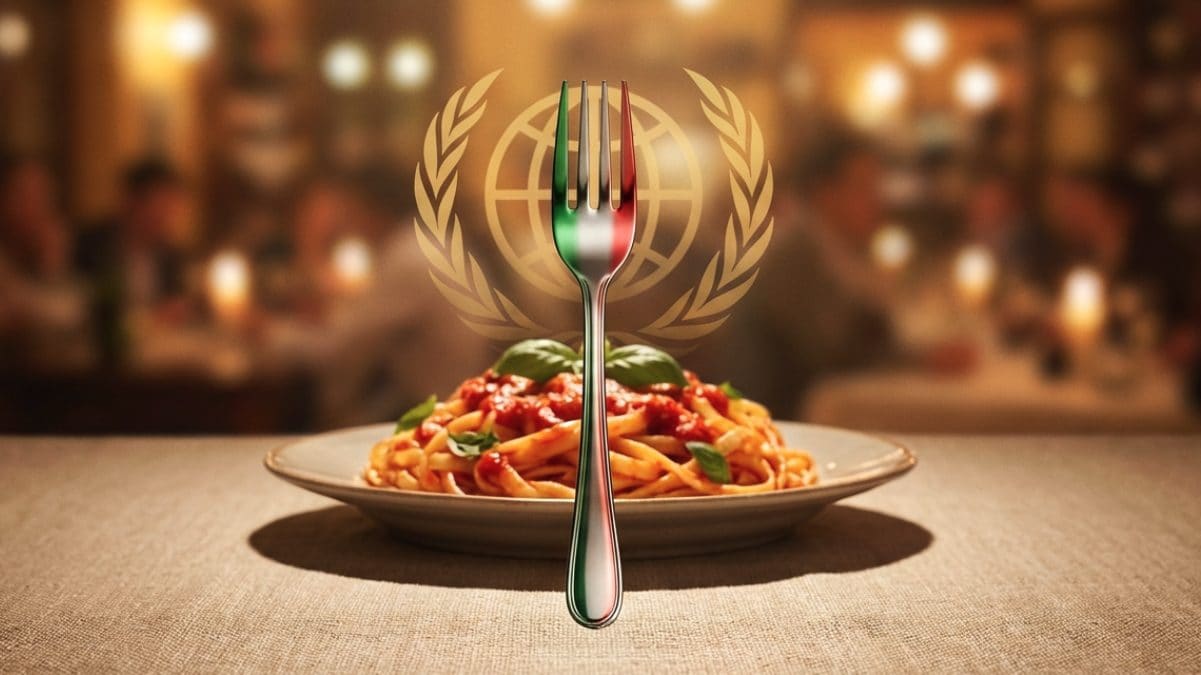
It’s official: Italian cuisine is the intangible cultural heritage of humanity, that is UNESCO heritage. The reason is easily stated by the organization’s Committee, which decided on the recognition this morning, 10 December 2025, in New Delhi (India):
Italian cuisine promotes social inclusion, promoting well-being and offering a channel for lifelong intergenerational learning, strengthening bonds, encouraging sharing and promoting a sense of belonging.
Italy thus becomes the first country in the world to obtain this type of recognitionhonoring a culinary identity with millenary roots, passed down from generation to generation.
The application dossieredited by jurist Pier Luigi Petrillo, highlighted the work carried out by Italian communities over the last sixty years, supported by institutions and cultural realities committed to safeguarding gastronomic traditions. UNESCO cites among the examples La Cucina Italiana, the Italian Academy of Cuisine and the Casa Artusi Foundation, recognized for their role in preserving and transmitting culinary knowledge and techniques. The profuse commitment of these entities highlights the participatory and widespread nature of Italian cuisine as an intangible heritage.
An eagerly awaited recognition, for a country where it is true which region you go to, recipes you find, and each of them tells a story of that territory.
The Mediterranean diet of the Bel Paese, rich and balanced, is once again unique in its kind also because it goes beyond taste, becoming a keeper of dreams and memoriesas chef Massimo Bottura stated:
Italian cuisine is not just a set of dishes or recipes, but it is a ritual of love, a language made of gestures, aromas and flavors that keep an entire country united. Around a set table Italy recognizes itself: there we share dreams, we argue, we make peace, we pass on memories. I explained it at the opening of the Paris Refectory. For us it’s not just about feeding ourselves: it’s about taking care of family, friends, our guests in our restaurants or in our refectories.
Each region has its own grammar of taste: a different way of combining flour with water, oil with light, time with patience. Our true wealth lies in this biodiversity of landscapes, cultures and traditions.
Italian cuisine is a living intangible heritage built day after day by millions of hands of farmers, cheesemakers, breeders, artisans, chefs. Recognizing it as a World Heritage Site means recognizing its strength in creating bondsin building community and restoring dignity. Because when taste meets memory it is no longer just cuisine: it is culture.
Italy now holds the world record for agri-food recognitions compared to the total obtained: of the 21 traditions registered in the UNESCO List, nine concern food and agricultural practices, from Italian cuisine to the Mediterranean diet, from pizza chefs to transhumance, up to traditional techniques such as the sapling vine.
