In Tell Kom Abu Billo, Egypt, a necropolis was discovered with hundreds of sarcophagi dating back to between the 5th and 1st centuries BC. The grave goods include amulets, golden tongues, statuettes and funerary decorations, documenting the progressive encounter between Egyptian traditions and Hellenistic influences.
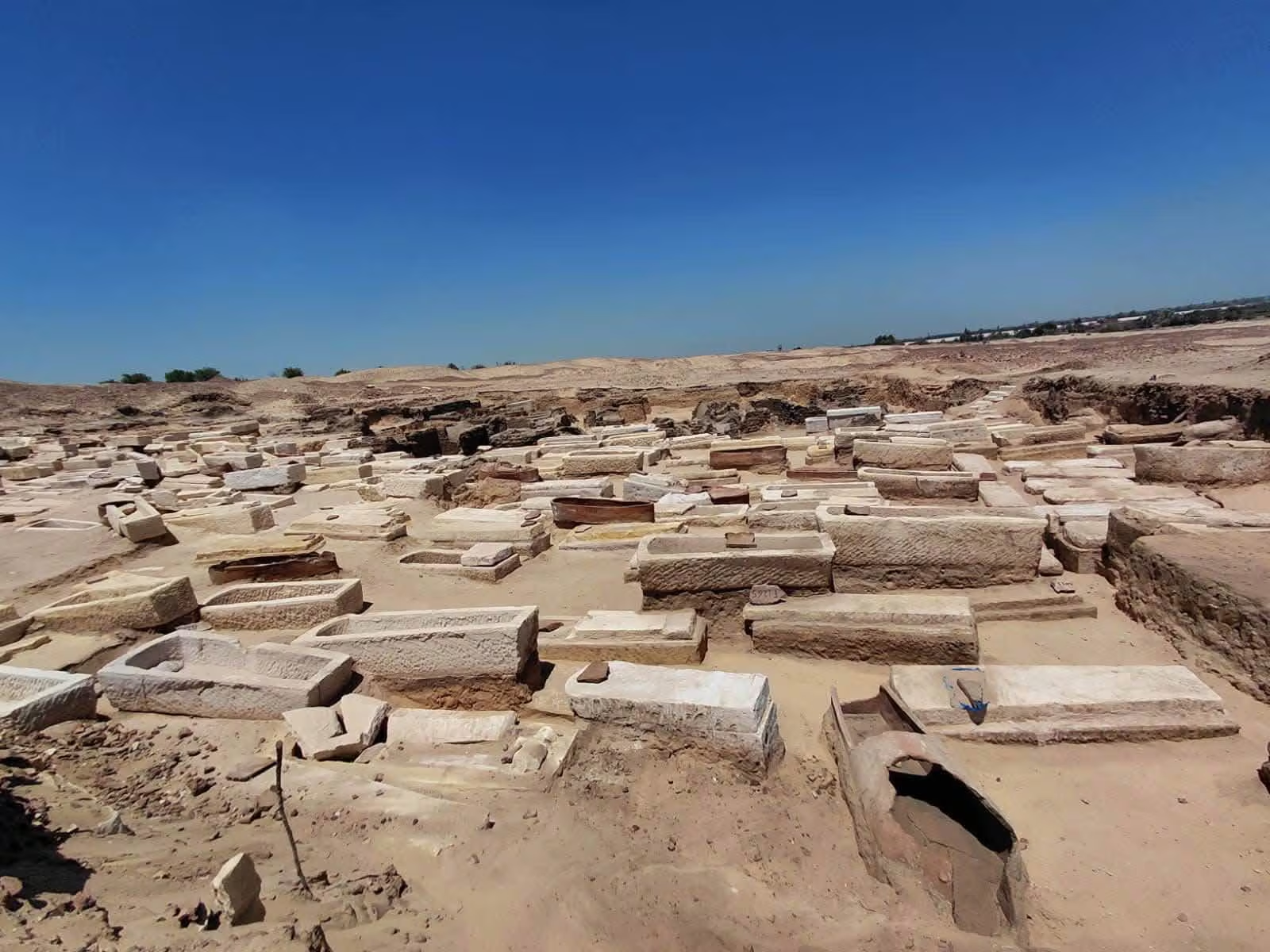
A vast one necropolis – belonging to the ancient city of Terenuthis – with hundreds of sarcophagi and numerous funerary objects was identified by Egyptian archaeologists in the area of Tell Kom Abu Billoin the governorate of Menoufia, north of Cairo.
The discovery, announced by Ministry of Tourism and Antiquitieswas carried out by a mission of Supreme Council of Antiquities and documents funeral practices between the end of the Late Period, the Ptolemaic age and the beginning of the Roman era, in a period that goes from the 5th to the 1st century to. C.
The complex stands out for its concentration of burials in an open-air funerary area, a configuration unprecedented on the site so far. The excavations have brought to light hundreds of stone sarcophagi and numerous ceramic sarcophagisome with human facial features rendered in a stylized manner, others clearly anthropomorphic in shape. Many of them, unfortunately, turn out without lid or damagedprobably due to previous lootings and stone extraction activities for the reuse of the material.
In addition to the sarcophagi, however, the remains of wooden coffins, vaulted tombs built in mud bricks and a burial covered internally in limestone were also found.
Preliminary analyzes indicate that most of the depositions date back to initial phase of the Ptolemaic period (late 4th-1st century BC), in particular to the 3rd and 2nd centuries BCwhile some would be older and datable at the end of the Late Period (VII-IV century BC).
Furthermore, the great variety of grave goods also suggests that the necropolis was intended above all for individuals belonging to middle classes of the company.
Despite the poor state of conservation of human remainsarchaeologists have recognized traces of substances used inembalmingresins and fragments of cartonnagea composite material, similar to papier-mâchéemployed to make funerary coverings and decorations. Some of these elements still remain traces of yellow, red, blue and golden pigments.
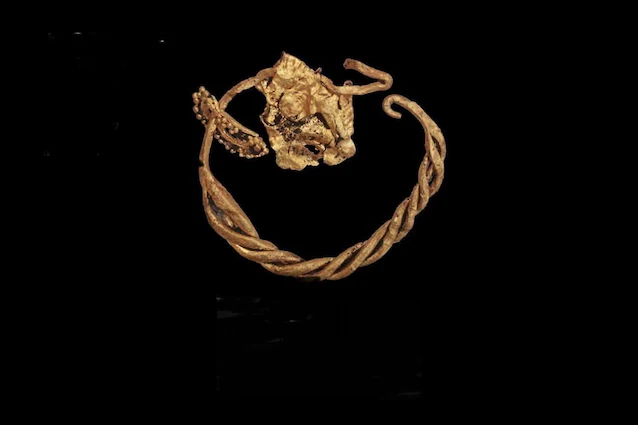
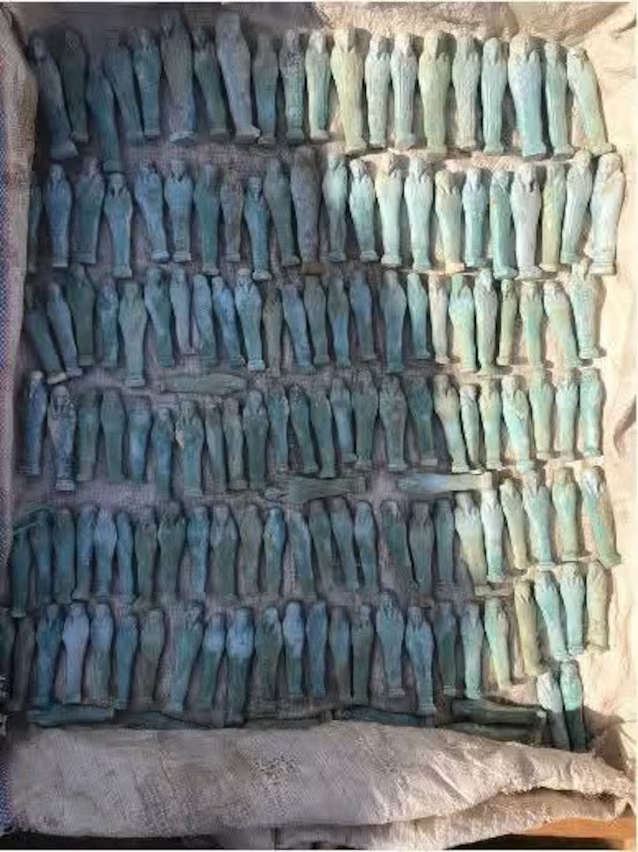
The finds include golden tonguesprobably amulets intended to be placed in the mouth of the deceased, a earringa pendant And golden plates of different nature. They were also recovered scarabs, amulets, wedjat eyes (protection amulets representing theeye of Horus) and numerous ushabti figurines in faience (glass paste), some decorated with hieroglyphic inscriptions. These figurines, placed in the tombs, were intended to carry out work for the deceased in the afterlife. Various kits complete the picture offering tablesused for funeral meals, small limestone heads, sphinxes and fragments of statues of the god Horus depicted as a hawk. They have also been identified two falcon burials.
The findings also include remains of architectural elements in clay (covered with plaster) depicting a façade of a royal palace and two pylons surmounted by lions crouch down with a falcon’s headfacing each other, with the Double Crown of Egypt and the right paw resting on a djed pillar.
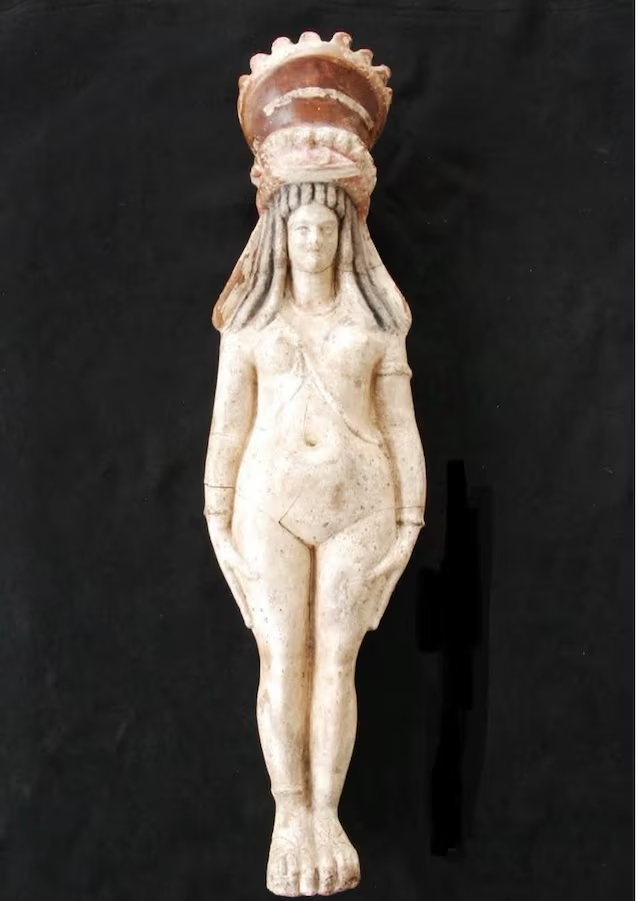
Characteristic of the site history is the presence of Terracotta figurines of Isis-Aphrodite and a fragment of a lid depicting the goddess sitting on a lotus flower while breastfeeding the baby HarpocratesGreek form of the child god Horus. The finding testifies the intertwining of Egyptian religious traditions and influences from the Hellenistic worldtypical of this final phase of Egyptian history.
The necropolis is located in the area of the ancient city of Terenuthisnear the eastern entrance of Wadi Natruna region known in ancient times for the extraction of natrona salt used in mummification processes. In the late era the city was one of the main shopping centers of Egypt.
The excavations, together with the study and documentation activities, will continue: some structures identified appear to be extend beneath layers of sand and debris.