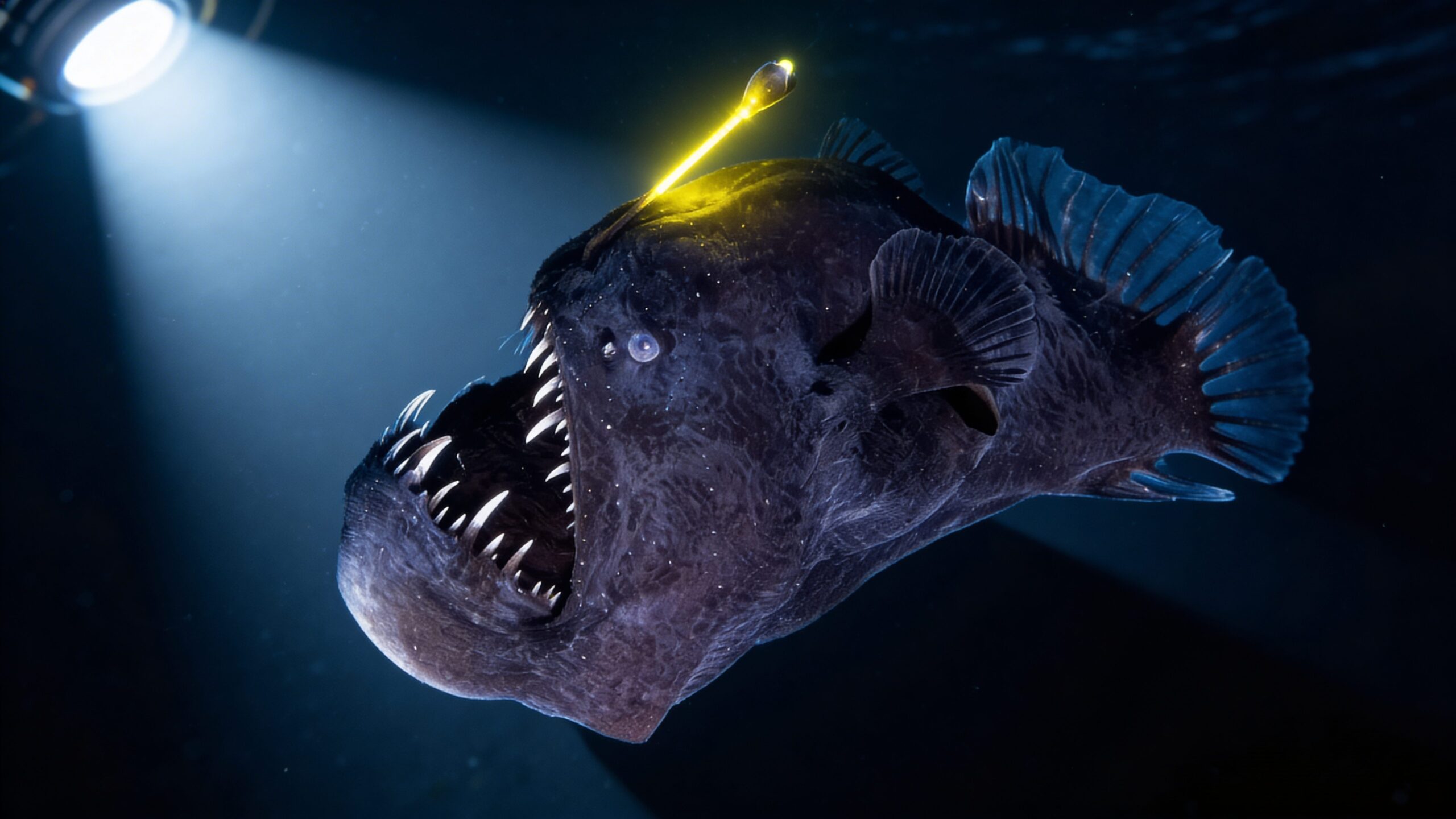
Sea spiders, lantern fish, the vampire squid and the ghost jellyfish: these are just some of the creatures with imaginative names that populate the abysses of the seas around the world. Despite being known to science, these species sighted so rarely by man represent only an infinitesimal part of oceanic biodiversity, considering that over80% of the sea depths is still completely unexplored. To survive in a extreme habitatfreezing and shrouded in total darkness, these animals have developed extraordinary evolutionary adaptations. Thanks to “tricks” like the bioluminescenceThe abysmal gigantism and a slowed metabolismoften take on bizarre and disturbing appearances, so much so that they seem like the perfect protagonists of a horror film.
But what depth are we talking about exactly when we say the word “abyss”? To help us orient ourselves, the oceans are divided into different bands as we descend towards the seabed. It starts with the bathypelagic zone (or “midnight”), which extends from 1,000 to 4,000 meters. Further down we find the abyssal zonewhich drops from 4,000 to 6,000 meters. Finally there is the hadal zoneor adopelagic: the most extreme darkness, which sinks from 6,000 to 11,000 meters, reaching the bottom of large oceanic trenches such as the Mariana Trench. Let’s discover together the incredible animals that swim and feed, undisturbed, in this alien world.
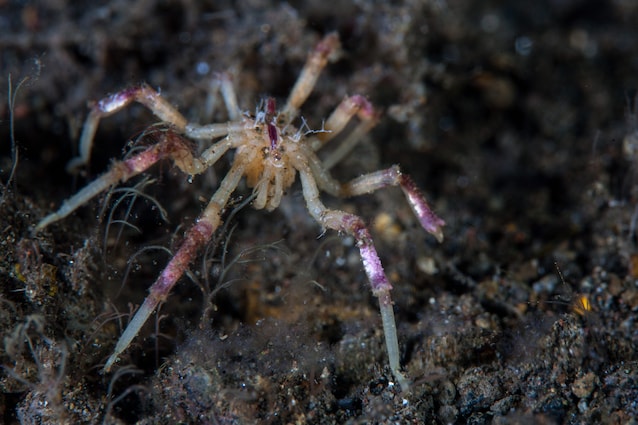
Sea spiders, up to 50 cm in size
Where light no longer penetrates and the temperature drops below 4°C, creatures characterized by a condition called abysmal gigantismi.e. the tendency to reach enormous sizes when compared to their surface relatives. It is hypothesized that a larger mass in these freezing, oxygen-rich environments offers advantages, such as less loss of body heat. However, given the enormous difficulties in studying animals at such depths, the true reasons behind this gigantism still remain, in part, a fascinating scientific mystery.
Among these enormous creatures we find, for example, sea spiders, colossal squids, ghost jellyfish and giant isopods. The first ones we can meet on our abysmal journey are the sea spiders (belonging to the Pycnogonida class), singular marine arthropods that can reach 50 centimeters in size in the polar depths. They are not true spiders (arachnids) but marine chelicerates which populate all oceans at different depths. Characterized by very long legs that house vital organs and even allow them to breathe, they feed by sucking the fluids of anemones and jellyfish through a straw-like proboscis.
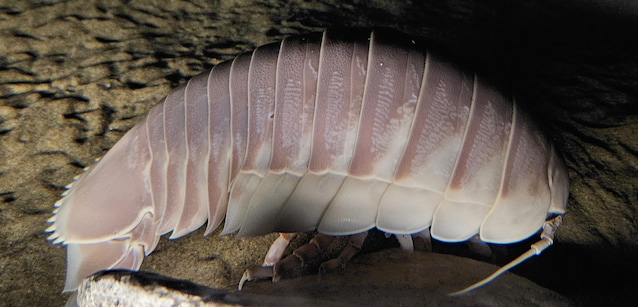
Giant isopods, at a depth of 2000 m
Up to a depth of approximately 2,000 m there are the giant isopods (Bathynomus giganteus), of crustaceans that reach 40/50 cm in length. It may not seem like much but when compared to its close relatives, the wood pigs (2.5 cm), its size is considerable. They have 14 legs and a hard exoskeleton, they live on the seabed behaving like real scavengers, feeding mainly on the carcasses of fish and squid that fall from surface waters.
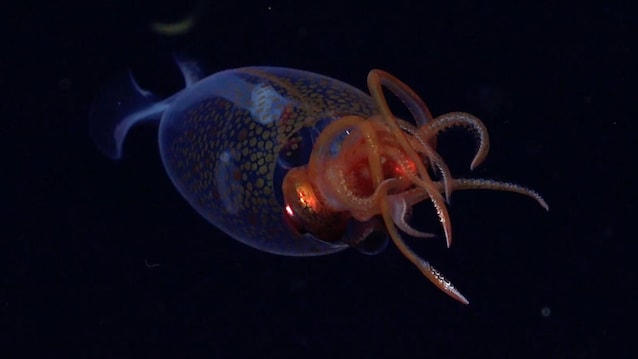
Colossal squid, the largest invertebrate in the world
The bathypelagic zone also lives colossal squid (Mesonychoteuthis hamiltoni), the largest invertebrate in the world (up to 500 kg for 7 meters), equipped with hooked tentacles. It is a living ambush predator above 1000 metres deep in the Southern Ocean, where it hunts fish and is in turn preyed upon by sperm whales.
Ghost jellyfish, up to 10 meters long
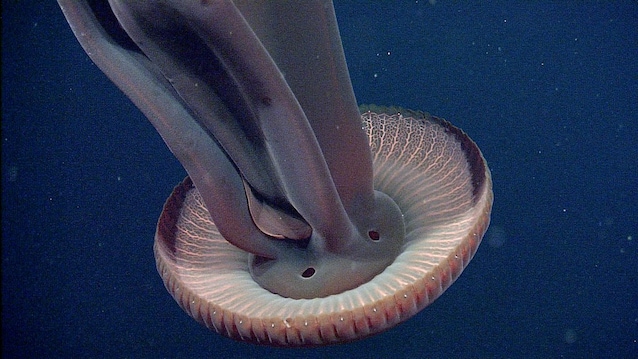
Finally, from 200 to 7,000 m it “floats” in the water ghost jellyfish (Stygiomedusa gigantea), a harmless abyssal creature without stinging tentacles. It can reach 10 meters in total length thanks to four very long “oral arms” with which it captures plankton, carrying it towards its large crimson red domed umbrella.
Ice fish, with transparent blood
In the depths of the sea, however, size isn’t everything. This environment is also populated by other unique marine species.
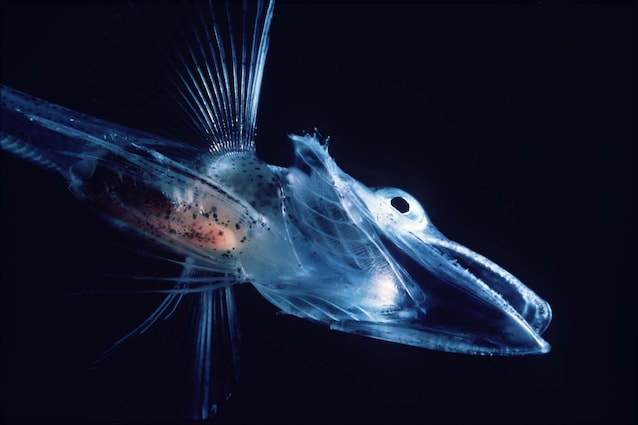
THE ice fish (family Channichthyidae) are the only vertebrates to have the “white” bloodbeing devoid of red blood cells and hemoglobin. To survive in the frigid waters of Antarctica, they absorb abundant dissolved oxygen directly through their scaleless skin. For example, Chionobathyscus dewitti it is up to 60 cm long and lives between 500 and 2,000 meters deep.
Sleeping sharks and slowed metabolism
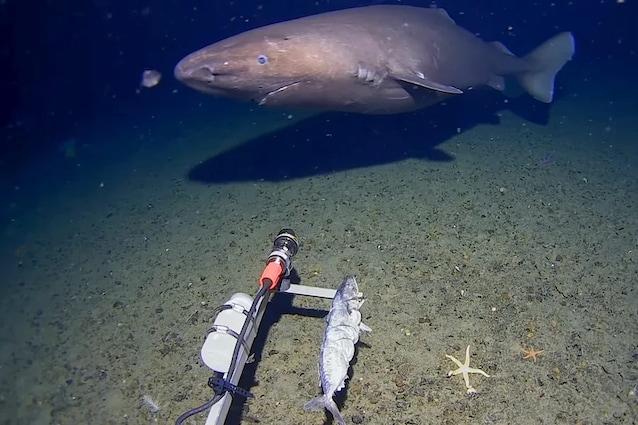
The sleeping sharks they represent a family of sharks capable of living at significant depths. The best known and most sighted species – such as the Somniosus antarcticusThe Somniosus pacificus and the Greenland shark (Somniosus microcephalus) – are characterized by considerable size, an extremely slow metabolism and record longevity, being able to live from 200 to 500 years.
Vampire squid, a real living fossil
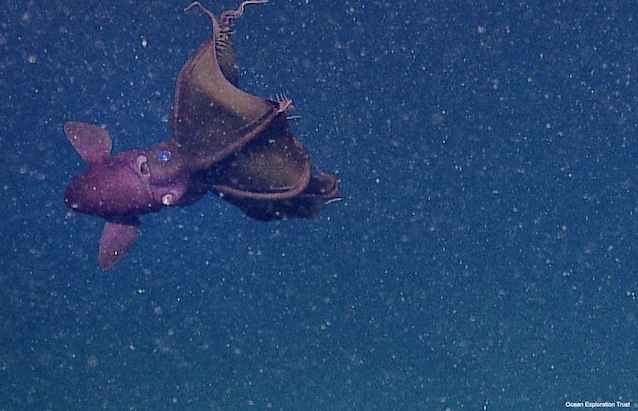
The vampire squid (Vampyroteuthis infernalis) is a harmless 30 centimeter long abyssal mollusc, characterized by large eyes and eight arms joined by a mantle-shaped membrane. Despite its name, it does not suck blood but feeds on debris at 600-900 meters of depth, representing a true “living fossil” evolutionarily halfway between octopuses and squids.
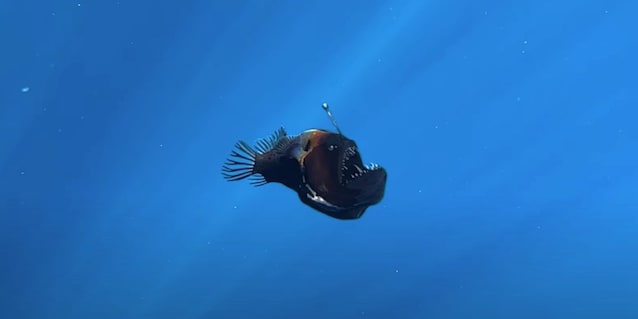
Black devil, with bioluminescent appendage
The black devil (Melanocetus johnsonii), a relative of angler frogs, is a small abyssal fish (females reach 18 cm, males only 3 cm) that lives up to around 2,000 meters deep. It is famous for its enormous toothed mouth and the bioluminescent appendage on its head, used as a luminous bait to attract and swallow prey even larger than itself in the dark.
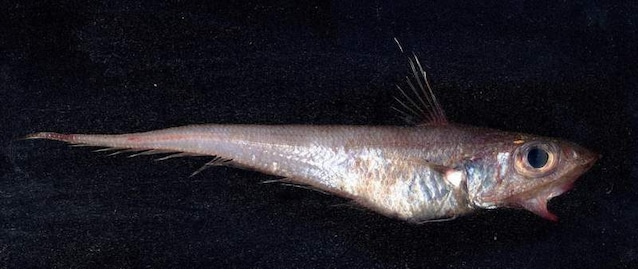
Mouse fish, among the most abundant
THE mousefish (Macrouridae family) are among the most abundant abyssal fish and inhabit the seabed all over the world, at depths ranging from 200 to over 2,000 metres. Ranging from 10 cm to about one meter long, they have enormous eyes, very long tapered tails from which they take their name and the frequent presence of bioluminescent organs on their belly.
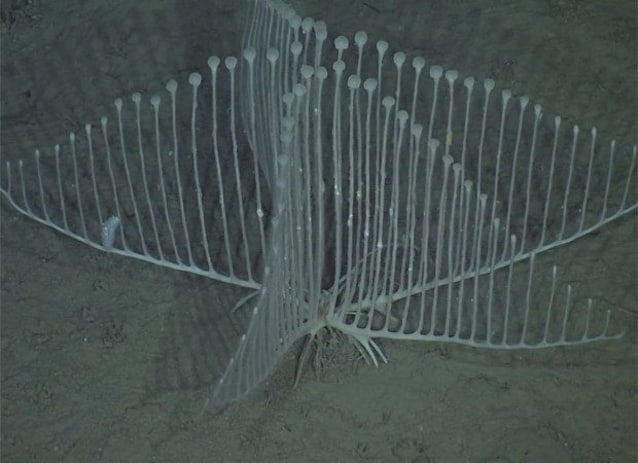
Carnivorous sponges with strange shapes
In addition to the animals that swim freely in the depths, the seabed is home to carnivorous sponges (family Cladorhizidae), shaped harp or sapling which trap small crustaceans even beyond 3,000 meters of depth using microscopic adhesive hooks.
How to survive in the dark
As our journey in the dark abyssal waters has already taught us, animals here have adapted by developing tricks and evolutionary stratagems that allow them to live, feed and reproduce in the dark and cold.
For example, the ability to emit light – la bioluminescence – it can be used for defense, as an intimidating element towards a potential predator but also for attack, to attract prey or to confuse it and make it more vulnerable.
Other techniques are the presence of antifreeze proteins in the blood which block the formation of ice crystals and the slowed metabolism – as in sleeping sharks – which minimizes the expenditure of energy to deal with the cold and the perennial scarcity of prey.
Even the diet it has adapted to a sparsely populated environment where it is very difficult to hunt. Most of the species here feed on what “falls” from the more superficial layers of the sea. We talk about marine snow – excrement, shells, waste from dead or decomposing animals, bacteria, suspended sediments, mucus and other particles of biological origin (both living and dead) – and actual carcasses.
