Are we in Iran only at the “first stage” of the war? What Trump really wants
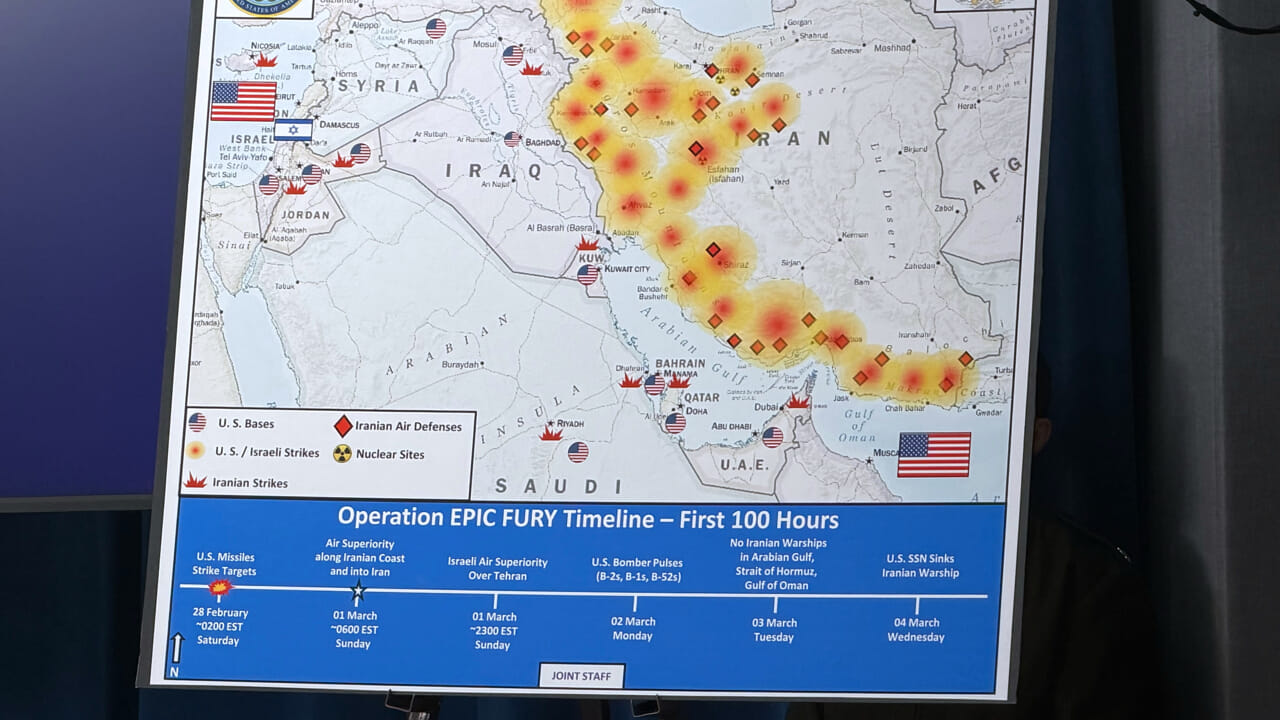
The American and Israeli air campaign is an operation that required long technical planning and which essentially consists of a gigantic targeting action. Regardless of what may or may not be the political motivations that led to the decision to take action, the study of the targets involved an intelligence activity that certainly lasted several months, and probably started already at the end of the bombings in June. With that action, Iranian anti-aircraft defense had been practically neutralized, while missile capacity had been significantly degraded, not so much in the number of missiles but in that of launchers and the fire control systems associated with them. However, as we saw later, the regime’s internal repressive capacity had not been affected in the slightest and it was easily able to overcome the popular protests that subsequently exploded.
The repression of the protests has highlighted the absolute lack of coordination between Iranian civil movements and the coalition military forces, the absence of internal coordination among the protesters and the permanence of an effective command and control system of the security forces.
Who are these “terrorist” Pasdaran of Iran, the parallel army of the ayatollahs
It is now clear that Israeli-American planning has targeted the regime’s internal command and control structure, while it is not yet clear whether measures have been taken to ensure coordination with and between Iranian opposition groups within the country.
On the opposite front, the regime has clearly taken its measures to respond to a new assault. Among these was the issuing and distribution to the missile units of a series of pre-compiled orders to be opened as needed in the event of a new attack and loss of contact between the launch departments and the chain of command. These orders evidently envisaged a vast spectrum of targets distributed throughout the region, so as to hit everyone and not forget anyone. Naturally, however, they could not predict exactly who would participate in the attack and who would not. So it happened that, once the leaders had been decapitated and contact had been lost, the launch units opened fire based on orders in a sealed envelope, also hitting actors who had nothing to do with it, such as Oman or the British sovereign bases on the island of Cyprus, which, unlike what many have said, are not “EU territory”. And now Iran has become in the wrong in the eyes of many regional players who, from the start, disapproved of the new American action. It is very likely that the Mossad, in addition to knowing the exact movements of the top Iranian authorities to be beheaded, was also aware of this detail and that this was part of the overall strategy.
Over 500 missiles and 1400 drones from Iran over the Gulf countries in four days
The fact that the air campaign depended on precision targeting planning also explains the lack of “transparency” towards the European and Arab allies: the authorization to open fire probably came at the last moment, to hit the regime’s leaders when they appeared in the targeting crosshairs. We found ourselves with the Minister of Defense in Dubai at the wrong time, but others had bigger problems, starting with those who were hit by the Iranian retaliation with their defenses not yet activated. And the Americans themselves lost three planes, but no pilots, due to friendly fire from Kuwaiti air defenses, clearly not coordinated with the American Central Command.
As for the Iranians, their prepared reaction entailed, on the one hand, a response fire capacity probably greater than expected; on the other hand, however, it prevented the concentration of fire on the most profitable targets, making it impossible to saturate the defenses and therefore leading to limited damage for the Americans and Israelis. In a campaign of this type, the “first round” of fire is the most intense and effective, because the targets can be calmly studied and planned in “peace” time, and it is possible to hit them with more intense fire than happens later, when in subsequent rounds the carriers have to be reloaded and the missiles begin to run out at least as badly as the targets.
How the war in Iran will continue
With the increase in the “fog of war”, the movement of forces on the field and the progressive reduction of targets, as well as of available fire units, the intensity of the fire tends to decrease together with the accuracy of the shot. Moving from situation analysis to predictive analysis, and remaining in a strictly military field, what can we expect? I would say that the answer depends greatly not only on Trump’s strategic objectives, but also on the degree of precision of American and Israeli planning.
If this level is high and the coalition’s ambitions truly include regime change, it will be necessary that, in addition to careful targeting planning to decapitate the regime, disarm its response capacity and cut off internal communications and command and control capacity, effective links with the internal opposition are also established; that the latter has been equipped with its own coordination tools; that there is a plan to provide air support capable of protecting protesters and targeting security forces engaged in repression; and above all that there is an alternative ruling class capable of taking power in the event of the regime’s collapse.
To draw a parallel with a known situation, it would be a question of doing as in Afghanistan in 2001, when the Americans essentially provided the air force to the Northern Alliance, which overthrew the Taliban and liberated Kabul.
If, however, ambitions are more limited and/or planning has not sufficiently included the Iranian opposition, it is more likely that a “Venezuelan” scenario will be created, in which the more radical leadership is eliminated through targeted targeting and relatively more “moderate” elements within the regime assume power, with which both Israel and America, but also the Saudis, could establish a modus vivendi. A structure that would not upset the current Middle Eastern balance, but would still leave the Iranians under an absolutist clerical regime.
Finally, there is the possibility that, as often happens, there is no serious planning for the “after” and that everything ends up in a campaign of suppression of the regime, affecting both its leadership and its military and industrial capabilities, but without really solving any aspect of the problem. It would be the realization of Netanyahu’s “revenge” for October 7, but it would leave the Iranian threat towards Israel intact and would give space both to the closure policy of the current Israeli government, in view of the elections in the Jewish state, and to Trump’s hopes for the midterm elections.
