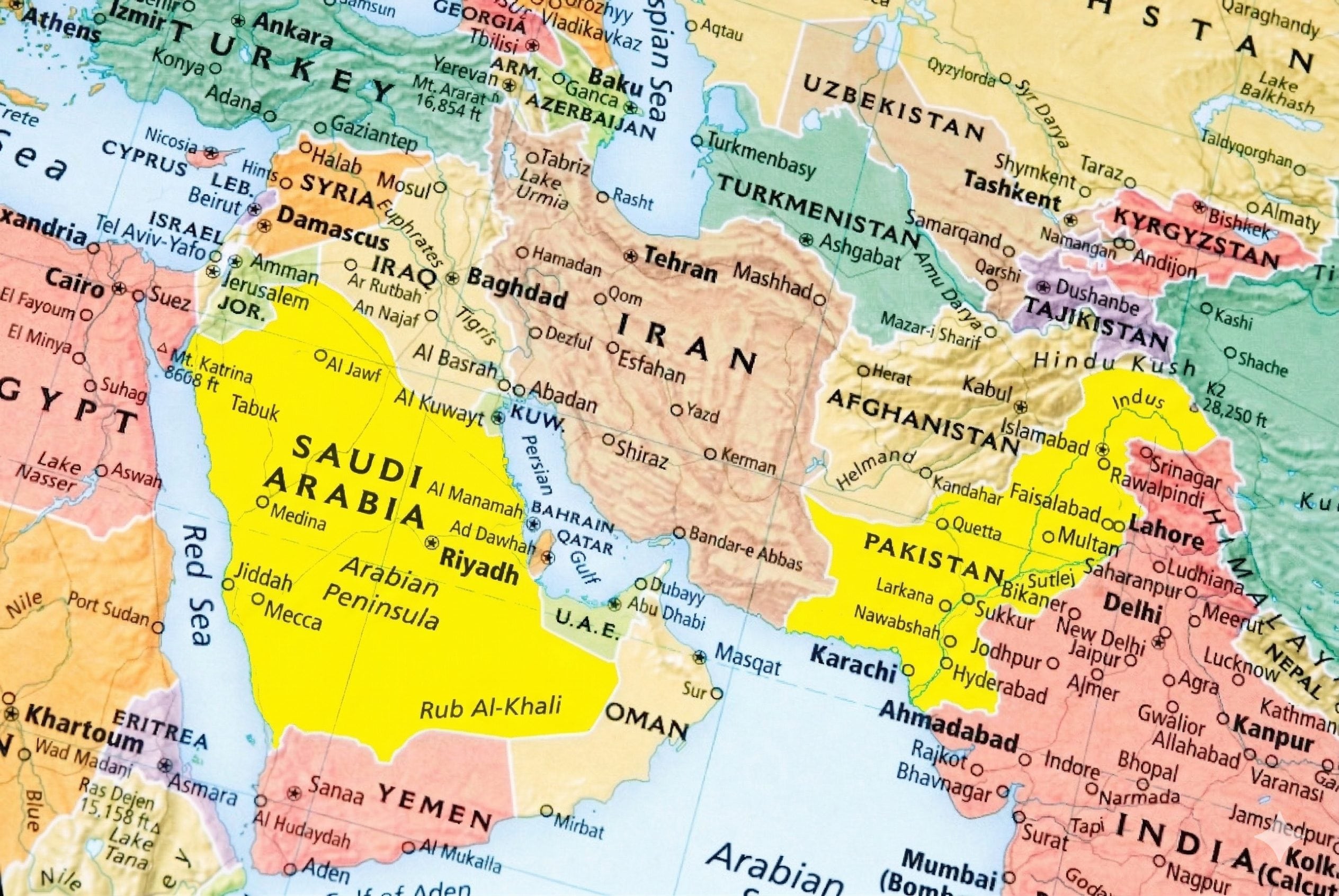
There Islamic Republic of Pakistan and the Kingdom of Saudi Arabia have maintained a for decades collaborative relationshipwhich saw the two countries getting ever closer on a political, economic, religious-doctrinal and, above all, military level. This closeness was undoubtedly favored by the common adherence to very conservative currents ofSunni Islamismwhich are Saudi Wahhabism and Pakistani Deobandism. Today the collaboration between Islamabad and Riyadh has taken a further leap thanks to the signing, which took place on 17 September 2025, of the Strategic Mutual Defense Agreement (Strategic Mutual Defense Agreement, SMDA), thanks to which the Kingdom of Saudi Arabia will also be able to enjoy the protection of the so-called Pakistani “nuclear umbrella”..
The military dimension of the alliance between Pakistan and Saudi Arabia
Saudi Arabia has always been one of Pakistan’s strongest supporters ever since the latter’s wars with India began. Bilateral military relations reached their peak during the 80s of the 20th century when Riyadh coordinated with Islamabad to more effectively support the Afghan mujahideenengaged in their war of resistance against theSoviet invasion (1979-1989). In parallel, the Pakistanis agreed to deploy to Saudi Arabia a permanent military contingent originally made up of 20,000 soldiers and today grown to 70,000 to ensure the safety of the kingdom and in particular members of the royal house of Saud.
Saudi Arabia also played a leading role, along with the United Arab EmiratesIn the financing of Pakistan’s nuclear programculminating in the Chagai-I and Chagai-II tests, which took place on May 28th and 30th respectively 1998. Already then several analysts speculated on how “Pakistani nuclear weapon” could become one “Islamic nuclear weapon”suggesting that Pakistan could make the decision to extend its nuclear umbrella to other countries in the Islamic world, which actually happened thanks to the recent signing of the Strategic Mutual Defense Agreement. On this occasion the two countries declared that “collaboration in the military field covers all issues”.
“Brothers” in the name of Islam
An element that certainly played a leading role in encouraging a deepening of relations between the two countries was theSunni Islamwhose most conservative current is at the same time the official religion and state ideology in the Kingdom of Saudi Arabia (under the name of Wahhabism) as well as the Islamic Republic of Pakistan (under the name of Deobandism). Given that the very origin of Pakistan makes explicit reference to Islam (Pakistan in fact means “Country of the Pure”, implied, Muslims) it was foreseeable that Saudi Arabia would try to leverage this aspect to extend its influence over the vast country of Indian subcontinent.
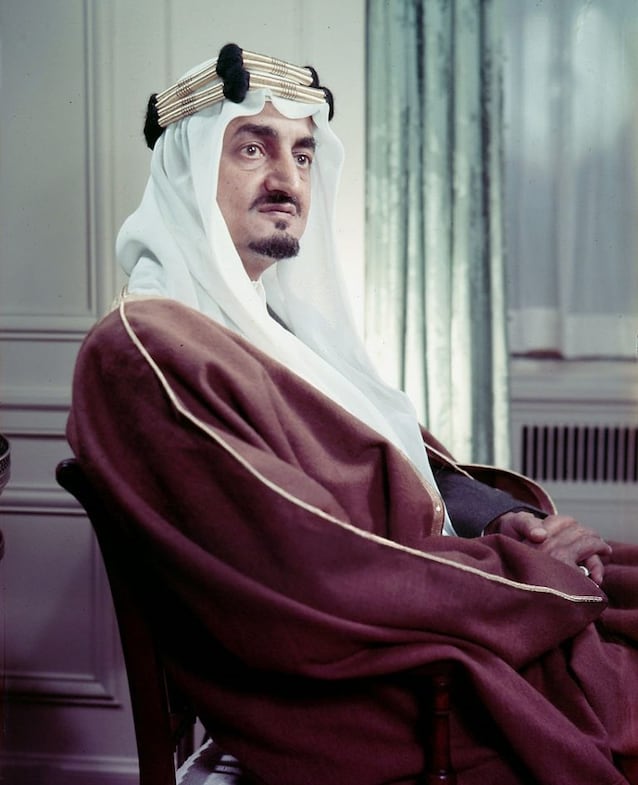
The third was particularly active in promoting Islamic values within Pakistani society king of Saudi ArabiaFayṣal ibn Abd al-Azīz Āl Saʿūdwho inaugurated generous plans for theassistance to the poor as well as the construction of thousands of madrassas (religious schools) to encourageIslamization of the country. Such was the impact of his work that, in 1979four years after his death, the Pakistani government decided to rename the important city of Lyallpur with the name of Faisalabad. However, Saudi Arabia’s “Islamic approach” to Pakistani affairs has proven to be a double-edged sword over time, because it has favored the rise ofIslamic fundamentalism in its most extremist and dangerous form in vast segments of the population of the “Land of the Pure”, so much so that today they are different local Islamic terrorist organizations constitute one of the main threats to the security and stability of the State.
A new geopolitical balance in the Middle East and beyond?
We can say without a shadow of a doubt that the one between Pakistan and Saudi Arabia constitutes one partnerships privilegedcapable of shift the geopolitical balance in the Middle East and not only that. Although in fact theSaudi Arabia does not have either the demographic strength or the military efficiency (with the sole exception of the air force) capable of managing a policy of geopolitical power and influence on its own, can thanks to its considerable economic-financial power supported by hydrocarbon reserves “enlist” in this sense the Pakistan which, providing its undisputed as a pledge military powerwould obtain in exchange the financial resources necessary for its economic stabilization.
In addition to the Middle East, the spread of joint Pakistani-Saudi influence would also affect the Indian subcontinentin part ex-Soviet Central Asia and even more distant areas such as Western Europewhere Muslim communities have long had to deal with the infiltration of Pakistani secret services (primarily the ISI) e of Saudi capital of often opaque origin. In a general framework which, despite several setbacks and some disagreements, has seen a strengthening of the partnerships strategic Pakistani-Saudi strategy, the signing of the Strategic Mutual Defense Agreement represents only a formal act on a path already abundantly traced.
