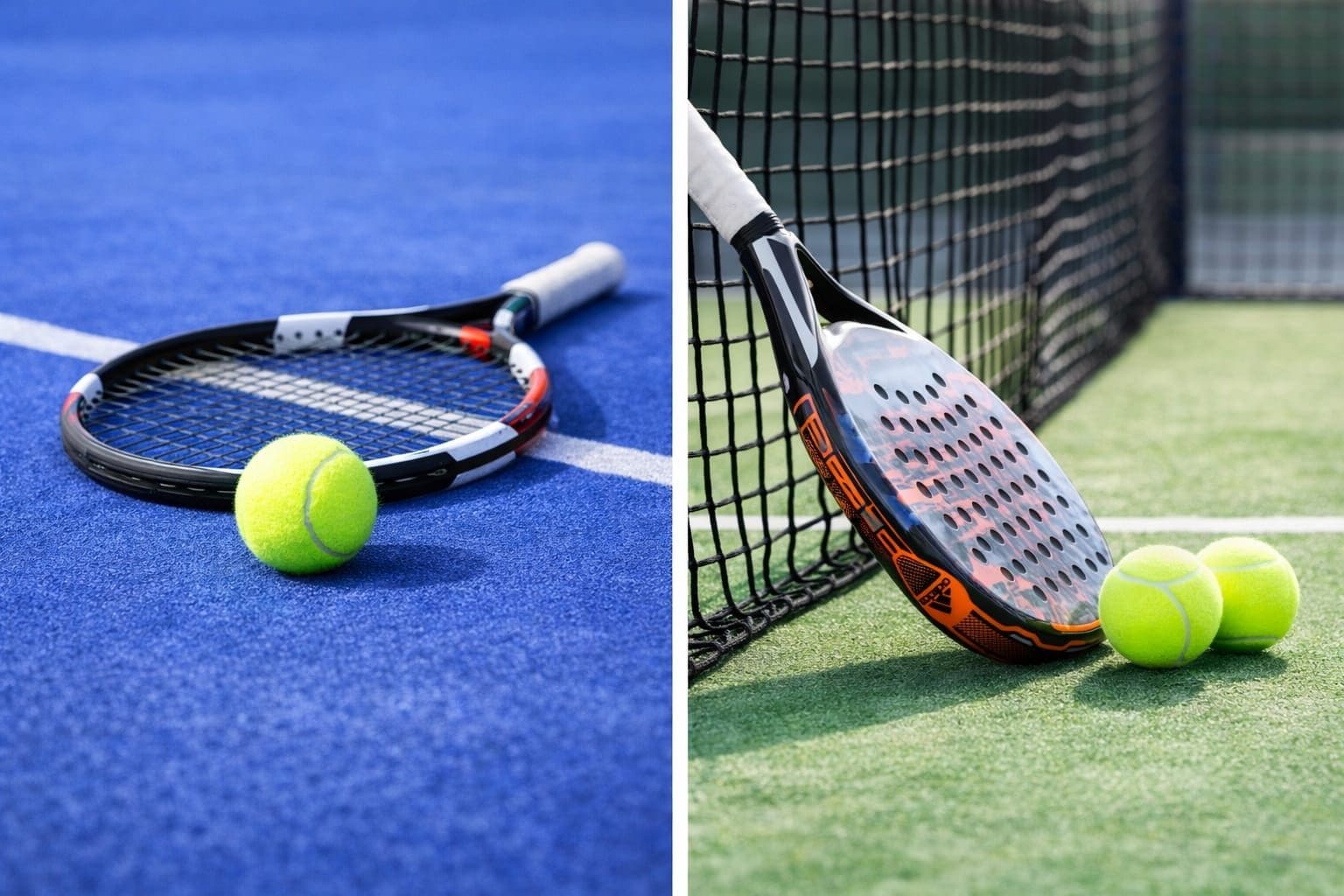
Padel balls and tennis balls are practically identical at first glance: same bright yellow colour, same shape, same felt covering. Yet you only need to play a few exchanges to realize that they don’t behave the same way. Because that gives padel seems to “turn off” after the bounce, while the one from tennis remains fast and responsive? It is not just a sensation but there is a precise physical explanation: the balls have a very similar diameter (6.77 cm for padel and 6.86 cm in tennis) but different internal pressures (tennis 1.8 and 2 atmospheres and padel around 1.5–1.7 atmospheres) which adapt to the needs of the two sports, in that of Sinner Strength and speed are needed, while between glass walls, tactics, patience and positioning count more. Given the characteristics, it is recommended to use specific balls for the sport for which they were designed.
Padel vs tennis balls: characteristics and pressure differences
From a construction point of view, tennis and padel balls are very similar: both are composed of a Pressurized rubber core covered with felt. However, the factor that most differentiates the game is the internal pressure.
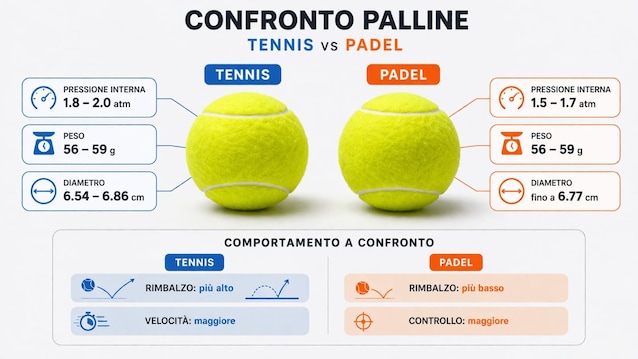
The balls from tennis they generally have higher internal pressure between 1.8 and 2 atmosphereswhich makes them more elastic and capable of returning energy after impact. This results in a higher bounce and greater overall speed. Those from padelhowever, have a lower pressure (approx 1.5–1.7 atmospheres) and this radically changes the behavior: more of the energy is dispersed and the rebound is lower and more controlled.
It is precisely this that gives the feeling that the padel ball “dies” sooner. It is not a flaw, but a precise design choice. Padel is played on a smaller court, with walls that are part of the game: a ball that is too fast would make rallies chaotic and difficult to manage.
Also weight and dimensions they are very similar, but with some regulated differences:
- The weight it’s pretty much the same for both: between 56 and 59 grams.
- The diameterhowever, varies slightly: the balls from tennis are generally between 6.54 and 6.86 cmwhile those from padel they fall into a smaller size range, reaching up to 6.77 cm. A minimal difference, difficult to perceive with the naked eye.
How the game changes: strength versus strategy
These technical differences are clearly reflected in the style of play. In tennis, the more responsive ball favors a high pace, with powerful serves and exchanges often shortwhere whoever can push the hardest often has the advantage.
In padel, however, the dynamic is the opposite. The slower ball offers more reaction time and makes rallies longer. The game becomes less about strength and more about strategy: Position, use of walls and ability to control rebounds count. This is also why padel is often perceived as more accessible.
Because at altitude different balls are used
Then there is a peculiarity linked to the altitude that few people know about. If you’ve ever played in a mountain town — like a Sestriereat over 2000 meters — you may have noticed that the game is a little different. At altitude, the air is thinner and the balls tend to travel faster and bounce more. To compensate for this effect, they should be used in mountainous areas specific balls (calls High Altitude), designed with lower internal pressure and thicker felt.
Also the color of the balls has a curious history. Today we are used to the classic yellow, but in the past balls of other colors were also widespread (for example white or black), then replaced to improve visibility during television broadcasts.
Finally, the last detail that differentiates padel and tennis balls are the packages. Tennis balls are almost always found in tubes of four, while padel balls are sold in packs of Three. A small practical clue that allows you to distinguish them immediately, even without looking at the label.
