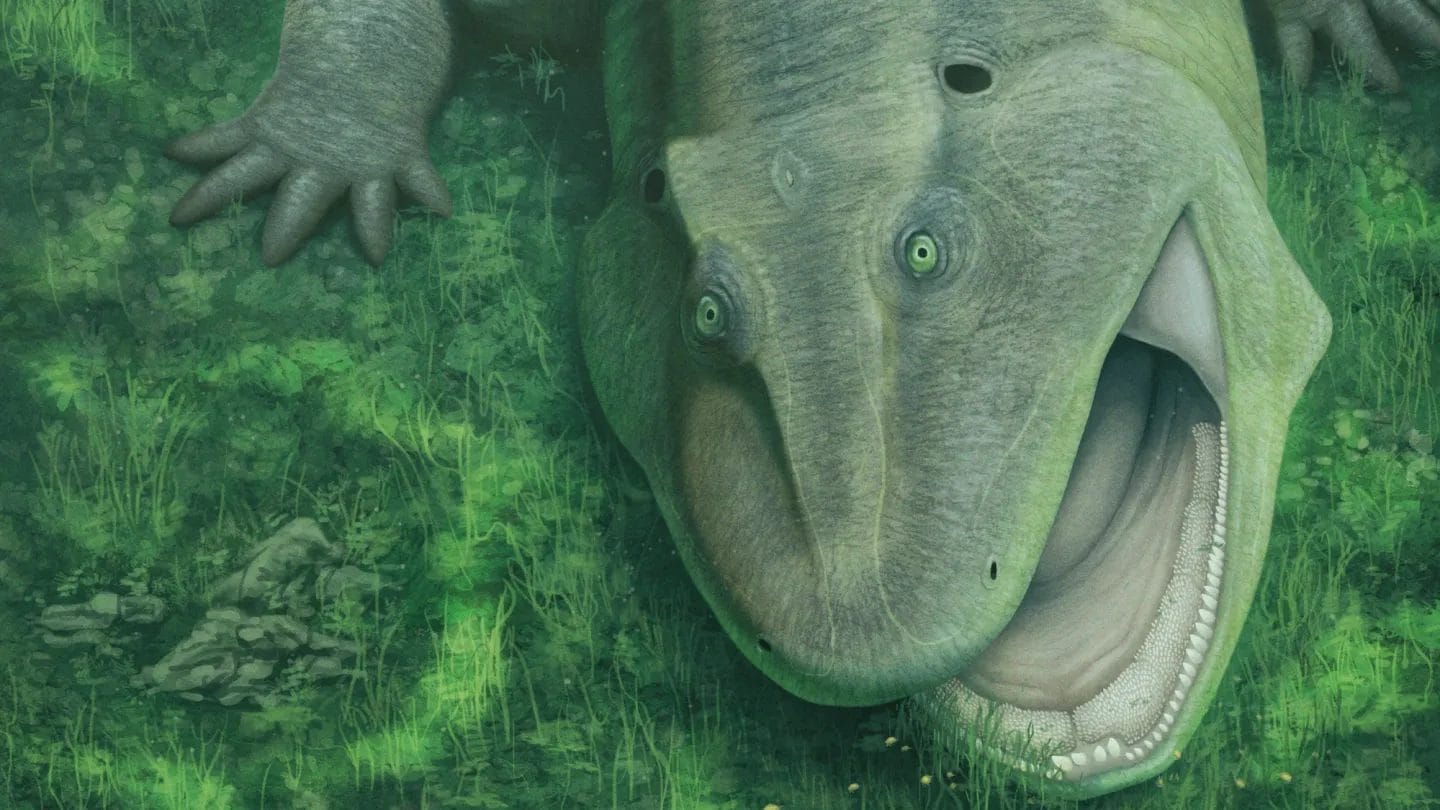
A study published on Proceedings of the Royal Society Bwith Jason D. Pardo of the Field Museum in Chicago as the leader, he describes Tanyka amnicolaone new species of tetrapod (the superclass that includes all four-limbed vertebrates, including us) archaic found in Brazil. The evolutionary history of tetrapods is traditionally divided into two major phases: an initial diversification of archaic groups of stem tetrapodsfollowed by their abrupt replacement by temnospondyl amphibians and amniotes following an arid interval of late Carboniferous (around the 300 million years ago), known as the Carboniferous Rainforest Collapse. However, the degree to which this scenario applies to early tetrapods of the Gondwana (the supercontinent that included South America, Africa, Antarctica and Oceania) remained uncertain.
Tetrapods actually represent all terrestrial vertebrates. Stem tetrapods, the oldest lineage, split into two large branches: the one that laid eggs outside the water, from which reptiles, birds and mammals descended, and the one whose eggs needed stay moistfrom which modern amphibians, such as frogs and salamanders, derive. Even after this separation, however, some tetrapods stem they continued to exist. This is the case of Tanyka amnicola.
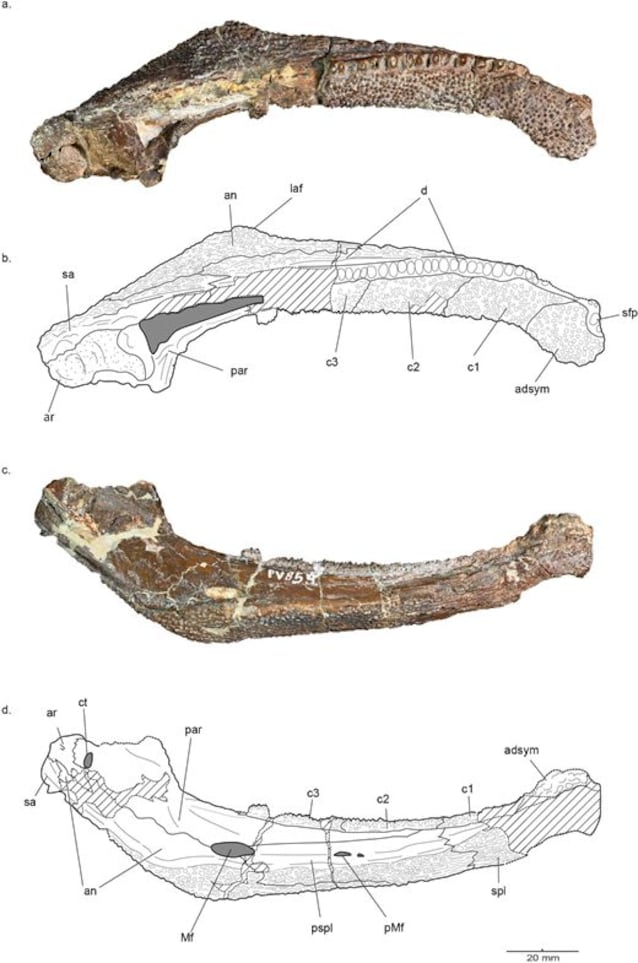
Tanyka amnicola is an archaic stem tetrapod of the Lower Permian (298-275 million years ago) of Brazil, characterized by a strong torsion of the mandibular ramus and a notable set of enlarged denticles on a strongly arched coronoid. The name of the genus comes from the term guaraní (native people of the central-southern Amazon)”tañykã“, what does it mean “jaw” or “chin“, While amnicola is Latin for “who lives near the river“, referring to the river bed in Brazil where the fossils were found. The team of paleontologists came across a fossilized jaw bone. In the course of their field work, they found some eight similar, each about fifteen centimeters longbut no other bones with which to completely reconstruct the skeleton.
According to Jason Pardo, Tanyka it belongs to an ancient lineage that was not known to have survived until that period, and it is also a very unusual animal: the jaw has a strange twist which left researchers mystified. Phylogenetic analysis shows affinity between this species and other stem tetrapods. The unique morphology of the mandible suggests adaptations to the specialized chewing of small invertebrates or the consumption of plant materialshowing that stem tetrapods continued to explore new ecological niches in the Permian of Gondwanaunlike what was known until now.
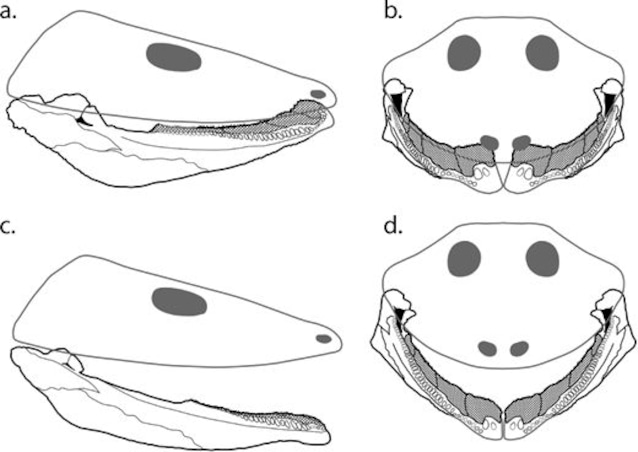
There ecomorphic diversity Of Tanyka contrast with the emerging consensus that the mandibular morphology of tetrapods, and therefore the food ecology, was strongly bound to the origin of amniotes, and suggests that stem tetrapods were both more capable of evolving than believed to be less ecologically constrained than previously thought.
