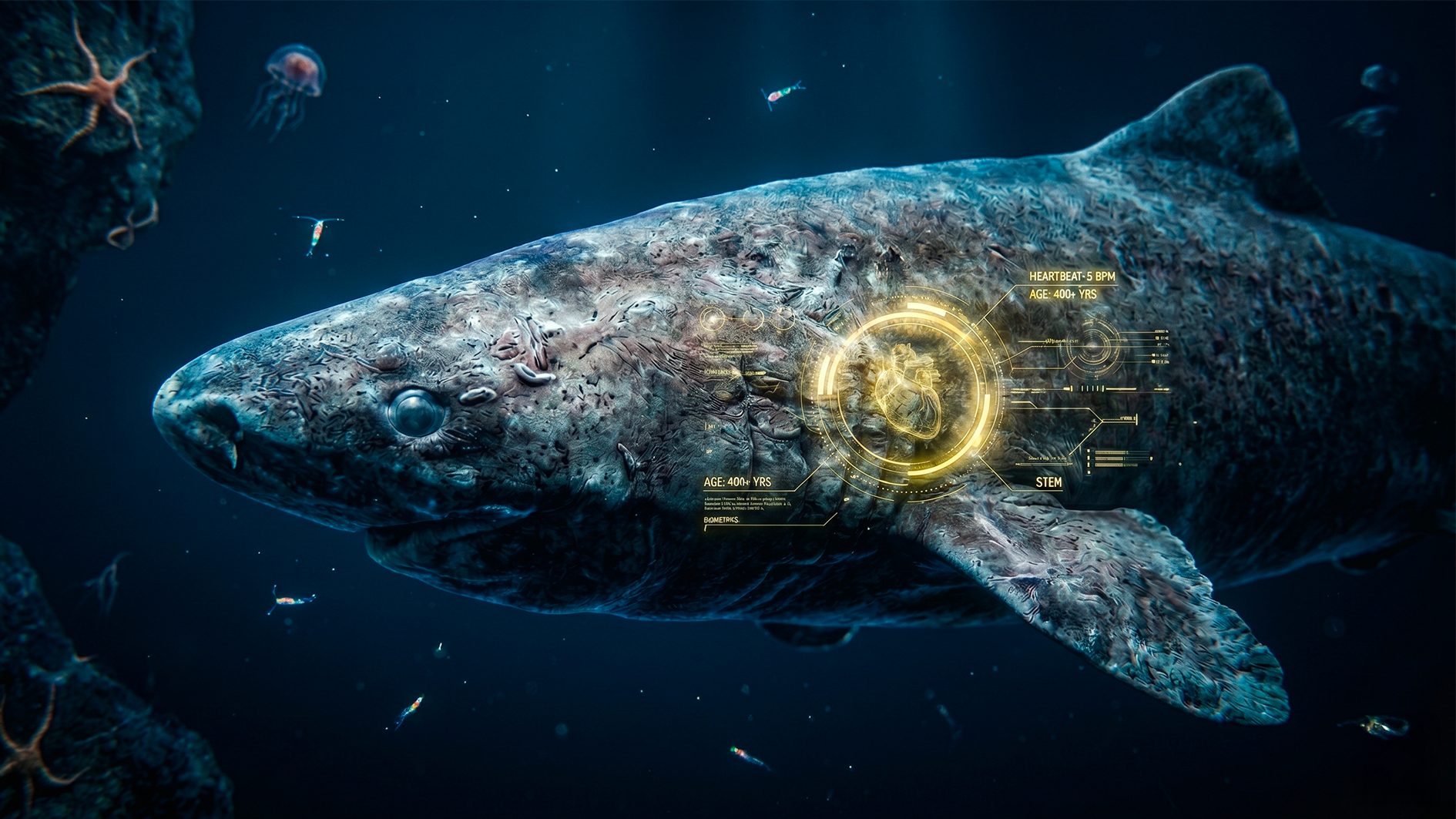
The Somniosus microcephalusit Greenland sharkis the longest-lived vertebrate known on Earth capable of swimming in the freezing waters of the North Atlantic and the Arctic Ocean for 300 years. A feature that fascinates researchers in biology of aging. How does a heart beat for centuries? It must be a healthy heart, free of the damage that age accumulates in the tissues of all other vertebrates. In reality this is not the case. A study published in the journal Aging Cell led by the Scuola Normale Superiore of Pisa with the participation of the Anton Dohrn Zoological Station of Naples and the University of Genoa discovered that the heart of this shark is full of aging lesions (fibrosis, accumulations of cellular waste, chronic oxidative stress) which would be lethal in humans. Despite this, it works perfectly.
The longest-lived vertebrate on the planet
Somniosus microcephalus it is an animal that grows very slowly (~1 cm/year) and reaches significant dimensions that can exceed 5 meters in length. The largest specimen ever measured, long 502 cmwas estimated by radiocarbon dating of the lens nuclei to have 392 (± 120 years).
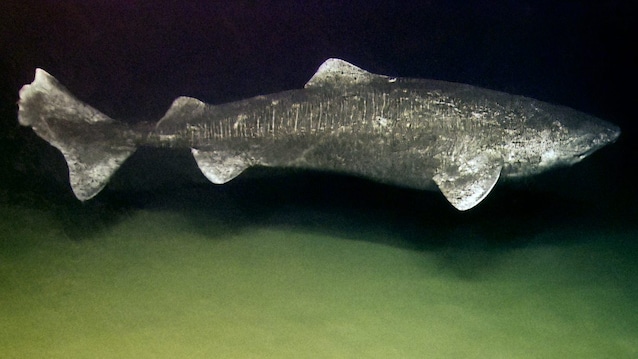
It is also the fish with the slowest sustained swimming speed in proportion to body size, with a tail beat frequency of approximately 9 shots per minute and a cruising speed of approx 0.3 m/s. It has a very low metabolismuseful for living in waters a few degrees above zero with a heart that must beat for centuries. The name reflects the species’ limited distribution between the Atlantic Ocean and the Arctic Ocean.

Damage to the hearts of Greenland sharks
To understand how an organ can function for so long, the team led by Alessandro Cellerino of the Scuola Normale Superiore of Pisa analyzed heart tissue samples from 10 Greenland sharks aged approximately 150 years and compared them with hearts from two reference species, Etmopterus spinax (the lantern shark that lives in deep waters) e Nothobranchius furzerithe African turquoise killifish. The starting hypothesis is that the Greenland shark has a heart that resists aging and which, unlike ours, does not accumulate the typical damage of age.
The first histological analysis revealed a extensive interstitial and perivascular fibrosis throughout the ventricular myocardium of all ten specimens analyzed, male and female, of S. microcephalus. Cardiac fibrosis is one of the classic markers of aging in the vertebrate heart, including in humans. This condition was not present in E. spinaxwhich lives in the same deep waters but has a much shorter lifespan, ruling out the possibility that this is an adaptive response to life in the depths. It was not present in the older killifish either.
Secondly, the lipofuscinan autofluorescent pigment considered to be another marker of cellular aging, was present in massive quantities in heart cells of S. microcephalus. In the other two comparison models it was almost absent or at least localized in a limited way. Furthermore, the presence of damaged mitochondria and abundant deposition of 3-nitrotyrosine (3-NT), an indicator of oxidative stress.
The phenomenon of the resilient heart
All specimens of S. microcephalus analyzed, despite carrying these three classic markers of advanced aging in their hearts, they appeared healthy and intact.
The Greenland shark therefore ages by accumulating damage, but has evolved the ability to tolerate it. This is the concept of resilience: the ability of an organism to maintain its functions even in the presence of a pathology.
Understanding which molecular mechanisms make it possible for cardiomyocytes to remain viable despite being full of damaged mitochondria, or how extensive fibrosis does not compromise contractility, could rewrite the way we think abouthuman cardiac aging.
Sources
Chiavacci, E., Steffensen, KF, Delaroche, P., Astoricchio, E., Poulsen, AB, Brayson, D., Garibaldi, F., Lanteri, L., Pinali, C., Valente, GR, Vignati, F., Steffensen, JF, Shiels, H., Tozzini, ET and Cellerino, A. (2026), Resilience to Cardiac Aging in Greenland Shark Somniosus microcephalus. Aging Cell, 25: e70505. Scuola Normale Superiore of Pisa
