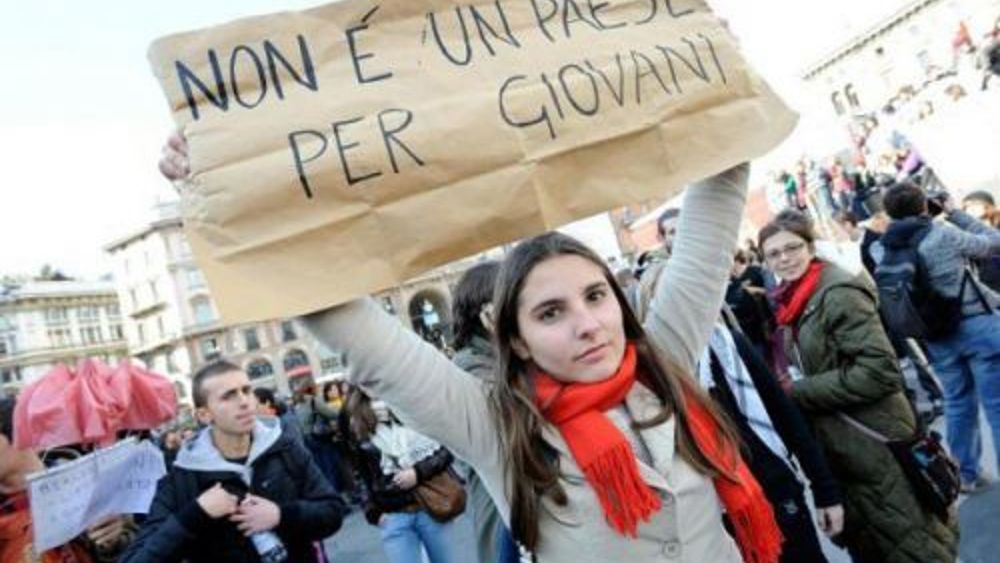
The phenomenon of the so-called “brain drain” today represents one of the main critical issues for the future of Europe. The emigration of qualified young people to more attractive countries – European and otherwise – is not just a demographic issue, but has a profound impact on the ability of territories to grow, innovate and remain competitive, especially those with historical socio-economic difficulties.
In recent years the phenomenon has taken on increasingly complex characteristics, no longer only involving transfers from one country to another, but also within the same states, between urban and peripheral areas. A dynamic that contributes to emptying entire regions, making it even more difficult to guarantee balanced and sustainable development, since the flight of young people makes territorial inequalities even deeper.
This is why the topic is becoming increasingly central in the European debate and, in particular, in the context of cohesion policy. Because it is, to all intents and purposes, one of the most complex challenges to the EU’s objectives for a balanced and inclusive development of all the regions of the Union.
European competitiveness will be decided in the territories
A structural phenomenon
The so-called “brain drain” no longer concerns just some countries or specific areas, but crosses the entire continent, from south to north, from east to west, inside and outside the European Union. In some regions, up to half of qualified young people decide to leave their territory, generating a progressive depletion of skills.
In Italy, according to i Istat data, in 2024 over 156 thousand people of all ages made the choice to leave the country. Perhaps forever, considering the fact that – in the same year – only 53 thousand returned. A study of the North East Foundation has detected a flow of youth emigration equal to 550 thousand cancellations from the registers from 2011 to 2023.
However, the issue also affects those European countries considered traditionally wealthy. The case of Norway highlights this dynamic well. At a national level, the migratory balance – i.e. the difference between the number of registered people and the number of those canceled from the population registers – is positive, but in the northern regions the situation is the opposite.
In Tromsø, a symbolic city of the North, 36 percent of young residents plan to move in the next few years and many companies are unable to find qualified staff. “It’s not a lack of jobs, but of people,” emphasizes Brynjar Saus, project manager for the European Youth Capital 2026 in Tromsø within Tvibit, a hub dedicated to culture and creative activities that promotes the development of people and ideas in youth culture.
The opportunity of cohesion for Ukraine’s accession to the EU
Even in Ukraine the situation is taking on worrying features, in a context marked by the Russian war for over four years, bombings and calls to the front which have made the phenomenon of youth emigration even more critical. The restrictions imposed by the conflict have limited travel, but not the desire to leave which already existed before February 2022.
“Young people abroad are looking for something better for them, more experience, more knowledge, better education,” explains Taras Chura, program manager of the youth network TVORY! in Lviv, which helped the western Ukrainian city win the title of European Youth Capital 2025.
The consequences of this critical situation – now aggravated by security and defense issues – are also evident on the education system and the job market: the number of students is decreasing, there is a lack of qualified teachers and professionals, and entire sectors are struggling to find new generations of qualified workers.
Participate to stay
One of the elements that are both crucial and overlooked in addressing the structural phenomenon of youth migration is the link between participation and permanence. In other words, young people are more likely to stay in an area if they feel involved and listened to.
“If you don’t have the opportunity to participate, you leave”, the Ukrainian Chura makes clear, speaking of the inclusive model that was chosen to adopt in Lviv: “No change for young people without young people”.
This principle translates into an active presence of young people in local institutions, in decision-making processes and in urban development projects. Participation thus becomes a concrete tool for territorial cohesion, capable of strengthening the bond between young citizens and the public space in which they grew up and which they might decide to leave.
This is why bottom-up initiatives can prove to be one of the most credible tools, also thanks to the support of Brussels.
How feminist cities make urban spaces truly for everyone
A concrete example of how European policies can be translated into local actions are the European Youth Capitals, the title awarded annually to a European city which thus becomes a center for the culture, participation and ideas of young people. These European Youth Capitals thus become true laboratories of innovation, where new forms of participation and inclusion are tested.
In Tromsø, this year’s capital, the project aims to give young people back a central role to “be part of decisions and shape their communities”, explains Saus of Tvibit.
The idea is to promote widespread leadership, which is not limited to politics or economics, “but of anyone who is actively involved in their community”. By doing so, social capital is strengthened, which is incentivized to stay because it is involved and feels it can contribute in a tangible way to the development of the area in which it grew up.
In Lviv, the capital in 2025, the opening of youth centers and the organization of thematic events have produced significant results, demonstrating that one of the most effective – but at the same time least visible – aspects for strengthening the sense of community is the creation of spaces dedicated to young people.
“Young people have started to feel part of a community and want to change it,” says Chura of the TVORY! network. Sometimes all you need is an empty room where you can be together. Accessible, free and informal places that “allow young people to meet, express themselves and develop projects”, but which also encourage dialogue between generations and collaboration “to build an idea of a different city, with the best elements it already has”.

Support from Brussels
If the social dimension is fundamental, the economic one remains decisive. Many young people leave their area not only because there is a lack of jobs, but also because they cannot find opportunities in line with their expectations.
New generations want flexible paths, growth opportunities and dynamic environments. “Too often there is a lack of precisely these types of jobs,” explains Norwegian Saus. In this sense, European cohesion policy – inside and outside the Union’s borders – can play an important role by supporting economic diversification, innovation and entrepreneurship.
But it’s equally important to improve the other side of the coin. As the Tvibit project manager points out, “if the opportunities are not visible, it is as if they do not exist”. Also on this front, European cohesion policy can intervene not only through the redistribution of resources, but also by facilitating the construction of strategies capable of enhancing local specificities and strengthening the social and economic fabric of the territories.
How cohesion funds can be used to alleviate the housing crisis
Above all, it is the European Committee of the Regions, the EU consultative body which represents the local and regional authorities of the 27 member states, which has repeatedly reiterated the need for policies capable of responding to the concrete needs of communities.
“Dealing with the phenomenon of youth emigration requires strengthening local authorities, improving living conditions and transforming brain drain into brain circulation”, forcefully underlines Tine Radinja, mayor of the Slovenian municipality Škofja Loka and member of the European Committee of the Regions.
Mobility is not a problem in itself, but it can represent a resource, as long as it does not result in a permanent loss for the territories of origin. The objective is twofold: on the one hand to be able to retain young people who do not necessarily want to emigrate with new proposals, and on the other to create the conditions to attract new talent or encourage the return of those who have left.
Last, but certainly not least, is the question of access to resources. In many cases, young people have ideas and skills, but do not have the necessary means to implement them.
“If there are opportunities and resources, ambitious projects can be created”, is Radinja’s condition, underlining the importance of tools such as municipal funds for youth projects, which allow ideas to be transformed into concrete initiatives and reduce social and territorial inequalities.
