We can recognize some cities just by observing the characteristics of the subway that passes through them, be it historic, artistic, extravagant or super technological. The first metro lines were born in Europe and the USA in the second half of the nineteenth century and today they are widespread in all continents of the world, characterizing themselves as distinctive elements in many urban realities and becoming, at the same time, a fundamental tool in managing the flows of incoming and outgoing people. Some subways are also futuristic engineering works thanks to their technology (for example with automated driverless trains) and architectural design. Let’s see some that we can consider representative: that of Doha in Qatar, Chengdu And Shanghai in China, e Tokyo in Japan.
4 futuristic subways
The Doha Metro (Qatar)
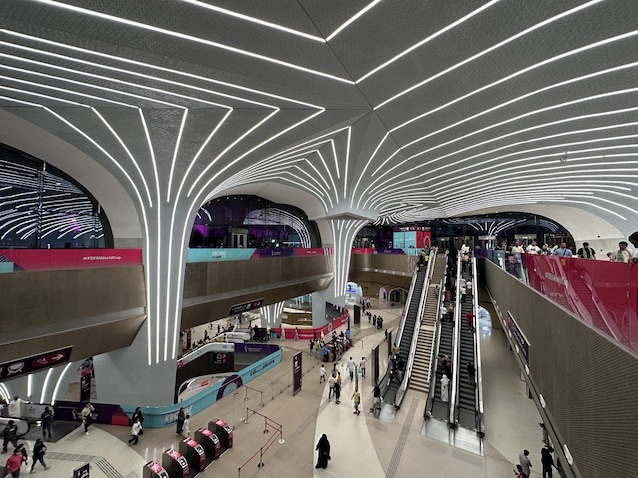
The metro of the city of Dohacapital of Qataris one of the most recent and advanced in the entire world. Inaugurated in 2019 and still under expansion, this rapid transport system includes 3 separate lines And 37 stationsfor a total length of 76 kilometers.
But it is not so much the extension and number of lines that make this subway famous, but rather its cutting-edge features. The Doha subway, in fact, already at first glance gives the impression of being inside a film blockbuster science fiction thanks to the geometric pattern decorations, with stations with a futuristic design, LED systems of high quality.
The trains, guaranteed every 6 minutesI am completely automatedcan reach very high speeds and are managed by computer systems that control every aspect of the journey: departure, stops and safety.
The lines of Chengdu (China)
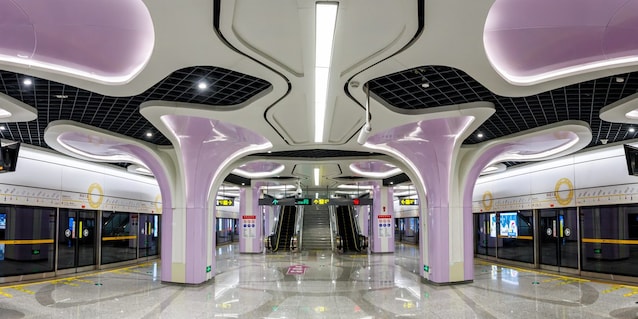
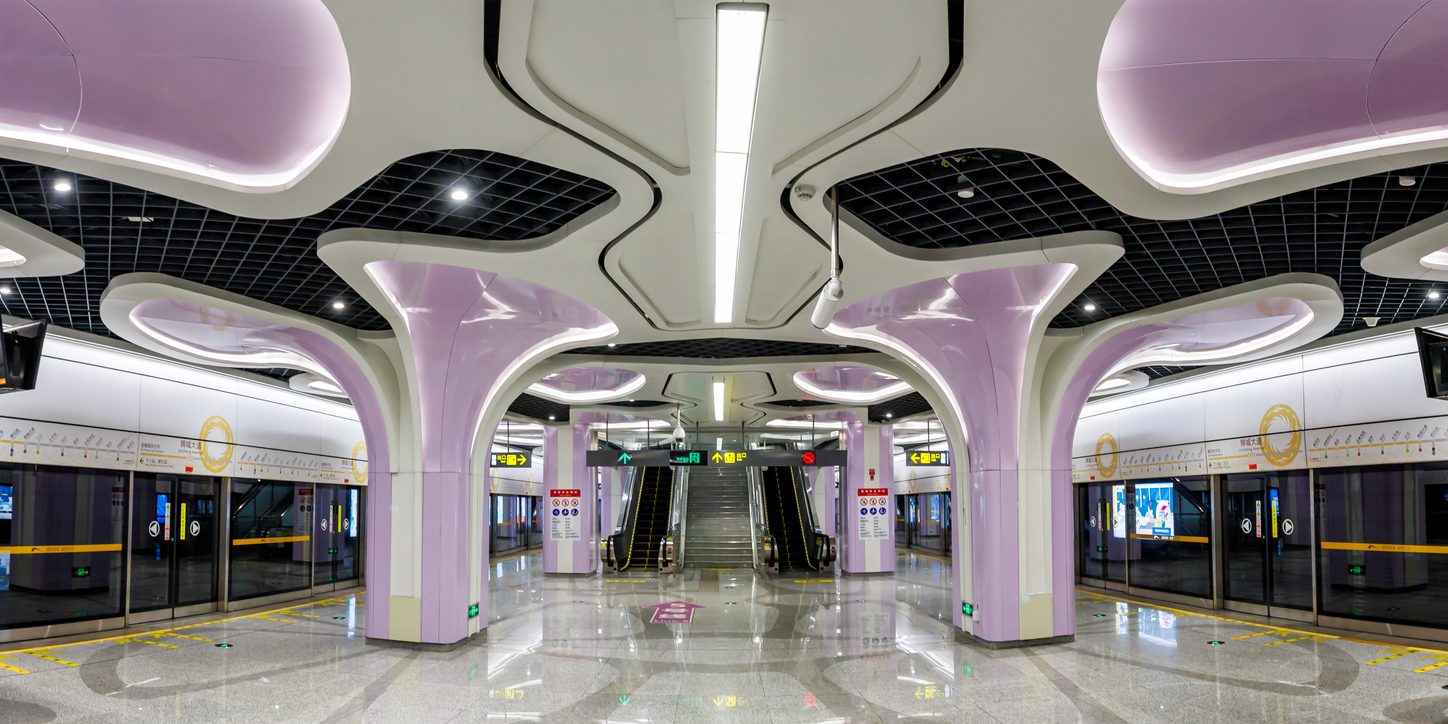
The subway is also worth mentioning Chengducapital of the province of Sichuan in the China southern. This transportation system, inaugurated in 2010, is decidedly mammoth and encompassing 12 lines and 334 stationsan overall development of 515.7 kilometers.
Its peculiarity is the Line 9: fully automated and which does not require service personnel. The interiors of 13 stations that make up the line are designed by renowned architects and designers and stand out for their fluid and dynamic shapesthanks to which it will seem like immersing yourself in the hub of some space station.
Contrary to what you might think, however, part of this design draws inspiration from very ancient elements of local culture. Some of the studios involved, in fact, were inspired by traditional motifs created with Sichuan silk: it is precisely this interweaving of threads and the continuity of lines that are represented in the elegant architectural structures of the Chengdu metro.
Metro stations in Shanghai (China)
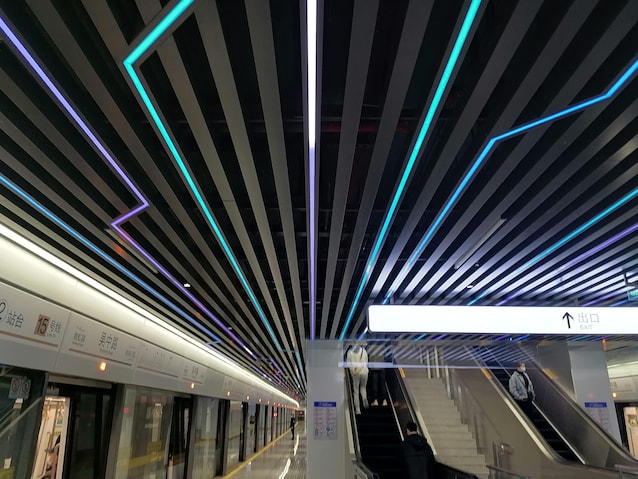
Let’s stay in China to discover the subway of Shanghaione of the largest in the world. It is not surprising, in fact, that this transport system, designed to meet the needs of one of the largest megacities on the planet, includes 20 lines and more than 500 stations on a total development of 840 kilometers.
The Shanghai Metro was born in 1993 and the new lines – like the Line 14the Line 15 and the Line 18 – I am completely automated so that advanced software can manage door opening and closing, car speed and transport safety. The aesthetics of the stations, like the Yuyuan Station and the Wuzhong Road Stationonce again presents motifs that recall futuristic cities with iridescent surfaces and cybernetic brains.
Innovation in Shanghai, however, is not a purely aesthetic choice, but rather an open construction site aimed at mere efficiency: lines driverlesshigh frequency, AI integration and urban decentralization of fast routes will be increasingly important in planning a mobility system that moves daily between 10 and 11 million individuals.
Tokyo subway trains (Japan)
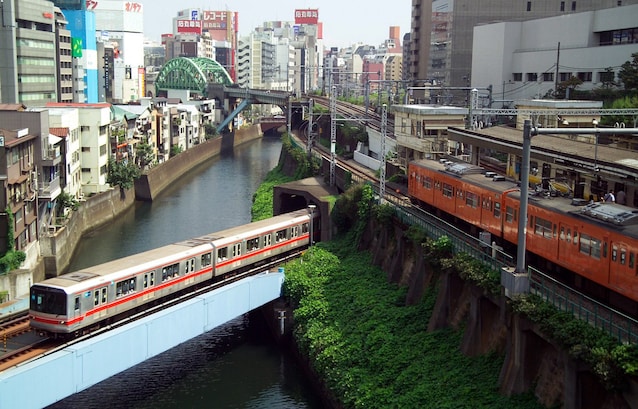
Speaking of innovation and efficiency we couldn’t fail to mention the subway of the Japanese capital: Tokyo. Considered one of city global par excellence, Tokyo incorporates a metropolitan transport system which, when compared to the giants of the Asian continent, almost does not seem to be so extensive with its 13 lineshis 286 stations and an overall length of just over 300 kilometers.
Although at first glance many Tokyo metro stations may not give the impression of being on another planet, especially when compared to the more futuristic ones seen previously, the Japanese transport system focuses on almost perfect organization of complexity. Advanced control systems, intelligent safety technologies, software for extremely efficient flow management, digital signage and guided routes make it possible to optimize the distribution and movement of passengers with trains that respect the arrival time by splitting the second.
The Tokyo subway, in fact, is integrated into an extremely complex system of transport and interchanges that moves every day beyond 40 million people in the heart of one of the largest in the world.
