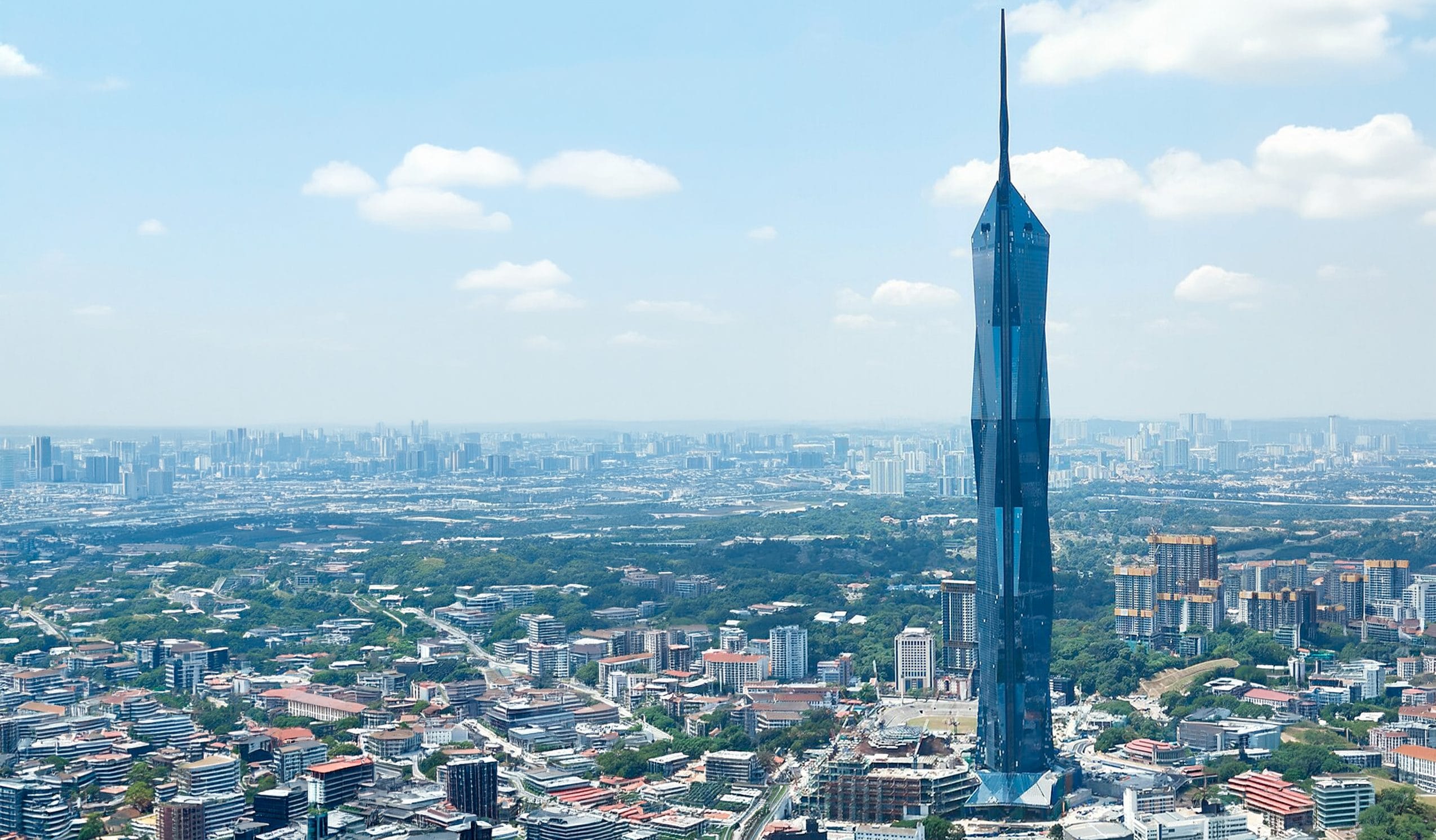
With his 678.9 meters highThe Merdeka 118 Of Kuala Lampur (also known as PNB118 or KL118) is the second tallest skyscraper in the world. Its name is the union of the term “freedom” in Malay and the number of floors this skyscraper has. Inside there is not only a hotel Of luxury but also the highest observatory of Southeast Asia. A huge project, which aims to set the record for the second tallest building in the world, and, at the same time, luxury and sustainability.
The main features of the Merdeka 118
One of the first aspects to consider is the aesthetic appearance of the skyscraper, characterized by over 18,000 glass panels which form a façade of approx 114,000 square meters. This design choice does not only have a strictly visual function: the diamond geometry is designed to “break” the air vortices (vortex shedding), drastically reducing the horizontal aerodynamic load that the wind exerts on the entire structure, with great gain in terms of stability and safety. At the top of the structure we find a gigantic spire 160 meterswhich alone weighs approx 3,500 tons and was assembled internally and then lifted with a high-precision hydraulic jack system.
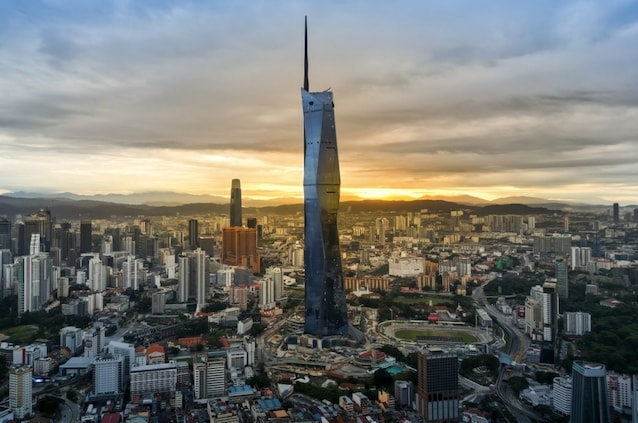
The load-bearing system of the entire skyscraper is formed by a structural system characterized by reinforced concrete very high resistance, with a perimeter steel structure that works redundantly and integrally with the reinforced concrete structure. The central core, therefore, rigid but at the same time elastic in the engineering sense of the term, allows the entire structure to accommodate, with sufficient amplitude, the horizontal load of the tropical wind, characterized by very strong gusts especially in the monsoon period.
This central core is anchored to the perimeter columns via a system of structural belts (outriggers) strategically positioned at the levels of the mechanical floors. These steel elements transfer part of the load from the core to the external columns, drastically increasing the torsional rigidity of the building.
To manage the flow of thousands of people through its 118 floorsthe elevator system consists of a system of 87 units high-speed, capable of moving at impressive speeds, reaching up to 10 meters per second. These systems include “double-deck” elevators capable of optimizing and reducing waiting times, transforming the logistical challenge of a vertical city into a model of urban fluidity.
118 floors, 300 shops: the functional composition
A skyscraper of this size contains 80 floors of luxury offices, such as the headquarters of Permodalan Nasional Berhad. From the 74th to the 115th floor the building develops Park Hyatt Kuala Lumpurwhich offers hundreds of rooms, suites, spas, gyms and exclusive restaurants. The base of the building (podium), however, houses the 118 Malla shopping center with over 300 shopscatering spaces and entertainment areas.
On the top levels is the observatory (the highest in Southeast Asia), with viewing platforms a 360°but also galleries and event spaces. The entire complex also contains underground parking 4 levels, direct connection to the metro station (MRT), attached residential areas and urban green spaces (linear parks) surrounding the structure.
An eye on sustainability
The Merdeka 118 aims for a triple sustainability standard (LEED, GBI, GreenRE) through solutions cutting-edge technologies. The low-emissivity (Low-E) glass coating certainly plays the most important role, because it reflects solar radiation to reduce thermal loads and the energy requirement for air conditioning. The geometry of the building is also designed to maximize natural light, reducing the need for artificial lighting. This strategy is managed by an intelligent control system capable of regulating electricity consumption based on external radiation, optimizing global efficiency. The combination of these engineering and architectural choices defines the skyscraper as a reference model for energy efficiency in tropical climates.
