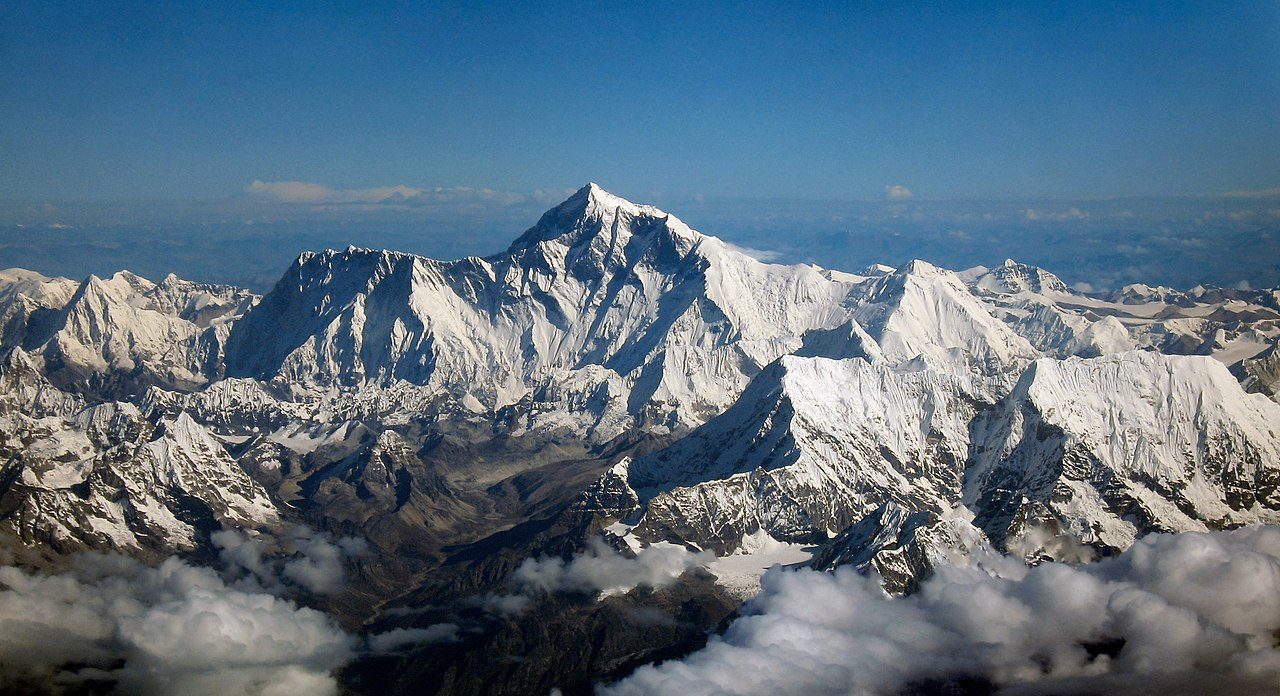
It has been achieved a new record on Mount Everest: the Nepalese mountaineer Kami Rita Sherpa, 56 years old, he reached the summit of the highest mountain in the world for the 32nd time, beating the record he set himself last year.
The mountaineer, who reached the summit at 8849 meters on Sunday 17 May, at 10:12 in the morning, was leading a commercial expedition organized by Nepalese operators in the Himalayan chain. Less than an hour earlier, Lhakpa Sherpa she set a new record for the most ascents by a woman, completing her eleventh ascent and beating herself.
Since the first full ascent in 1953, the summit of Everestlocated in the Himalayas on the border between Nepal and China, it has been achieved thousands of times: the numbers updated to 2025 speak of over 13,500 ascents (including guides), with over 7 thousand people having reached the top at least once. It is estimated that 43% of people who try reach the summit. To date, approximately 340 people have died in the undertaking: approximately two thirds of the people along the South Col (the Nepalese route, easier and therefore more popular) and a third along the North Col (the Tibetan route, more technical).
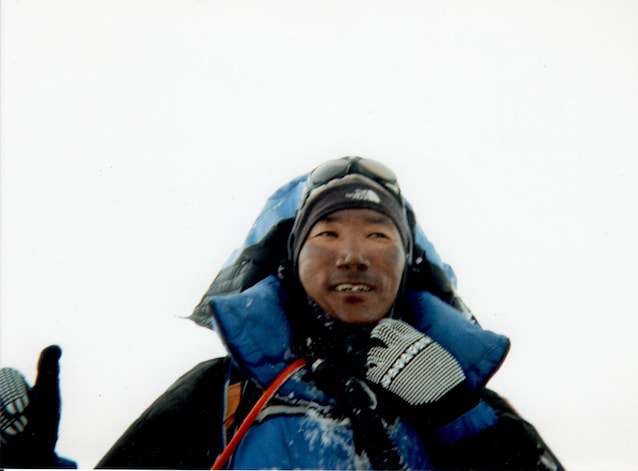
Kami Rita’s 32nd Everest summit and all her other records
Born on 17 January 1970 in the village of Thame, in the Solukhumbu region, “The Man from Everest” it reached 8849 meters above sea level for the first time in 1994while working for a commercial expedition. Since then, almost every year, he has climbed the mountain as a guide.
Kami Rita is from Sherpa ethnic groupa population native to the Himalayan region known throughout the world for their extraordinary ability at high altitude. In common language, “sherpa” is used to generically indicate mountain guides on Everest, but in reality it is the name of a people, with their own language and culture.
His mountaineering career began at the age of 22, in 1992, with participation in an expedition as a porter: just two years later he reached the summit for the first time and Rita has held the absolute record since May 2018 of ascents to the highest peak in the world. In 2017, in fact, he became the third person to reach the summit for the twenty-first time, together with Apa Sherpa and Phurba Tashi Sherpa, who then withdrew, leaving him the record.
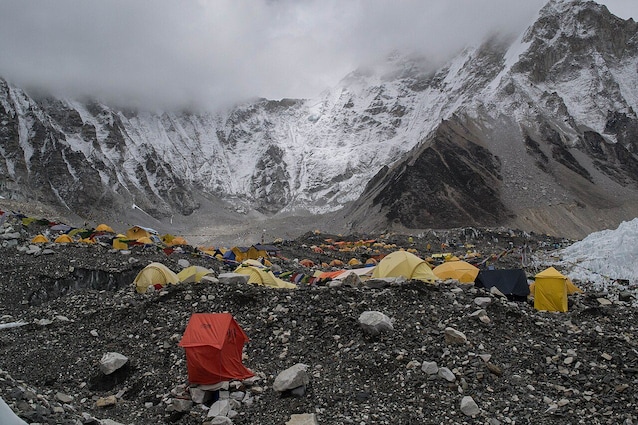
In recent years, Rita has witnessed several deaths: in 2014 an avalanche at base camp killed 17 people, all guides, including five people from her team. It is still the highest number of victims on Everest in a single day. The following year an earthquake caused another avalanche, which killed 19. “There are many risks in a climb, which can always be unpredictable and dangerous. But I continue because I don’t know anything else,” he said in 2018. That year he vowed to climb Everest at least 25 times before retiring: last May 17th Kami Rita beat his own record, dating back to May 27th 2025, reaching the 32nd climb.
The father was among the very first professional guides, since the peak was made accessible to foreigners in 1950. His brother, Lakpa Rita, also a guide, has successfully climbed Everest about twenty times. In these years, Kami Rita also once reached the summit of K2 (8,611 m and whose climbing is considered more dangerous) and of Lhotse; three times that of Manaslu and eight the Cho Oyu. He holds the record for the highest number of 8,000 peaks reached, with 42 total climbs.
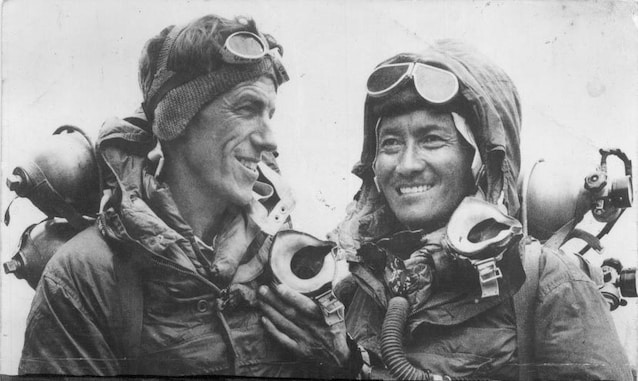
The first climb on the highest mountain in the Himalayas, at 8849 m
In reality, if measured from bottom to top, Everest is not the highest mountain in the world: the record would go to Mauna Keaa Hawaiian volcano that rises “only” 4207 meters above sea level, but over 10 thousand meters from the bottom of the Pacific Ocean. With the name “Sagarmatha” in Nepal and “Chomolungma” in Tibet (meaning Goddess of the sky), the summit of Everest was first reached on May 29, 1953by the New Zealander Sir Edmund Hillary and the Nepalese Sherpa Tenzing Norgay, who placed the flag on the summit at -28° Celsius after having subsisted on sardines and biscuits for days. Tenzing had come within 150 meters of the summit the year before, when he climbed the mountain with Swiss mountaineer Raymond Lambert.
While today every year they are granted between 300 and 500 permits – which, concentrating on a few days which offer a favorable weather window, lead to overcrowding of the street –, at the time it was permitted only one ascent per year: if Hillary’s expedition had failed, it would have been France or Switzerland that would have taken the lead, given that they had already booked the ascent in the following two years. The first eight-thousander conquered, however, was that ofAnnapurna (8.091), on 3 June 1950, by the French Maurice Herzog and Louis Lachenal, whose return was dramatic, due to severe frostbite that forced them to undergo amputations.
Reinhold Messner and climbing without supplemental oxygen
The Italian mountaineer Reinhold Messner he was the first, in 1986, to complete the extraordinary climb of all the mountains that exceed 8 thousand meters above sea level: 14 peaks all part of the Himalaya and Karakorum chain, between Nepal, Pakistan, India and China. Furthermore, he was the first to do it without oxygen, in 1978, together with Peter Habeler, and he did it again solo, from the Tibetan side, two years later: he was the first person to reach the summit alone, on 20 August 1980. In 1973 Guido Monzino had led the first Italian expedition to successfully reach the summit.
Near the top of Everest the amount of available oxygen is about one third compared to sea level: this means that even simple actions, such as attaching a carabiner or taking a few steps, can become extremely tiring, because the body receives very little oxygen. For this reason, most people who climb above 8,000 meters use supplemental oxygen.
Among the over 7 thousand people who have climbed Everest, around 200 have done so successfully without using it (only 1.7% of summits): according to the data, with oxygen the success rate is around 80%, while without it it is just 4%. In September 2025, the Polish climber and skier Andrej Bargiel he climbed to the top and then skied down without tanks, the first person to do so. The record for the number of peaks reached without the use of supplementary oxygen is Ang Rita, a Sherpa who set the record in 1996 with her tenth ascent.
All the other firsts and Everest records
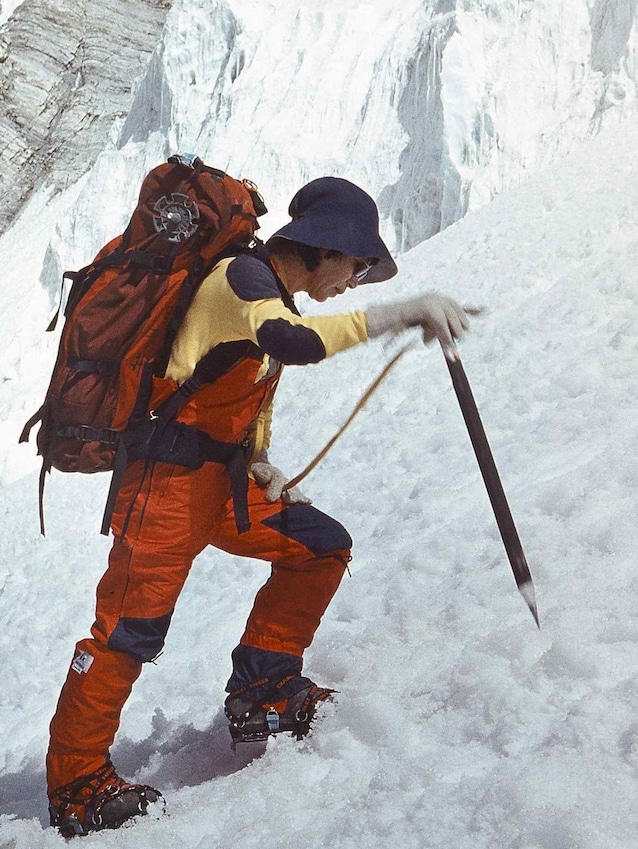
The first woman to reach the summit, the May 16, 1975it was there Japanese Junko Tabeipart of an all-female team. Tabei completed the feat despite having been overwhelmed and buried by an avalanche during the climb: unconscious for six minutes, she was pulled out alive and continued the climb. In the following years it became the first woman to climb the “Seven Peaks”the highest mountains on each continent: Everest in Asia (8,848 m), Aconcagua in South America (6,961 m), Denali in North America (6,194 m), Mount Kilimanjaro in Africa (5,895 m), Mount Elbrus in Europe (5,642 m), Mount Vinson in Russia (4,892) and the Carstensz Pyramid / Puncak Jaya, Oceania (4,884 m).
Between the not Nepalese the one to have reached the summit the most times is the British climber Kentoon Cool, who set the record on 18 May 2025: 19 times. Following are the Americans Garrett Madison and Dave Hahn, with 15 successes. The older climber it was the Japanese Yūichirō Miura: he was 80 years old and had just returned from heart surgery a few months earlier when he attempted the feat in 2013. In 1970 he was the first to ski on Everest. The older woman (73 years old!) was instead, in 2012, Tamae Watanabe, again from Japan. The youngest was Jordan Romero, American: in 2010 he was just 13 years and 10 months. In 2014, the record for the youngest woman (13 years and 11 months) was won by the Indian Malavath Poorna.
Many of the records, however, remain with the locals, who work on Everest as guides: Lhakpa Sherpa became, in 2000, the first Nepalese woman to successfully climb the highest peak in the world and now holds the record of female climbs, completed in 2000, 2001, 2003, 2004, 2005, 2006, 2016, 2017, 2018, 2022 and this year: the mountaineer, born in 1973 into a family of yak farmers, grew up with 10 brothers and sisters, in an area where female education was not foreseen at the time – Sherpa he is still illiterate today. Portartice since the age of 15, on May 12, 2022 he in turn broke a record that already had his name, reaching the summit for the 11th time. A documentary was made about his story in 2023, directed by British director Lucy Walker, “Mountain Queen: The Summits of Lhakpa Sherpa”.
The climb from base camp to the summit, a vertical climb of almost 3.5 km, was rarely completed in one gobecause it takes getting used to the altitude multiple stagesin which you ascend and then descend again in altitude, and intermediate stops to allow the body to acclimatise, for a total of approximately 36 hours. The last climb usually takes 10 to 14 hours. In the 2003, Lhakpa Gelu Sherpa he made the ascent in a single solution, starting from South Base Camp, and using 10 hours, 56 minutes and 46 seconds to reach the top. Usually, those who reach the top last a few minutes: at that altitude, due to the lower presence of oxygen in the air and the very low temperatures, the body is put to the test.
In 2011, Nepalese Bhakta Kumar Rai remained at the summit for 32 hours, 27 of which he spent meditating.
