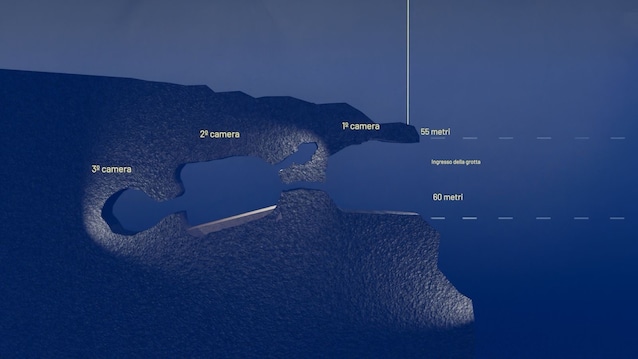
There Devana Kandu cave or “Shark Cave” at Maldiveswhere the five Italian divers lost their lives, is one of the underwater caves that characterize one of the small islands, that of Alimathawhich constitute theVaavu Atoll. These submerged structures, which cross the coral reef and are home to numerous marine species, represent a great attraction for diving enthusiasts. However, these are very insidious and difficult environments to explore, due to the depth at which they are found, the underwater currents of the area and their complexity linked to the geological processes with which they were formed.
How underwater caves in the Maldives originated
To understand the particularity of the underwater caves of the Maldives we must retrace the stages of their formation. The Maldives are an archipelago in the Indian Ocean consisting of 26 atollsring-shaped coral structures that enclose a central lagoon. According to the theory developed by Darwin in the mid-nineteenth century, atolls originated from the vertical development of coral reefs on the slopes of extinct underwater volcanoes. In the case of the Maldives, however, the volcanoes are not located immediately under the atolls, but are buried under a platform of limestone rocks 2 or 3 km thickmade up of the external skeletons of corals, composed of calcium carbonate, which have accumulated over time. Volcanoes are 55 million years old, while atolls are less than 450,000 years old.
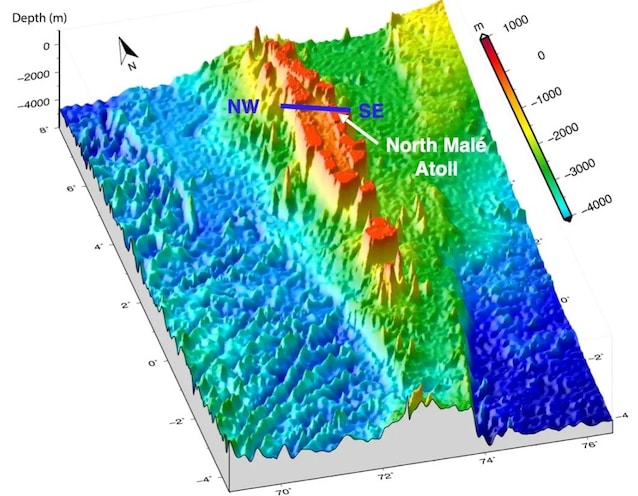
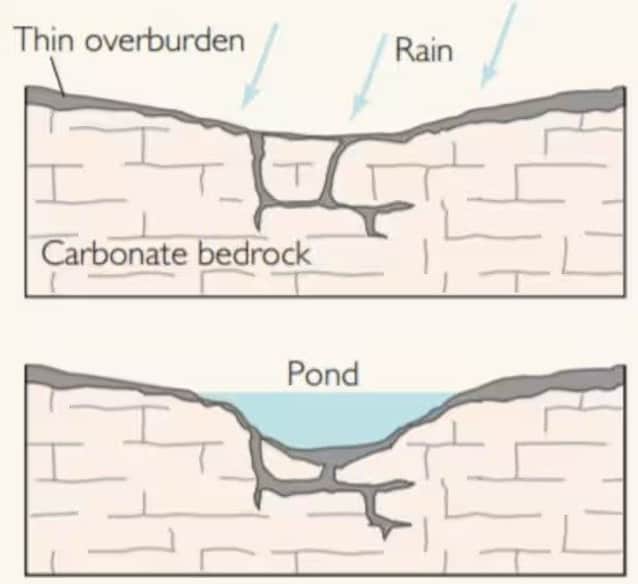
It was the one who shaped the atolls the alternation of glacial periods over the last 2.6 million yearscolder, and interglacialswarmer. During glacial periods the polar ice caps collected large quantities of water and as a result the sea level lowered (about 20,000 years ago it dropped to 130 m). The limestone platform emerged from the ocean and found itself like this exposed to precipitation waterslightly acidic and capable of dissolving the calcium carbonate of these rocks: this is the phenomenon of karst. Over time, the waters have carved into the platform basins with raised edges and by infiltrating the fractures they originate cave networks. Then, when an interglacial period occurred, the ice melted and the sea level rose, submerging the basins and caves. At this point the corals began to grow, faster along the raised edges of the bowls because they were closer to the water surface and sunlight. The phenomenon repeated itself about five times last 450,000 years and the result was the formation of atolls starting from the edges of the basins dug by rainwater, with ever higher coral reefs and ever deeper internal lagoons.
What are the characteristics of the Devana Kandu cave in the Maldives
The Devana Kandu cave, an environment as evocative as it is impervious and insidious, was formed exactly like this. Its entrance is located at a depth of between 55 and 60 m, while its deepest point exceeds 66 m. It is made up of three environmentsof which the first is the most enlightened and consists of ahorizontal opening in the vertical wall of the coral reef, which overlooks the ocean. A narrow passage then leads to a second room, which is instead a completely dark roomwith an extension between approximately 70 and 78 m. This room is large enough and has a high enough ceiling to allow more than one person to move around easily. There is also a small blind cave here. At this point the cave narrows considerably again and you enter a third tunnel-like environmentcompletely dark and extremely narrow, in which even a single person struggles to move. The walls of the cave are entirely made up of limestone rocks, while on its floor there are sandy and even finer sediments. The cave is located at one of the ocean channelsknown as “kandu“, which extend between the atolls, where ocean currents are channeled, gaining speed and becoming potentially dangerous for divers. It is therefore clear how such a complex conformation can represent a serious risk even for the most expert explorers.