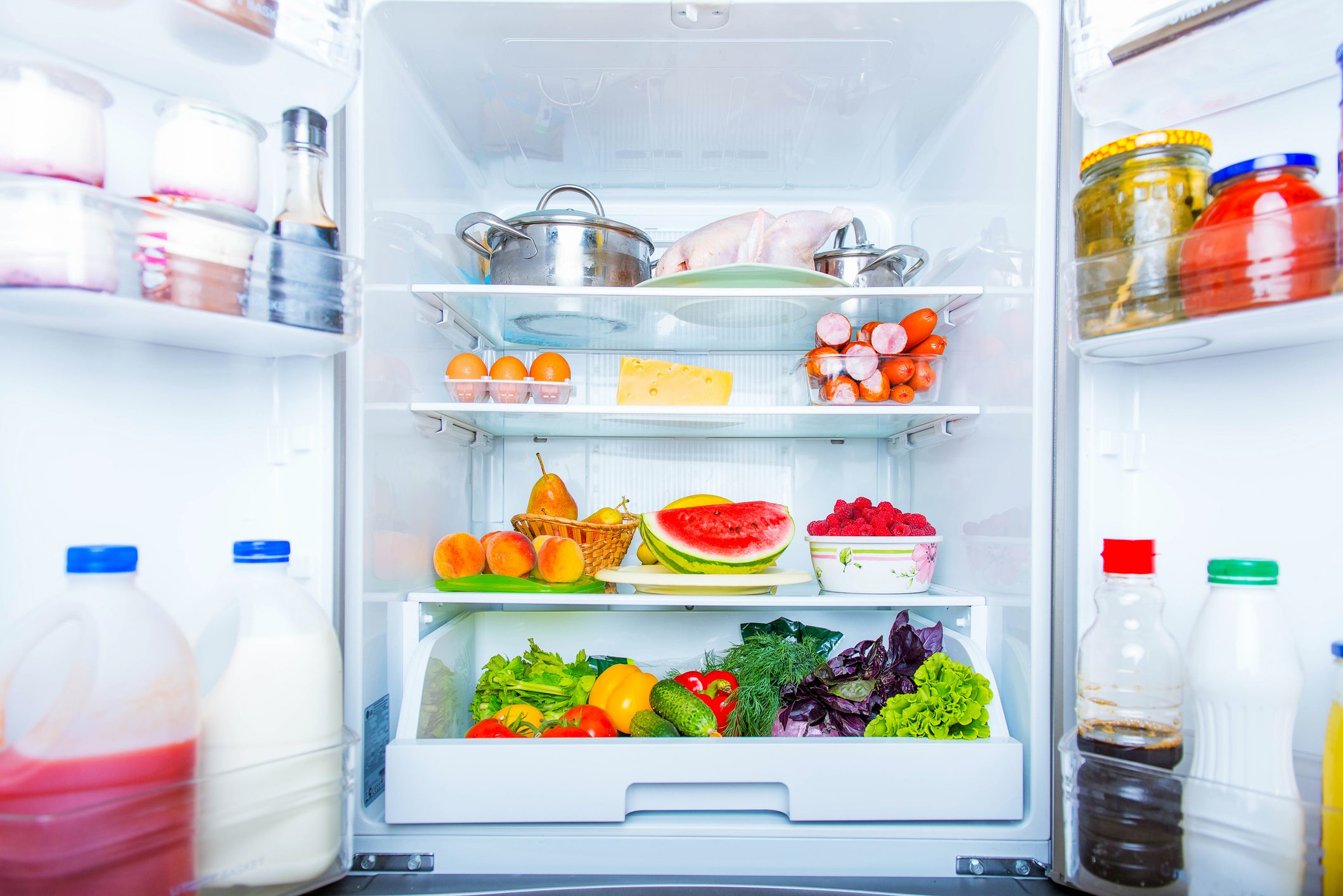
After shopping, we tend to put food in the refrigerator wherever it happens, often without following a specific order. Meat, milk, eggs… Just find a little space, it’s all the same, right? We should actually pay attention: Not all areas of the refrigerator are the same. It’s not just a question of order: let’s talk about food safety and shelf life of foods. Science clearly shows that Not all areas of the fridge have the same temperature: the cold (or rather, the distribution of heat) is not homogeneous and this determines the correct positioning of the various foods. There the coldest part is at the bottom, ideal for foods that require more attention, such as raw meat and fish; the hottest is the doorpreferable for sauces and condiments. If we get it wrong, the milk can last less, the meat can become contaminated and the vegetables can spoil sooner.
Not all fridges are the same: temperature and bacterial risk
The Ministry of Health reminds you that the optimal refrigerator temperature for correct food storage is between 4 and 5 °C. The fundamental thing to know, however, is the distribution of the cold (or rather, the heat) in the refrigerator it is not homogeneous.
Warmer air is less dense than cold air and tends to accumulate on the top shelves. Studies of hundreds of home refrigerators show important differences: for example, a 2024 study measured approx 5.7°C on the lower shelf versus 7.7°C on the upper one.
It seems little, but a difference of two degrees can mean a lot, especially at a microbiological levelreflecting directly on the maintenance of a certain food. Temperature, in fact, influences bacterial growth, which, in general, increases as the temperature increases. A study on milk shows that:
- at 3°C it lasts up to 68 days before deteriorating;
- at 6.5°C it is kept for 27 days;
- at 10°C it lasts just 10 days.
Basically, just put the milk in the wrong area of the fridge to halve or reduce its duration even further.
But it doesn’t end here, other studies, such as the one published in 2023 onInternational Journal of Environmental Research and Public Healthhighlight that not all domestic refrigerators “guarantee” the set temperatureIndeed, in many cases the internal temperature is higher than the nominal one that should be guaranteed by the manufacturer: we may be storing food in less than optimal conditions without knowing it.
At this point we come to the practical part: where do I store the various foods? The Ministry of Health provides us with general indications, linked to the nature of the food, the different temperatures in the various areas of the refrigerator and the risk of contamination.
Door: the hottest area
The door it’s definitely there hottest part of the refrigerator, or rather, it is the one that retains the cold the least. It is logical, if we think that, when open, it is the part most exposed to room temperature: every time we open the fridge, the door loses the accumulated cold. For this reason, it is a good idea to store all those foods that respond better to slightly higher temperatures, such as sauces, drinks or condiments. Absolutely avoid foods that last less, such as milk (common mistake) or eggs.
Central shelves: the area with intermediate temperatures
I’m there “neutral” zone, with the most stable temperature and less affected by opening the fridge. They are great for milk, yogurt, cheese and eggs, however, keeping the latter in their container and separate from other foods, to avoid contamination.
Lower shelf: the coldest area
The bottom shelf it’s there colder area of the refrigerator: if heat enters when we open the fridge, it accumulates higher than at the bottom. For this reason, it is convenient to keep them there more “critical” foods in terms of maintenance and which require lower temperatures, such as raw meat, fish, chickenbetter if still in their packaging. Not only do we reduce the risk of bacterial proliferation, but we also avoid them dripping on other foods placed lower down, contaminating them.
Upper shelves
Being someone else “hot” area of the refrigerator, it is better to store some already cooked or leftover foodor in general foods that do not require conservation at very low temperatures.
Drawers closed
THE drawers instead they should be used for fruit and vegetables. If we want to be fussy, we can use the highest humidity drawer for vegetables, low humidity for fruit and vegetables (it should be underlined, however, that only some refrigerators give us an indication of humidity levels).
