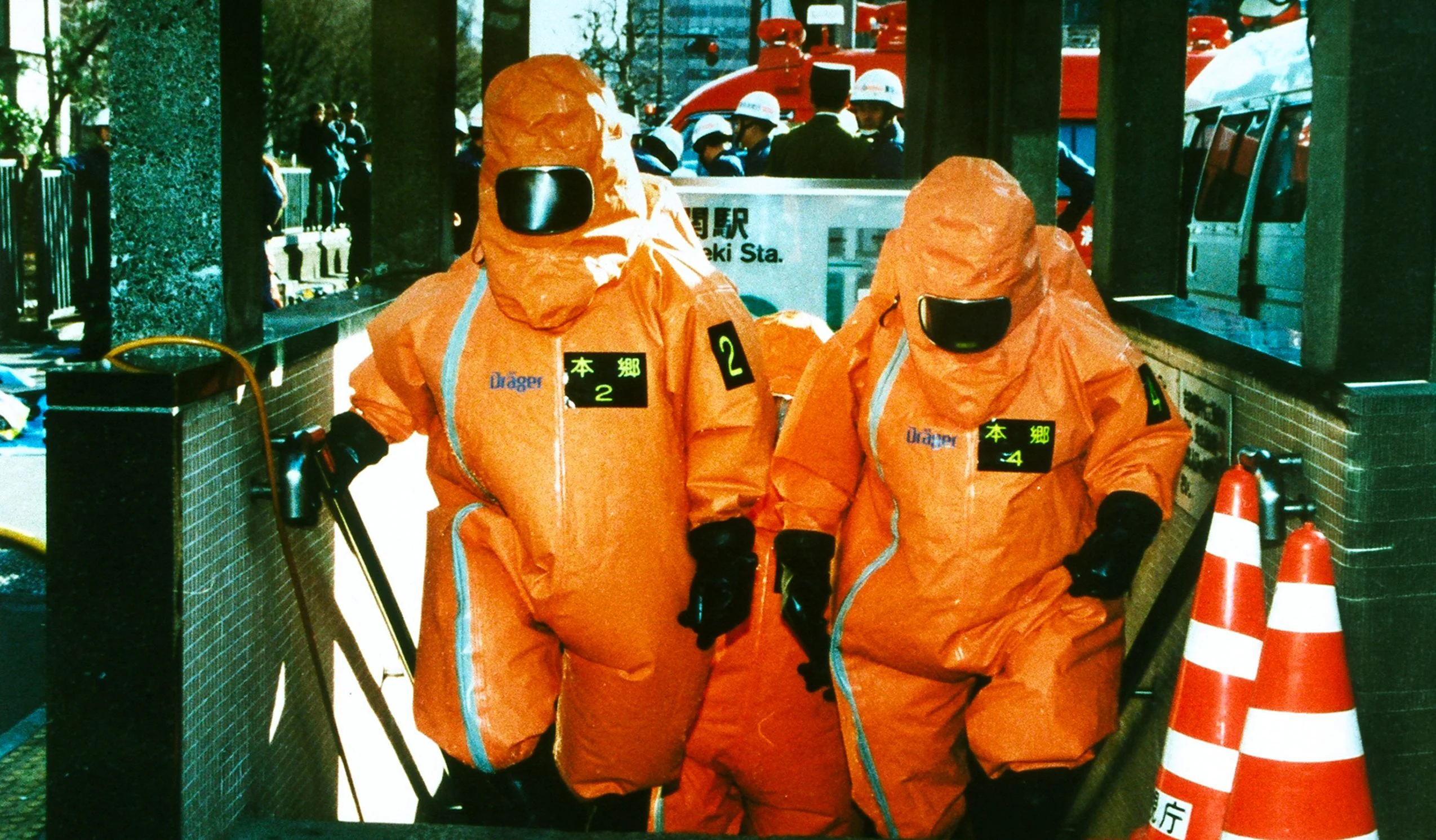
THE’attack on the Tokyo subway with the Sarina powerful one liquid nerve agent, It is one of the most infamous attacks in the history of Japan. The massacre was carried out on March 20, 1995 by members of Aum Shinrikyōan extremist Japanese religious sect, and caused 14 victims and beyond 5,800 injured.
But what were the reasons behind this extreme gesture, considered the largest attack in the Japanese country since the end of the Second World War? And how was it all organised?
To understand this we must first take a step back and briefly see how this sect was born and who it was Shoko Asahara, its founder.
The birth of Aum Shinrikyō, the sect that attacked the Tokyo subway
Aum Shinrikyō (translated into “supreme truth”) was born in the 1980s as spiritual group which mixed Hindu and Buddhist beliefs, with the integration of some Christian elements. He was at the head of this movement Shoko Asahara – pseudonym of Chizuo Matsumoto – who proclaimed himself not only Christ but also the new “enlightened one” after Buddha.
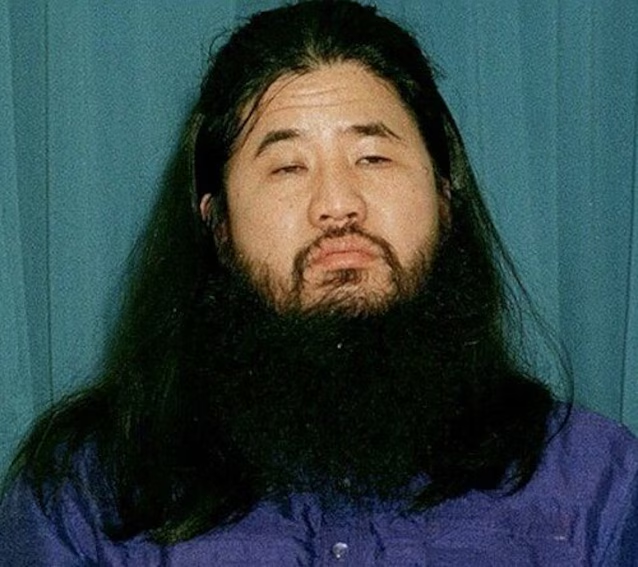
In 1989, Aum Shinrikyō obtained official status in Japan religious organization and managed to have such great success that it recruited thousands of followers all over the world, also thanks to the numerous conferences and books written by Asahara himself. However, beneath this veneer of apparent legality, there was a time bomb waiting to explode.
The extremist drift of the cult sect
Asahara began to develop a worship increasingly focused on one’s own figure. As also reported by the BBC, over time former members of the cult have confirmed that the practice was common pay thousands of dollars only to participate in rituals involving the leader’s hair or bath water.
But it didn’t end there: Asahara became more and more paranoidprophesying the end of the world and going so far as to claim that only members of the sect would saved from the apocalypse. He even tried to enter politics with the idea of founding a new one dictatorship religious… but the defeat in the elections made him change his mind, however increasing a strong resentment within him.
So it was his idea simple And vindictive: if the end of the world was coming anyway, why not speed up the process?
Thus was born the Aum Shinrikyō that everyone has come to know, that of violence, of extremism and gods attacks terrorists – the most famous of which was precisely that of Tokyo subway in 1995.
The day of the Sarin attack: what happened on March 20, 1994
That March 20 it seemed like a day like many others in Tokyo: people went to work and, as always, there meter era Very crowded. But in the midst of that crowd there were also five members of Aum Shinrikyō who, without being seen, left plastic bags wrapped in newspaper full of Sarin, a liquid nerve agent. These were left in five different subway trains on three different lines. The chemical compound was synthesized by two other members of the organization with a purity of 35% approximately. This is a crucial element because if pure Sarin had been used, the victims would have been in the thousands.
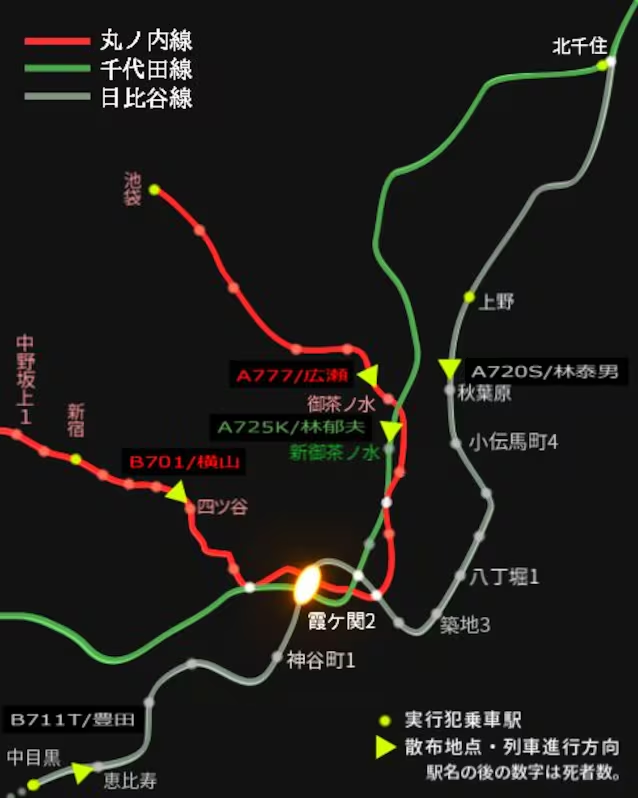
Once on site, the members used special pointed umbrellas to deliberately pierce the bags and allow the toxic compound to escape. This, being highly volatile, quickly became vapor, being inhaled by anyone nearby. Soon people began to not being able to breathe anymorea vomita lose your sight and even many remained paralyzed.
In Kasumigaseki station the employees Tsuneo Hishinuma And Kazumasa Takahashi they performed a heroic gesture: they managed to recover some of the bags from which gas was leaking and move them away from the crowd. This gesture cost him his life but allowed many others to be saved. Unfortunately, however, the overall toll was still extremely serious: 14 victims and a number of injured greater than 5800 – with estimates that even exceed 6000 unit.
After the attack
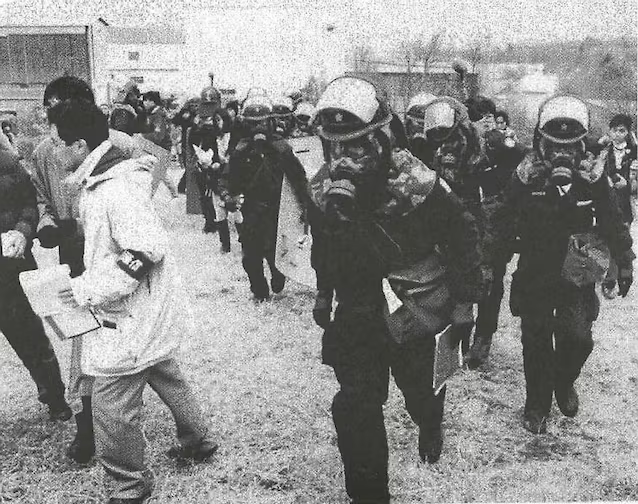
Immediately after the attack, each of the five attackers ran away with their accomplice-driver, losing their tracks. In the months following the attack the group tried to carry out other attacks with hydrocyanic acid, but without success. Finally, after months of investigation, various members of Aum – including its leader – were arrested And condemned to death For hanging.
The Tokyo massacre is a story that is still remembered with pain by the Japanese today and whose legacy can still be seen on the streets of the city. The limited presence of rubbish bins, in fact, is a direct consequence of the attack: the authorities were afraid of possible chemical weapons abandoned inside them and therefore, to prevent it, they chose to remove them from the main areas of the city.
