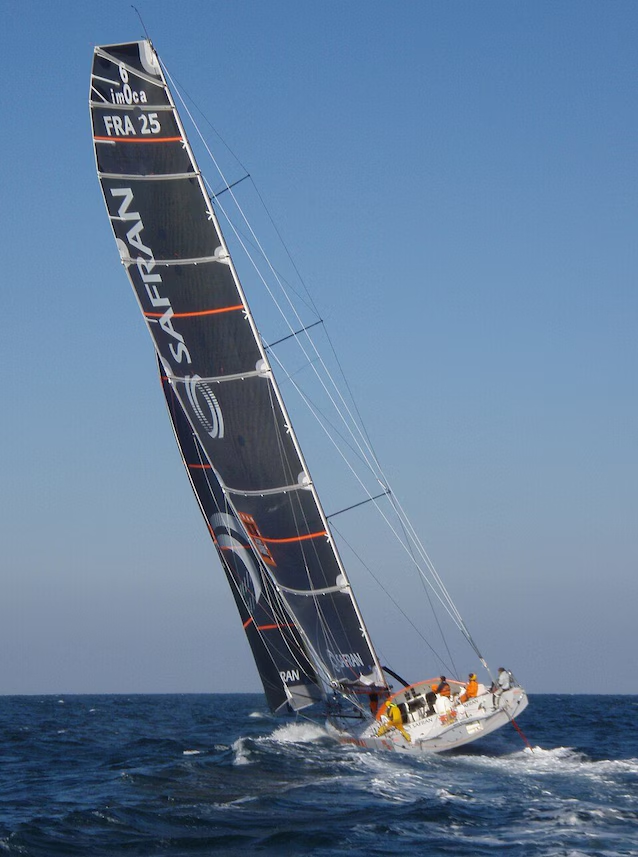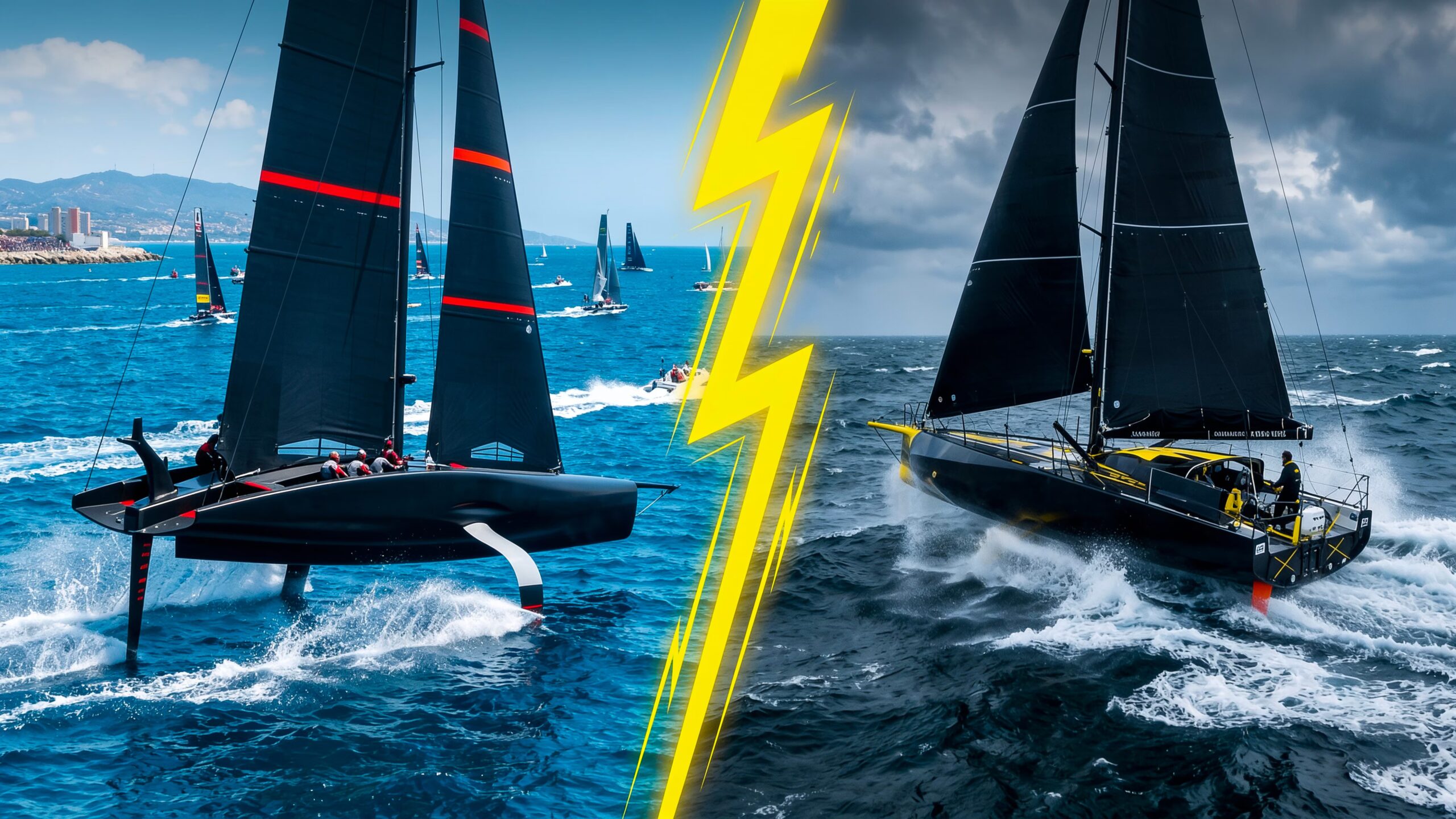
The windfilling the sails of ancient vessels, has been the invisible engine of civilization making possible i tradesdeciding the outcome of the wars and allowing theexploration of new worlds. The technique of the first great navigators – from the Egyptians to the Romans, from the Phoenicians to the Austronesians – evolved slowly, remaining for centuries based on just two primordial forces: the wind hey oars on hulls of wood. Legendary fleets, like those of the Vikings in the Middle Ages, or those of Portuguese and British in the centuries that followed, they pushed innovation by creating iconic ships such as caravels, galleons and large sailing shipssupported by revolutionary discoveries such asastrolabe before and there compass Then.
In the 19th century there was the turning point, the First Industrial Revolution and the advent of steam engine they changed the world of navigation. In a few decades, sailing lost its primary role in transport and military fleets. However, a world rich in history, charm and science could not be abandoned. Sailing has thus undergone a profound transformation, changing its “form” and purpose: from necessity it first became a pastime for a few and then one sport for everyone, by becoming part of the program Olympic already in 1900 (Paris). Precisely in those years, a new era of technological growth. Innovative materials, electronic media and futuristic designs have allowed sailors to overcome limits once unthinkable. From the boats that “fly” on the water in theAmerica’s Cup on solo trips around the world, sailing today is no longer just a challenge against the sea, but a continuous push towards the future.
How the America’s Cup turned sailing into a naval engineering race
The history of sailing has undergone a turning point important at the beginning of the 19th century. The advent of the steam engine made what was the only way to move by sea – using wind power – no longer necessary. Trade, transportation and even warfare could be carried out with motor vessels such as the first steamships and sailing had to find a new life. Around the beginning of 1700 the first ones began to be born nautical clubs or yacht club who promoted sailing as a recreational and sporting activity for aristocracy such as the Water Club of the Harbor of Cork in Ireland (1720) which still exists today and is known by the name of Royal Cork Yacht Club. These clubs created the social and organizational context necessary for the birth of structured competitions.
The event that established sailing as a sport and kicked off the technological race was a regatta held on August 22, 1851 around theIsle of Wightin England. At stake was the “100 Guineas Cup” contested between a fleet of 15 of the best British yachts and a single American vessel, the schooner America of New York Yacht Club. Against the odds, the overseas vessel dominated the race, winning it with a huge advantage.
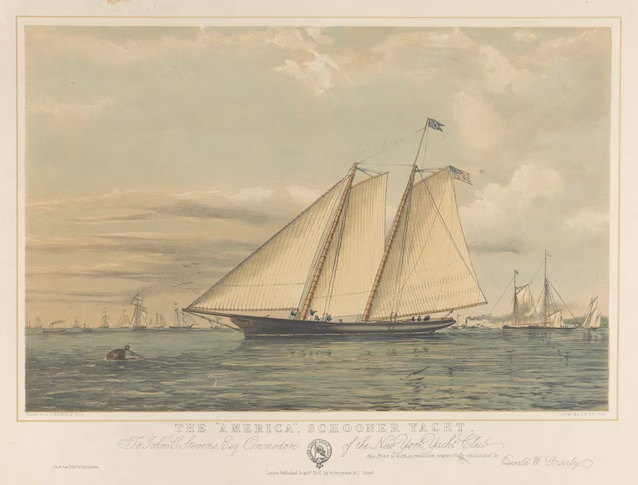
It was clear right from the start that the reason for the American success did not lie only in the skill of the crew but also and above all in technological innovation. The schooner America, 101 feet long (about 30 meters), had sails in cotton tightly woven, much more aerodynamic than the linen sails of English boats.
The cup, renamed “America’s Cup” in honor of the winning boat, it became the most prestigious sporting trophy in the world, establishing a principle that would guide the evolution of sailing for the next 170 years: the search for technological advantage as the key to victory. The history of this competition is one of technological escalation: we have gone from J-Class of the 1930s, to the more contained 12 Meters of the post-war period (with the Italian debut of Azzurra in 1983), up to the boats in carbon of the 90s (with Il Moro di Venezia in the final). The modern era has seen the revolution of “flight”with the introduction of foil which transformed catamarans and monohulls into true flying boats, pushing competition to the limits of engineering.
The pioneers of extreme sailing: the birth of solo world tours
Almost parallel to the birth of sailing as a sporting discipline, consecrated by its entry to Paris Olympics of 1900a man was writing a page of history that would inspire generations of navigators. April 24th 1895the American captain Joshua Slocum became the first human to circumnavigate the globe solo aboard his sailboat Spray. His feat, concluded in Newport (Rhode Island) 3 years later on June 27th 1898was the spark that, over the next century, ignited the desire to overcome human limits across the oceans.
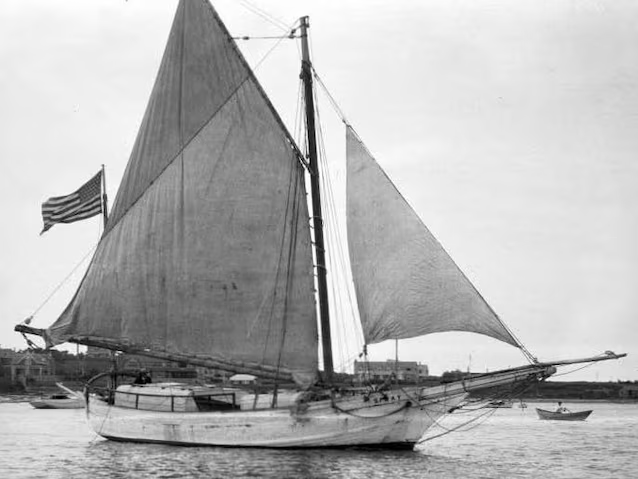
It was precisely in the second half of the 20th century that Atlantic crossings and world tours became popular, giving rise to the first ocean racing.
The most famous ocean regattas in the world and the records of the Jules Verne Trophy
The event that started it all was there Golden Globe Race of 1968: inspired by the exploits of Francis Chichesterwas the first regatta to set the goal of circumnavigating the globe solo and without stopping. The undertaking proved to be extreme: of the nine sailors who set off, only one reached the finish line, Robin Knox-Johnstonmaking the competition the symbol of the human challenge against the unknown. From that first competition the most important modern ocean regattas were born, which have followed in its footsteps:
- The big solo regattas, like the BOC Challenge or Around Alone and above all the idea of Philippe Jeantot, the Vendée Globenow nicknamed the “Everest of the seas”, with its historians IMOCA 60 – 60 foot monohulls (about 18 metres). In the 2024/25 edition the French Charlie Dalin marked the recrod time for the Vendee Globe Of 64 days 19 hours 22 minutes 49 seconds
- Crew stage races, like the The Ocean Raceborn as Whitbread Round the World Race in 1973.
- Transatlantic regattas, like the OSTAR (the Original Star) from Plymouth to Newport, which popularized the crossing of the Atlantic as a sporting challenge.
- Jules Verne Trophy: a crew competition whose goal is to circumnavigate the world in the shortest time possible, regardless of the boat. The record for is held by Francis Joyon who, with the Idec Sport trimaran and a crew of 6 people, completed the tour in 2017 in 40 days, 23 hours, 30 minutes and 30 seconds.
If the America’s Cup is a technological “sprint” in protected waters, these competitions are endurance marathons extreme in which boats must guarantee a perfect mix of reliability, speed and efficiency to survive the worst conditions on the planet.
Sailing technology: the construction secrets of modern monohulls
In current ocean racing, technological evolution clashes with the limits imposed by safety and regulations. Unlike what happens in the America’s Cup, in offshore competitions we have not yet reached complete and constant flight. The main reason is the risk of collisions with UFOs (Unidentified Floating Objects), i.e. unidentified floating objects which, in open sea and at high speed, would make a catastrophic impact.
The most popular boats in these races, such as Imoca 60 used for the Vendée Globe, operate under a “box rule”: a regulation that defines precise parameters within which innovation is permitted. The Imoca 60, in fact, use large foils which are not used to lift the boat 100% from the water, but rather to reduce the immersed surface (wet surface) e increase stabilitywhile still allowing extreme speeds. However, even within the “box rule” revolutionary innovations have arisen. A crucial example was the introduction of “round bow” (round bow) by David Raison in 2013: a design that initially left people perplexed, but which proved to be so superior that it beat everyone else, today becoming a construction standard for modern ocean-going monohulls.