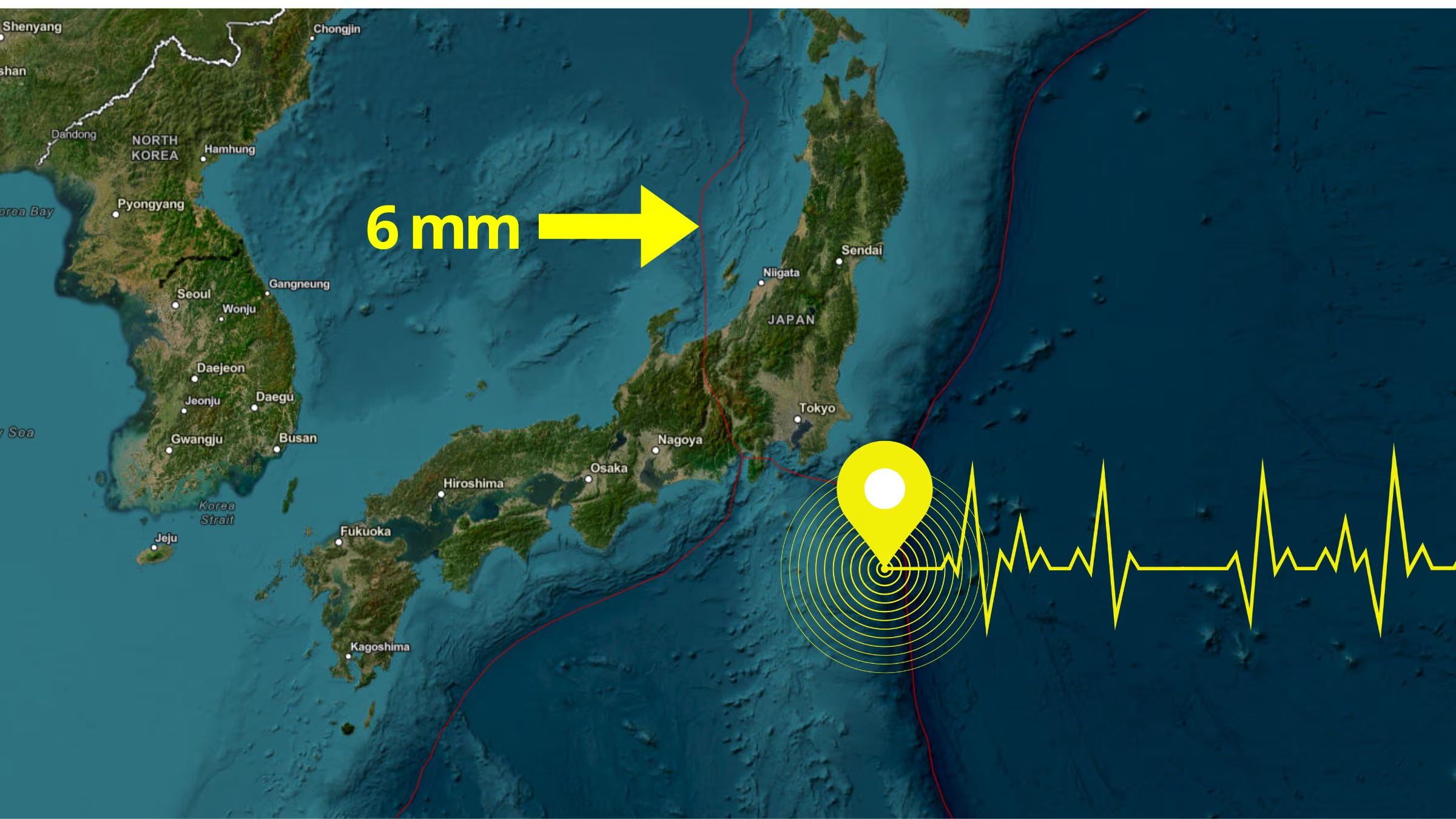
Following the 9.1 magnitude Tōhoku earthquakeThat in 2011 determined one tsunami in Japan with a wave up to 40 m high, the Fukushima Dai-ichi nuclear accident and approx 20,000 victimsthe whole of Japan has moved eastward by 6 millimeters. While this shift may seem modest, it occurred over an extraordinary extent, equal to approximately 3000 km. Furthermore, the slip occurred approx 16 minutes after the main shock and not in correspondence with aftershocks, a phenomenon never observed before. According to a new study, it was caused byseismic wavegenerated by the main earthquake – the most powerful ever recorded in the area – which crossed the Earth until bounce off the core and return to the surface. The study, conducted by the University of Chicago in Illinois and published in the journal Scienceis essential to improve seismic risk assessment.
Japan’s movement eastward
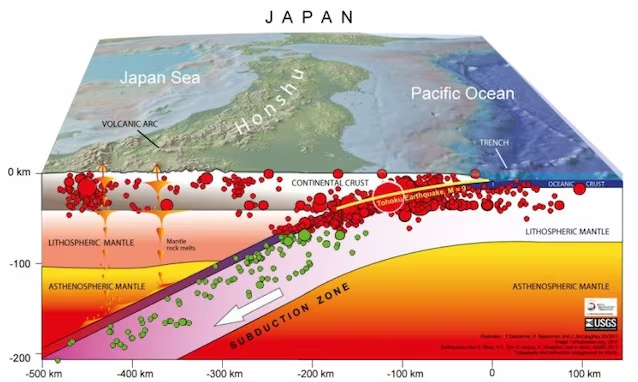
The archipelago of Japan is located along a subduction zonein which the Pacific plate sinks beneath the North American plate. Therefore it is subject to frequent earthquakes of even high magnitudebut none had ever been as violent as the one in 2011. For years, researchers have been trying to understand what geological factors made it so destructive. For example, a recent study attributed its severity to the presence of a ancient and slippery layer of clay in the fault zone, which favored sliding along the plates. One of the most interesting aspects of the event is the Japan’s shift eastward by 6 millimetersdetected by GPS stations all over Japan at the same time. The peculiarity of the phenomenon is that it did not occur in correspondence with the main shock or the aftershocks, but in the time interval between one and the other.
Sunyoung Park, author of the study, states:
Most of the time, we would see a shift like this when there is a real earthquake. But there was no known aftershock here at the time, so we were quite curious
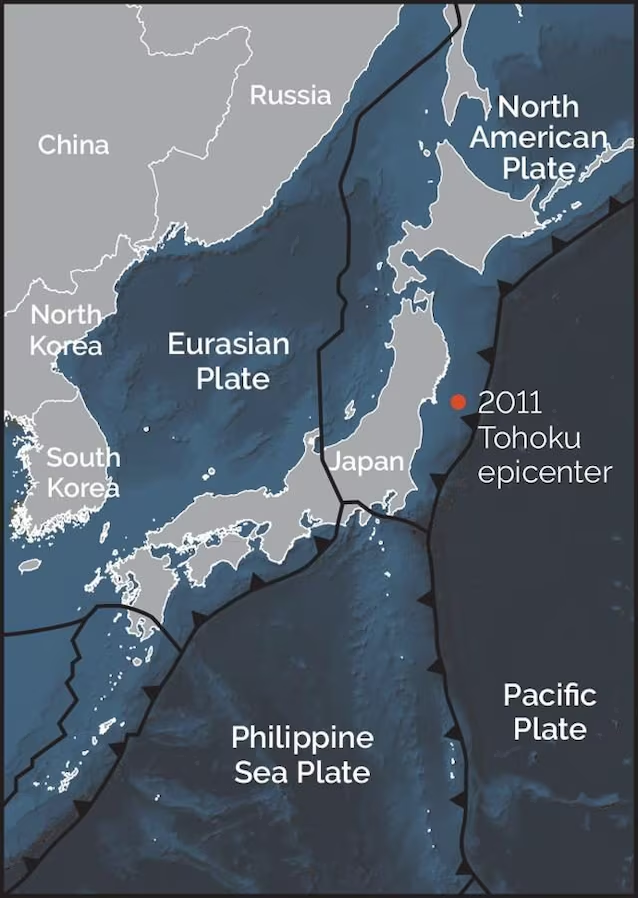
A seismic wave propagated across the Earth for 2900 km: the cause
The researchers then looked into the causes of the shift and after various hypotheses they reached a conclusion. A’secondary seismic wave (so called because it is slower) generated by the main earthquake has propagated inside the Earth for 2900km. At this depth he met the outer corewhich being fluid does not allow the propagation of secondary seismic waves within it. The wave was like this reflected from this layer upwards and traveled another 2900 km to reach the earth’s surface. This journey lasted approx 16 minutes. When it reached the surface the wave triggered one sliding of rocks along the fault between the two tectonic plates over a very large, long area 3000km. The sliding was facilitated by the fact that the rocks had already been subjected to enormous stress and weakened by the main earthquake. This event, although weaker than the main shock, is estimated to have released the amount of energy of a magnitude 7.5 earthquake. Instead of taking place as a single rupture, however, the movement spread across a vast stretch of plate boundary.
Because the mechanism studied is important
Study is important because it is the first time which is observed one movement along a fault triggered by a seismic wave reflected from the Earth’s core. The event highlights how the effects of an earthquake can manifest themselves even after the end of the main shocks, with the reactivation of a fault by secondary waves. In the future we will look for evidence of this type of phenomenon during other large earthquakes. From now on, it will be necessary to take into account the fact that even tens of minutes after the main shock, significant slips can occur which could pose a danger to the population.
