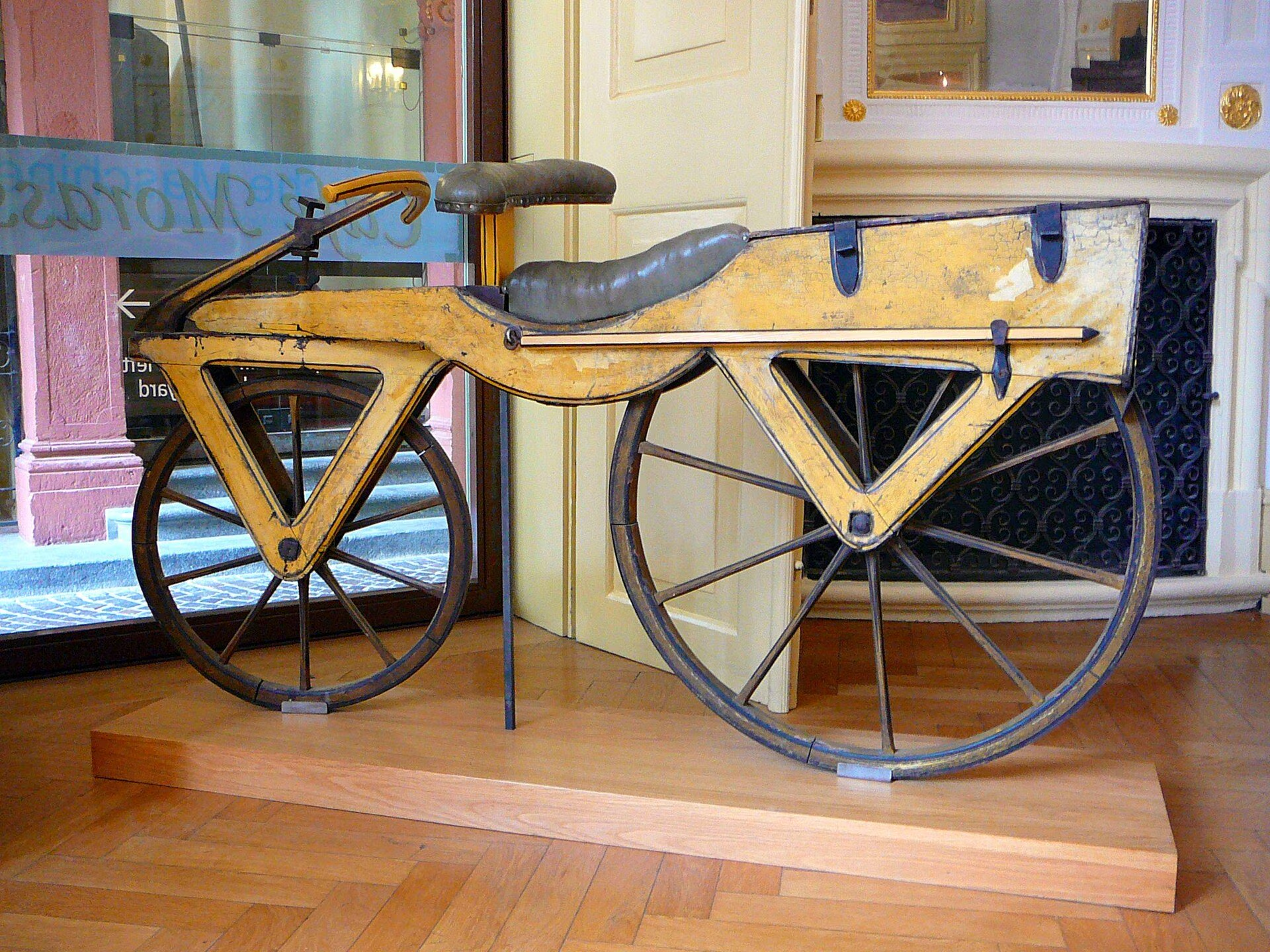
Draisine is a means of transport similar to a bicycle, but without pedals: the propulsion is given by push of the feet on the ground. Like bicycles, the draisine is a wooden vehicle, equipped with a steering handlebarbut it has no brakes. The vehicle was invented in 1817 by the German baron, Karl Draisand spread to several European and American countries. It was mainly used by aristocratsfor many of whom it was a sort of status symbol. It lost its importance in the 1960s, when the French inventor Ernest Michaux built a new vehicle, the velocipedesimilar to draisine but equipped with a new element: i pedals. Shortly afterwards, in the 1980s, the modern bicycle. Today the draisine is a museum object, although there are “working” children’s models, which are used to teach cycling.
What is draisine: history and characteristics
The draisine is a two-wheeled vehicle, composed of a frame similar to that of a bicycle, but without pedals. Propulsion occurs thanks to the push that the driver gives on the ground with your feet. Like current bicycles, the draisine is equipped with a steering handlebar, which allows the driver to change direction without stopping. It is, however, devoid of braking system: to stop, you need to put pressure on the ground with your feet. The speed that can be reached is limited: in average, you go at around 15 km/h.
Impossible ancestors: Leonardo’s bicycle and the celerifero
It is sometimes believed that, before the draisine, other vehicles similar to modern bicycles existed. Their existence, however, is doubtful.
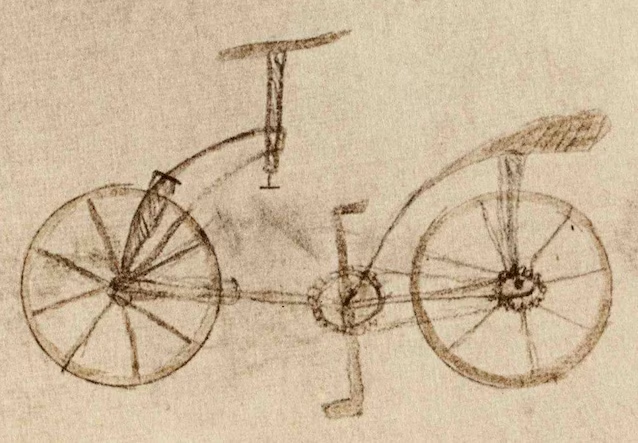
For many years it was thought that Leonardo da Vinci had already designed a a vehicle similar in all respects to a bicyclecomplete with pedals and chain transmission. The bicycle design is present on the Codex Atlanticusa collection of Leonardo’s writings and drawings. In 1997, however, the scholar Hans-Erhard Lessing demonstrated that drawing it was completely incongruous and today scholars agree that it is a later addition: Leonardo did not design any bicycle.
The existence of another possible ancestor of the bicycle is also very doubtful: the celerifero. It would have been a medium similar to the draisine, but without steering handlebar; the driver would have had to stop and turn the vehicle by hand every time he intended to change direction. The celerifero was invented by a French aristocrat, Count De Sivracin 1791, but there is no certain proof of its existence. According to many scholars, the story was invented for nationalist reasons: they wanted to demonstrate that France had invented a two-wheeled vehicle, the ancestor of the bicycle, before Germany.
The invention and history of draisine
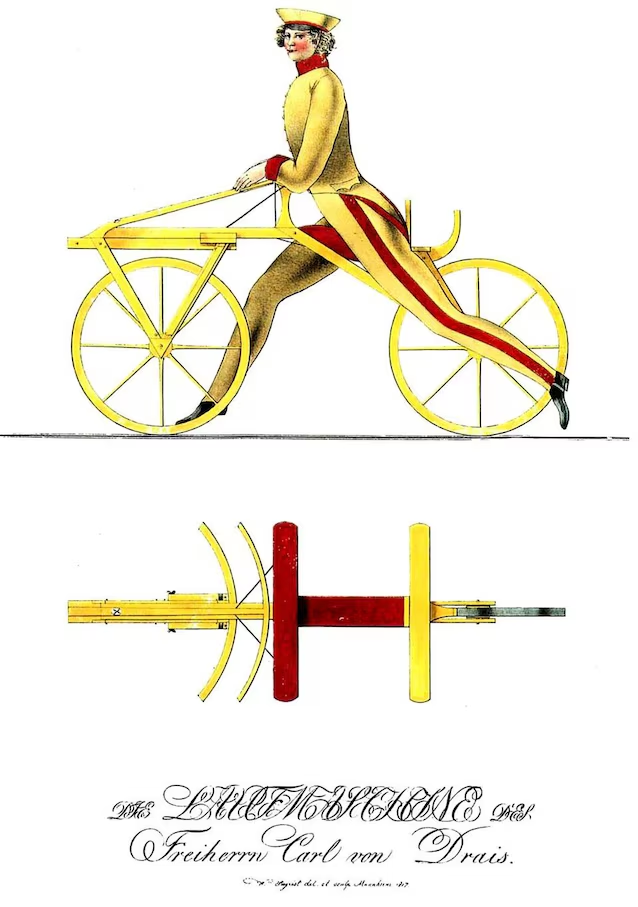
The only certain ancestor of the bicycle is the draisine. The vehicle was invented by a German aristocrat, the count (baron in other sources) Karl Christian Ludwig Drais von Sauerbronnin 1816. According to some scholars, the invention must be connected with the year without summer, that is, with the unusually cold temperatures of 1816, caused by the eruption of the Tambora volcano, and the consequent shortage of agricultural products: since the horses were in short supply due to the shortage of hay, Count Drais would have worked to invent an alternative means of transport. The theory is not proven, but it is certain that in the second half of the 1810s the draisine was patentedwith different names, in various countries. In Germany, Drais gave it the name of laufmaschine (race car). The first public demonstration took place in Mannheim on 12 June 1817
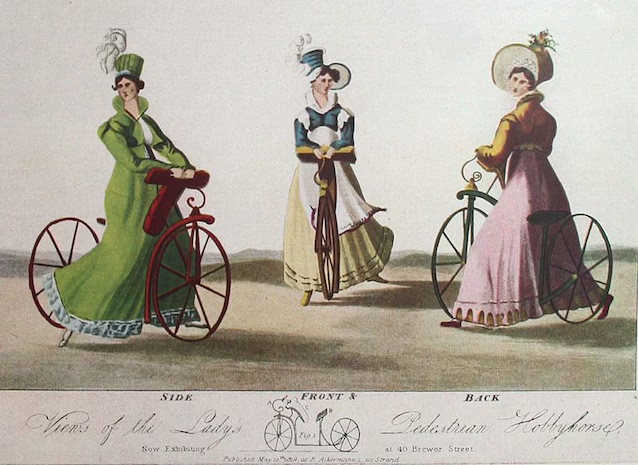
Draisine was mostly used by aristocrats and members of high society. Not being easy to drive, it caused frequent collisions with pedestriansfor which many European and American cities issued ordinances that prohibited their circulation in the busiest areas.
From the first years of its existence, draisine also became a medium for sports competitions. The first demonstration race (according to most sources) would take place in 1819 over a 10 kilometer route.
In the United States, draisine was patented in New York by the inventor WK Clarkson Jr June 26, 1819: for this reason, the day is sometimes considered – unfoundedly – the birth date of the bicycle.
From the draisine to the bicycle
The draisine lost its appeal in the 1960s of the nineteenth century, when a French inventor, Ernest Michauxadded a new element to the vehicle: pedals, which allowed it to provide propulsion without putting your feet on the ground. Originally the pedals were placed directly on the front wheel, which, for this reason, was much larger larger than the rear one. The new vehicle took the name of velocipede (which was the same name given, in some countries, to draisine).
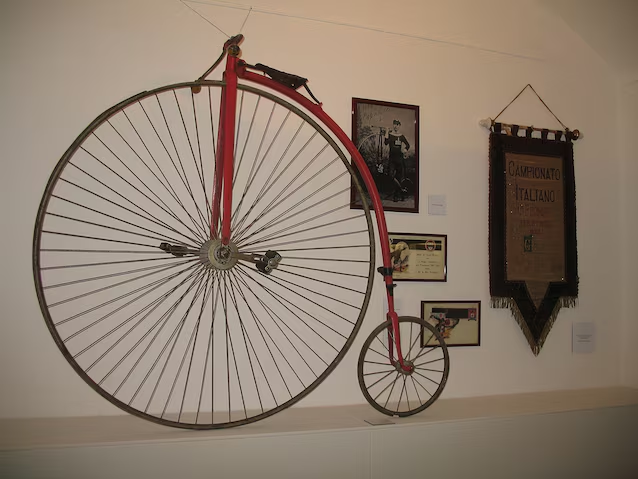
In the 1960s the first, rudimentary, braking systems. In 1884 the English inventor John K. Starley added another element, the chain drivewhich allowed the pedals to be moved from the front wheel to a toothed gear: it was the modern bicycle was born.
The bicycle has definitively relegated the draisine to the world of memories, which today is a collector’s item, present in some museums. However, they still have a practical function draisins for childrenwhich are used to teach balance before mounting bicycles.
