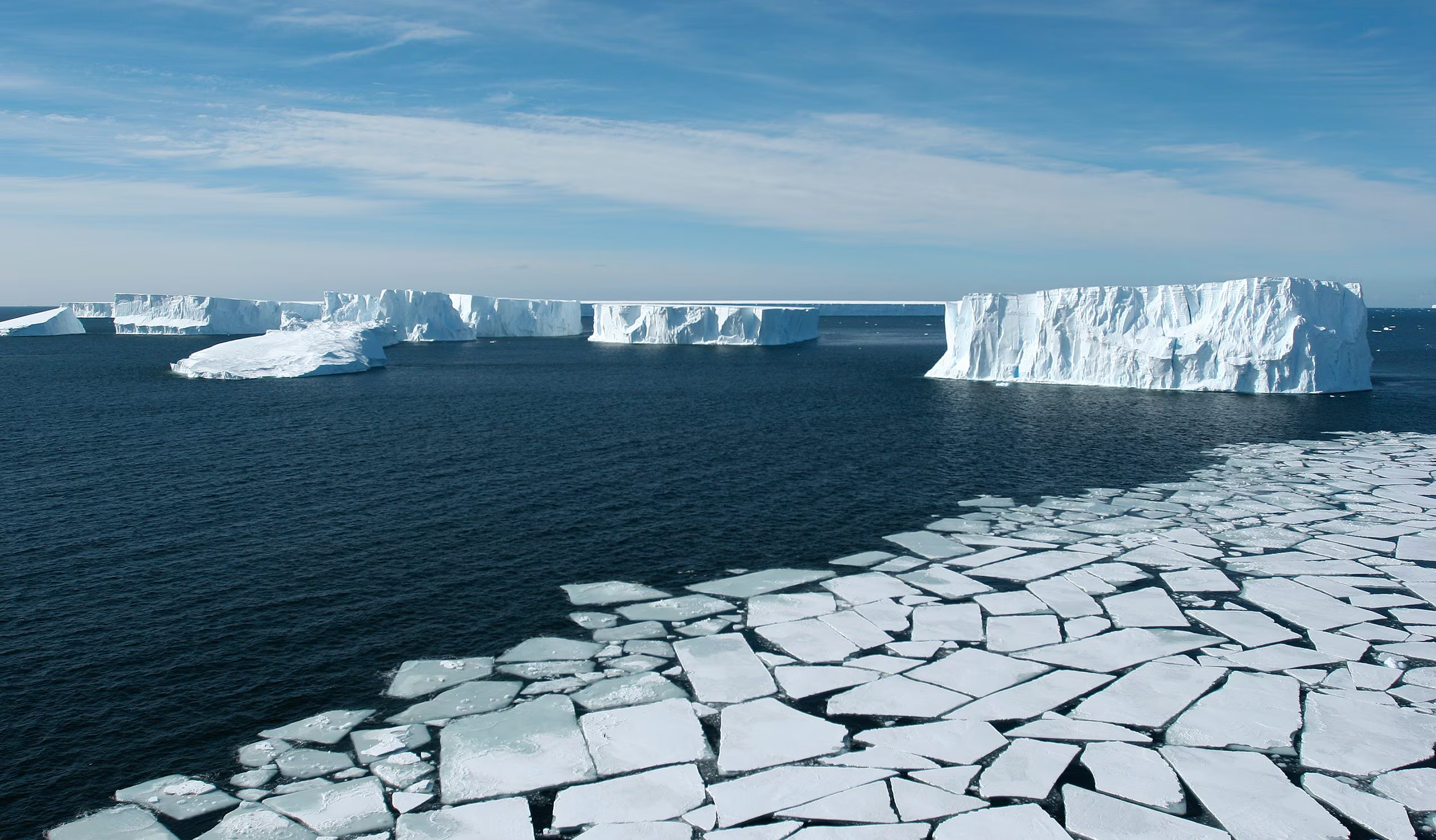
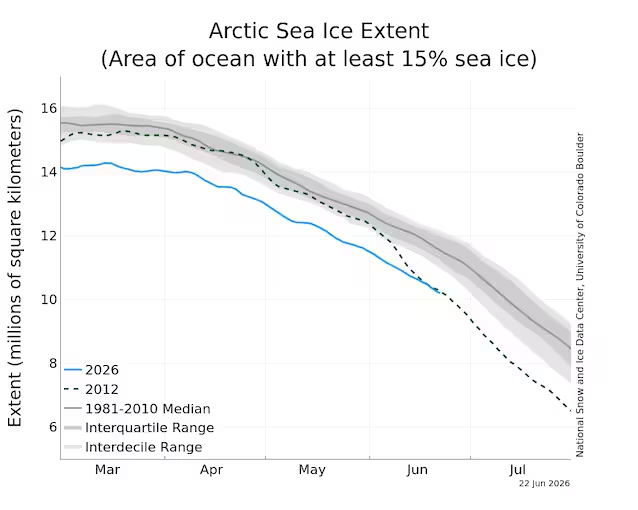
THE satellite data from the National Snow and Ice Data Center (NSIDC) at the University of Colorado Boulder show one of the worrying effects of ongoing climate change: the retreat of Arctic and Antarctic sea icewhich was also significant in 2026. For both polar regions its extension results lower than the average for the period 1981-2010. The most critical situation concerns the Arctic, where in March 2026 theMaximum annual sea ice extent was the lowest since 1979when satellite monitoring began: an unprecedented reduction of 12.5% per decade starting that year. The data confirm a trend that has been observed for 48 years, accelerated by climate change, and which in turn amplifies it, creating a real vicious circle.
What the satellite data shows: the loss of extension
We often hear about the melting of mountain glaciers and ice sheets in relation to the effects of climate change, but we must not forget that the sea ice is an important indicator of the progress of global warming.
Sea ice, which forms when water freezes in the ocean,Arctic it reaches its minimum annual extension in September and its maximum in March. In Antarctica instead the minimum extension occurs in February, while the maximum in September. According to satellite data, Arctic sea ice reached its maximum annual extent in March 2026 with 14.29 million square kilometers. This value is slightly lower than last year (14.31 million square kilometers) and represents the lowest maximum extension in the last 48 years, a sign that the ice is no longer able to recover optimal coverage during the winter.
The minimum Arctic ice extent in September 2025 was instead 4.18 million square kilometersits seventh lowest low on record.
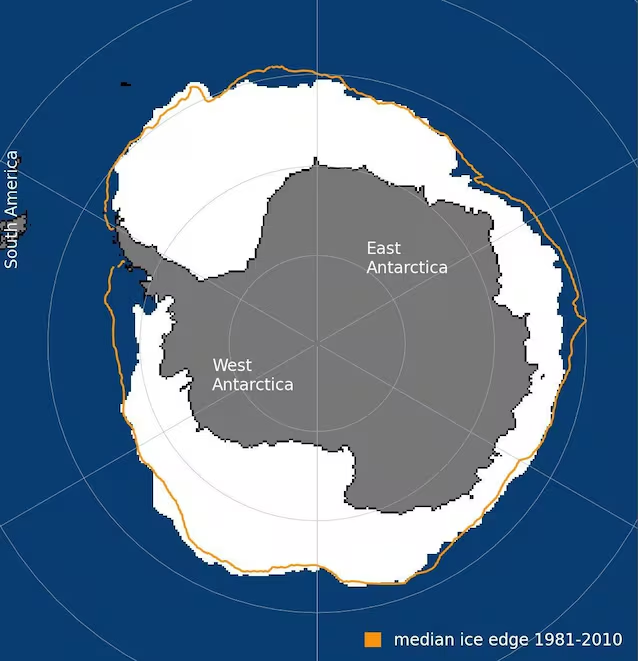
As regards Antarctic sea ice, the maximum extension it reached in September 2025 was 17.81 million square kilometersthe third lowest maximum value recorded since 1979. In February 2026 it instead reached an annual minimum of 2.58 million square kilometers. This is a lower value of 260,000 km2 compared to the average for the period 1981-2010, but above the historical minimum of 730,000 km2 of February 2023 thanks to a meteorological phenomenon that slowed down its melting. In general, due to the different geographical conformation in Antarctica there is a greater variability in ice cover changes and it is more difficult to make predictions about its evolution.
The consequences of the 12.5% drop
Sea ice, being clear, is able to reflect sunlight back into the atmosphere (albedo effect). This causes a large amount of heat not to be absorbed by the ocean. Conversely, when sea ice cover decreases, the heat absorbed by the dark ocean waters increases. A vicious circle is thus created feedback mechanism: Rising temperatures increase the melting of sea ice, leaving the dark surface of the ocean exposed and thus causing further warming. This is why the Arctic is warming much faster than the rest of the planet. Furthermore, sea ice is made up of fresh water, which when it melts is released into the ocean and changes the ocean circulation. In Antarctica, sea ice supports the ice shelves floating anchored to the continent, but with its fusion it makes them unstable, favoring their disintegration. The reduction of sea ice cover it also alters ecosystemsinfluencing the distribution and abundance of marine species. The consequence can be the loss of biodiversity.
