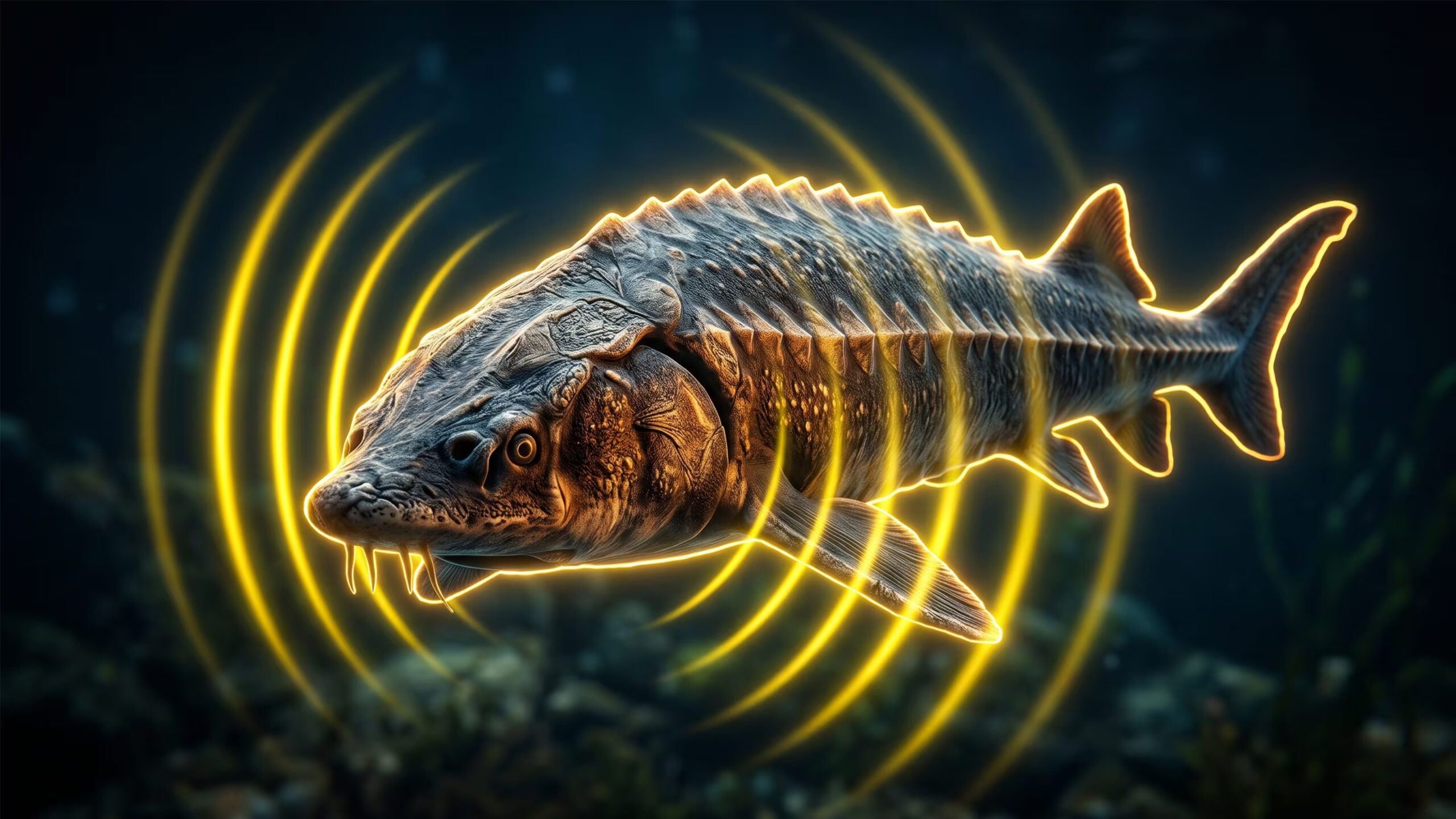
They were captured and recorded for the first time the sounds emitted by the Atlantic Sturgeon (Acipenser oxyrinchus oxyrinchus) in the reproductive phase; news that will particularly excite zoologists and ichthyologists (fish researchers) from all over the world. The discovery, published in the Journal Endangered Species Researchwas the result of the intuition of a group of researchers from the US Cornell University in collaboration with Delaware State University and the Department of Environmental Conservation of the State of New York. The team of experts installed special underwater recorders along a stretch of the Hudson River, to record the calls emitted by a group of Atlantic Sturgeons gathered for the period of reproduction. They have been registered low frequency signals (peak frequency of 44 Hz) comparable according to the researchers to rumble of thunder. The system adopted is non-invasive and does not create any disturbance to the fishbut it allows us to obtain valuable information on the use of the habitat, on the distribution and position of the specimens, on the reproductive activity and also on the interaction between individuals. The discovery is of considerable use for the conservation of this and other species of sturgeon, very vulnerable animals, now a risk of extinction and difficult to monitor their movements in the water.
How sturgeon “rumblings” were detected
Cornell University is no stranger to the world of innovative research bioacousticsscience that studies and analyzes the production of sounds by animals, using sensors, ultrasound detectors and passive recorders. Already in 2025, another team from the same University had developed an innovative system for estimate the number of whales francs of the North Atlantic using underwater microphones and Artificial Intelligence systems. This technique, which has long been used in research in the marine environment, has only recently begun to be used also for freshwater species.
The researchers operated along a stretch of the Hudson River within a Reserve, the Hudson River National Estuarine Research Reserve, a particularly important site for the conservation of the Atlantic Sturgeon. Here, in fact, the focus is the largest aggregation of Atlantic sturgeon being played in the United States. In 2021, between mid-May and June, at the time of spawning, the team installed an underwater passive acoustic recording unit (SoundTrap ST300 recorder) at a depth of approximately 8 meters in a very specific stretch of the river.
Acoustic signals collected underwater were analyzed by AI programs, so isolate the potential signals emitted by Sturgeons compared to all other sounds (both natural and anthropogenic). They were detected some sort of you grumble low-frequency signals with characteristics similar to those of “thunder” and such signals were considered potential sound emissions from Atlantic sturgeon.
The confirmation and importance of the discovery
Subsequently, in the summer of 2024, to validate the sounds recorded in the Hudson River, recordings were made within breeding tanks where adult specimens of Atlantic sturgeon bred in captivity were placed. The sounds were identified and it was possible confirm that they are emitted during the reproductive phase. The emissions have a median duration of 1.9 seconds, are characterized by a series of pulses (in the 10–100 Hz band) and with a frequency of peak of 44 Hz. They were emitted only on the day of spawning, therefore, this signal will be particularly useful for identify breeding sites and to characterize the timing and size of reproductive groups.
Atlantic sturgeon have never been characterized acoustically before and the discovery is fundamental to protect the breeding sites of species at risk of extinction, allowing them to improve their protection.
Sturgeons, ancient fish at risk of extinction
Sturgeons represent an entire Order of prehistoric fish (Order Acipenseriformes), considering that the first fossil remains date back to the Jurassic. There are 25 known species, all belonging to the Acipenseridae family and distributed in the northern hemisphere, the upper “half” of the Earth where we also live. All are at risk of extinction albeit with different levels of vulnerability, so much so that sturgeons can rightly be considered the “Pandas” of aquatic environments.
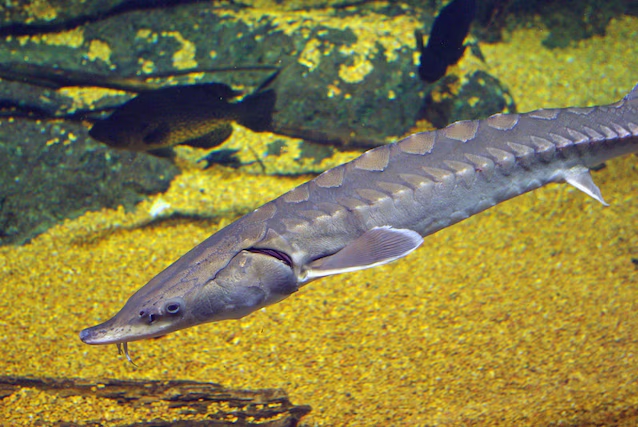
Evolved about 200 million years ago, they have maintained some primordial characteristics such as, for example, the 5 row of bone shields present on the body. They are long-lived (they can live up to 100 years), but they have notable body growth, despite being very slow: some species can even reach 8 meters in length and 1500 kg in weight, as reported by the University of Padua. They live most of their lives in the sea, become sexually mature after a few years of life and migrate towards river waters to reproduce, like salmon do; this is why they are defined anadromous fish (i.e., which go up the currents of the rivers).
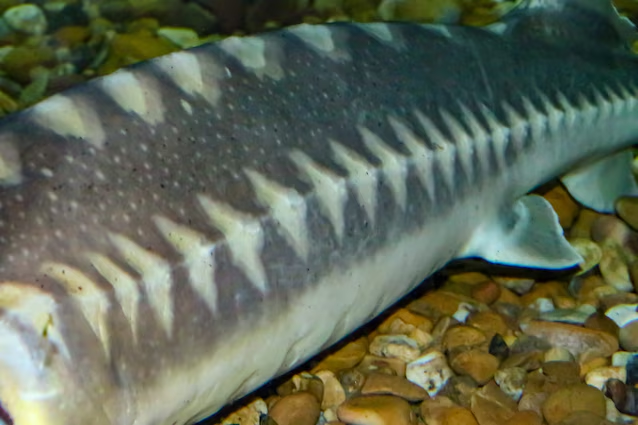
The Atlantic sturgeon (Acipenser oxyrinchus) occurs in marine and riverine habitats in eastern North America, and adults move from the Gulf of St. Lawrence to Florida. Even in Italy, in the rivers of the Po Valley and in the northern stretch of the Adriatic, three species of sturgeon lived: the Cobian or Adriatic sturgeon (Acipenser naccarii) still present, but currently classified as critically endangered, it Sturgeon labdanum (Huso huso) and it Common sturgeon (Acipenser sturio) now locally extinct in the wild. Intense fishing and poaching, barriers and dams along the rivers, modifications to the aquatic habitat have decreed their high status risk of extinction. For this reason, research projects are underway in Italy that allow individuals to be monitored in the wild or to be bred and reproduced for release along rivers, such as the LIFE RESTORE project coordinated by the University of Padua and involving various Italian institutions and universities, which are of international importance.
