
Road barriers, such as guardrails or barriers New Jerseyare not simply objects that delimit the roadway, but rather represent a engineering system passive and sophisticated, designed to absorb kinetic energy of out-of-control vehicles, suitable for contain any straying vehicles and at the same time limit the impact effects on passengers.
Their effectiveness is conditioned by a delicate balance between the mass of the impacting vehicle, the angle of incidence of the impact and the intrinsic ability of the barrier to deform without generating lethal decelerations for the occupants of the passenger compartment.
The physics of impact against road barriers
A moving vehicle has akinetic energy proportional to its mass and the square of its speed to which he is traveling. When the vehicle deviates from the road trajectory and hits a barrier, this energy must be progressively transformed into other forms of energy. If the transformation occurs without particular guidance, the impact forces are exerted entirely on the vehicle and passengers, causing serious injuries or even death. The job of the guardrail is dissipate safely these actions, directing the energy transformation through the engineered collapse of its components.
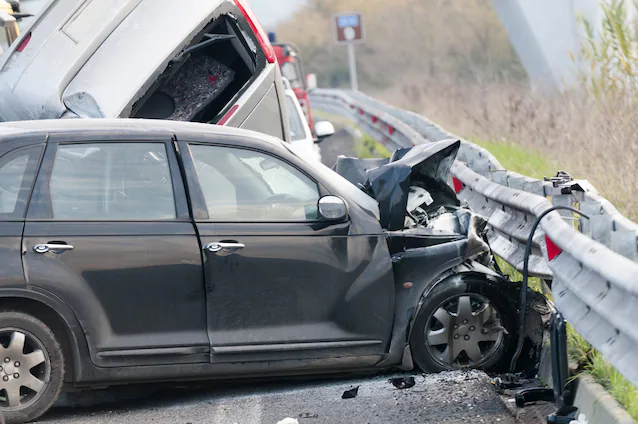
How to design a metal guardrail and what it is used for
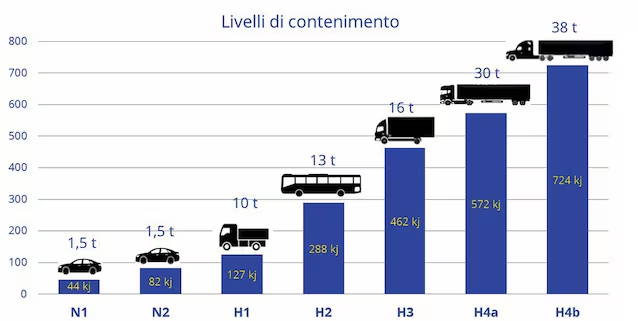
A barrier is designed based on various parameters. Among the most relevant is the containment levelwhich defines the ability of the barrier to hold the vehicle preventing it from leaving the roadway. Barriers for light impacts in urban contexts are classified low containment (are initialed as N1, N2), while the maximum containment levels apply on motorways or on very high risk sections such as bridges, viaducts and embankments (initialed as H4a, H4b). The containment level is essentially defined as based on the impact energytherefore in relation to the kinetic energy of the impacting medium.
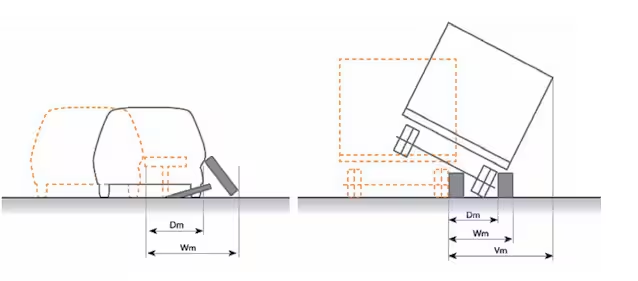
Other design parameters have to do with the geometry of the barrier. In particular, the working width, there dynamic deflection el’intrusion. These units establish the physical space of which the barrier needs to deflect laterally during the impact, becoming permanently deformed. The movement of the guardrail (in Italian “safety barrier”) must not come into conflict with stable and rigid secondary structures, such as the piers of an overpass. The operating width, therefore, must always be less than the space that separates the barrier from the fixed obstacle, otherwise the vehicle would still impact against the latter, obviating the protective role that the barrier should offer.
Last, but not least, are all those criteria that have to do with protecting the health of passengers and drivers. As a result, i severity levels are the biomechanical parameters measuring the severity of the impact in relation to the consequences it has on the human body. THE’ASI (Acceleration Severity Index), for example, measures theintensity of decelerations suffered by passengers during the crash. The human body has a limited tolerance to sudden changes in speed; going instantly from 130 km/h to zero can cause lethal internal injuries to vital organs even without a physical impact directed against the sheet metal, due to the kickback alone. Another important indicator is the THIV (Theoretical Head Impact Velocity), which measures the speed with which the head impacts on a generic surface due to the impact.
The difference with barriers New Jersey in concrete
The types of road barriers in use today are divided into two large construction families whose physical responses are diametrically opposed: i steel guardrails and the concrete barriersknown as New Jersey.
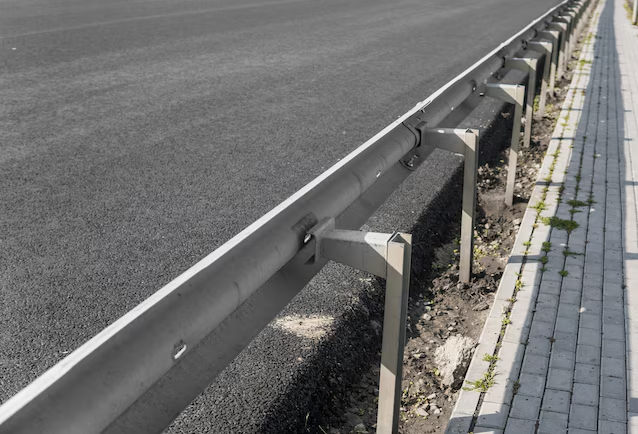
Metal guardrails exploit the principle of metal plasticization, i.e. the material’s ability to withstand the load deforming irreversiblybut without fracturing. The system is made up of vertical uprights driven into the ground (or flanged onto curbs), spacers and double or triple wave profiled strips. During impact, the vertical elements they bend progressivelyabsorbing the kinetic energy, while the horizontal belt holds the vehicle working like a large rope. This mechanism guarantees very low ASI indices, protecting the safety of passengers as much as possible, at the expense of the total destruction of the barrier, which will therefore have to be entirely replaced after the accident.
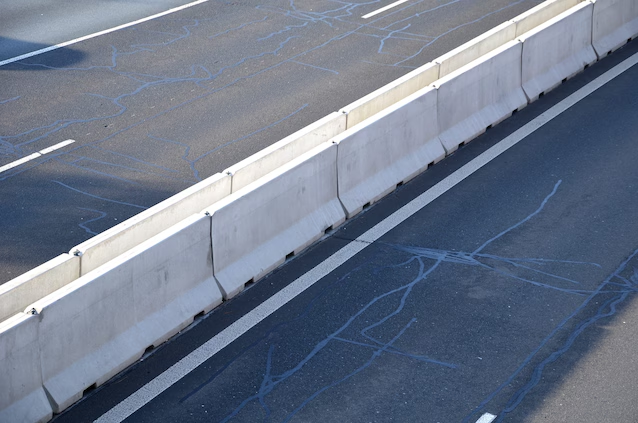
The barriers New Jersey of concrete, on the contrary, are heavy and rigid systems, which suffer reduced permanent deformations. The physics of their operation essentially lies in the specific geometry of the side profilewith variable slope. During impact, the shape of the concrete allows for a slight impact lifting the car wheeldissipating part of the energy by friction and temporarily raising the vehicle’s center of gravity, a condition which generates an increase in gravitational potential energy at the cost of part of the kinetic energy possessed by the vehicle. As a result, the vehicle realigns itself with the roadway due to the combined effect of friction and gravity. The New Jersey reduces post-accident maintenance costs and tends to prevent lane jumping, but returns very severe decelerations (high ASI), making it dangerous in the event of impacts with high angles of incidence and high speeds.
