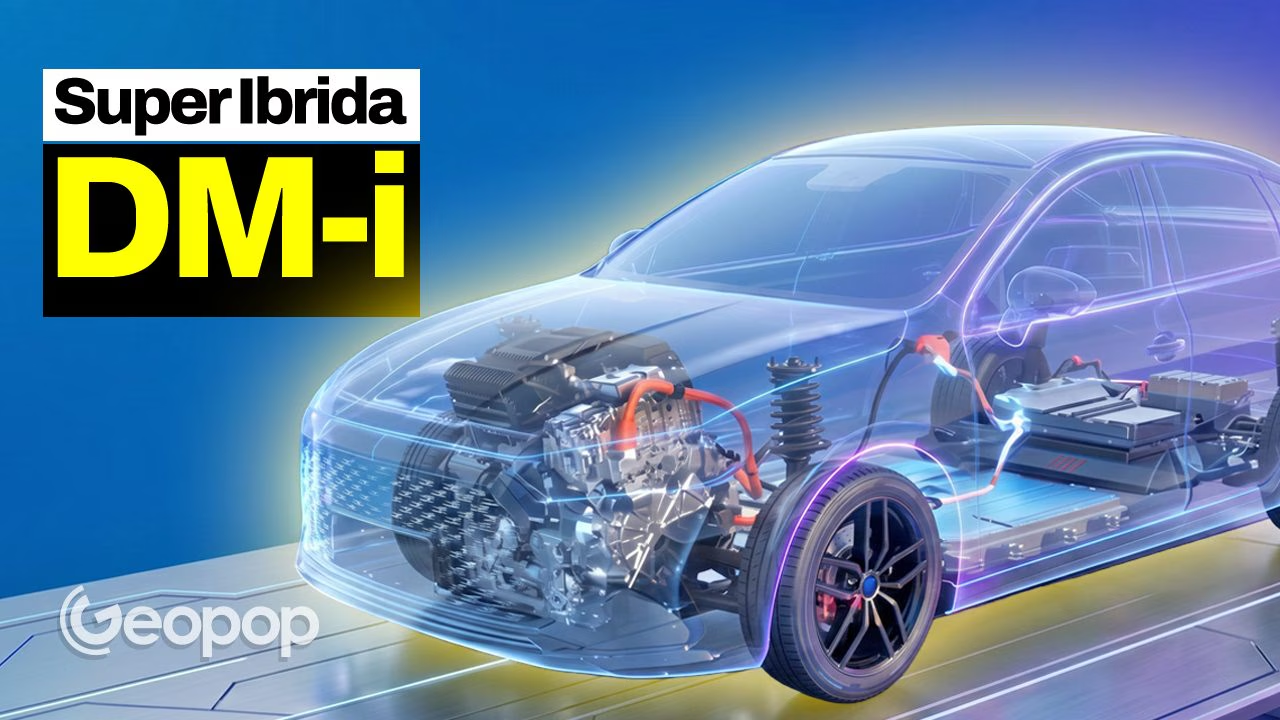
Observe even just in 3D what’s under the hood of a carhybrid car can be truly surprising: between battery pack, combustion engine and electric motor, there are more components than you might imagine. And not everything is as it seems: in fact, you just need to get close to the electric motor to discover that, in reality, there is not just one, but two. It is from this discovery Our video starts, in which we analyze BYD’s DM-i technology in detail.
What is DM-i technology and what does it change
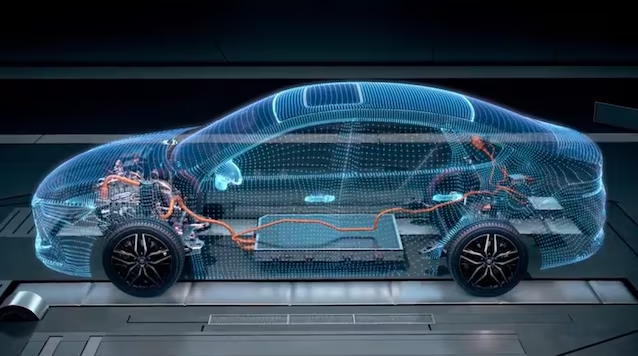
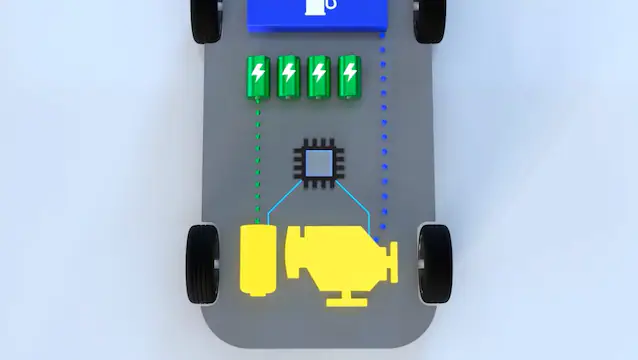
The DM-i technology present on BYD’s hybrid cars is a variant of the plug-in system, but with a fundamental difference: here it is not the thermal that takes precedence, with the electric giving it a hand: it is the exact opposite. The engine electric, therefore, is the real protagonist. The heat engine works mostly “behind the scenes”, like a portable power station that runs at the most efficient speed to produce the energy needed for the electric.
This is why – as we saw at the beginning of the video – when you open the bonnet you find not one but two electric motors: one for traction and one that works as a generator.
How a car with super hybrid DM-i technology behaves on the road
With the charged batterythe car with DM-i super hybrid technology behaves almost like a purely electric car: the electric motor moves the wheels, recovering energy both during braking and when the accelerator is released. The heat engine, however, is not completely excluded: it can still intervene when more power is needed or to optimize the efficiency of the system.
An ideal type of driving, especially in the city, where you often have to stop at stop signs and get stuck in traffic.
When the battery runs out (around 20-25%), instead, the combustion engine “wakes up” and comes into operation: not to move the wheels directly, but to power the generator, which in turn powers the traction motor. The two systems work in series, one after the other.
However, there is an exception: at high speeds – when focusing only on electric would reduce efficiency – the combustion engine enters in parallel and actively participates in the movement. It is the control unit that decides when and how, always with the aim of optimizing consumption.