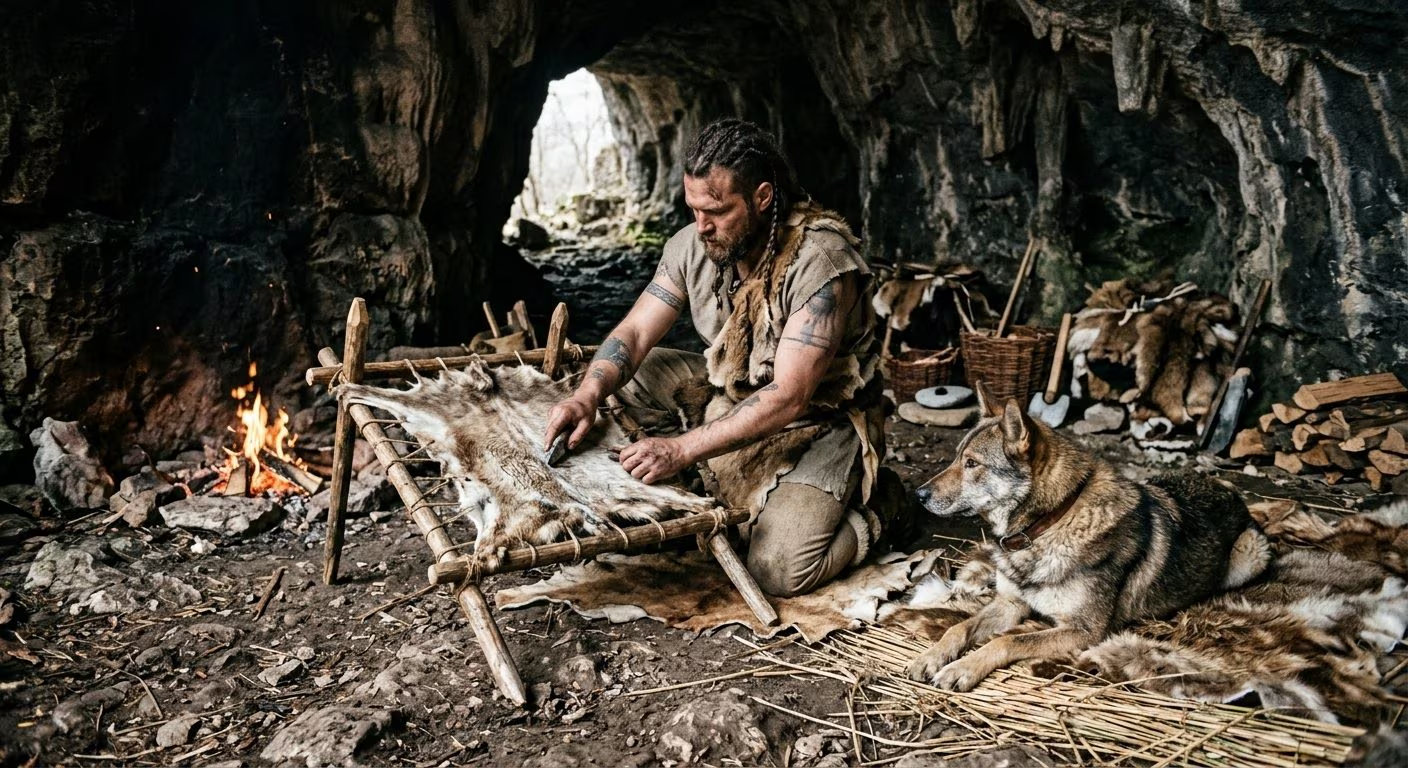
A goat skin about 7,000 years old, found in the Cueva de los Murciélagos in Spain, has yielded one of the oldest genomes of domestic animals. The analyzes indicate a non-local origin of the goats introduced into the Iberian Peninsula during the Neolithic.
A goatskin dating back to approx 7,000 years ago allowed us to recover genetic information on the first populations of pets from the Spain. It would be about one of the oldest farm animal genomes in the world.
The find comes from Cueva de los Murciélagosat Albuñolin the province of Granada (Andalusia), and was analyzed by an international group of researchers (the leaders of the study, from University College Dublin, are Jolijn AM Erven And Zoe Robinet Guyet) in a study published in the journal PLOS ONE.
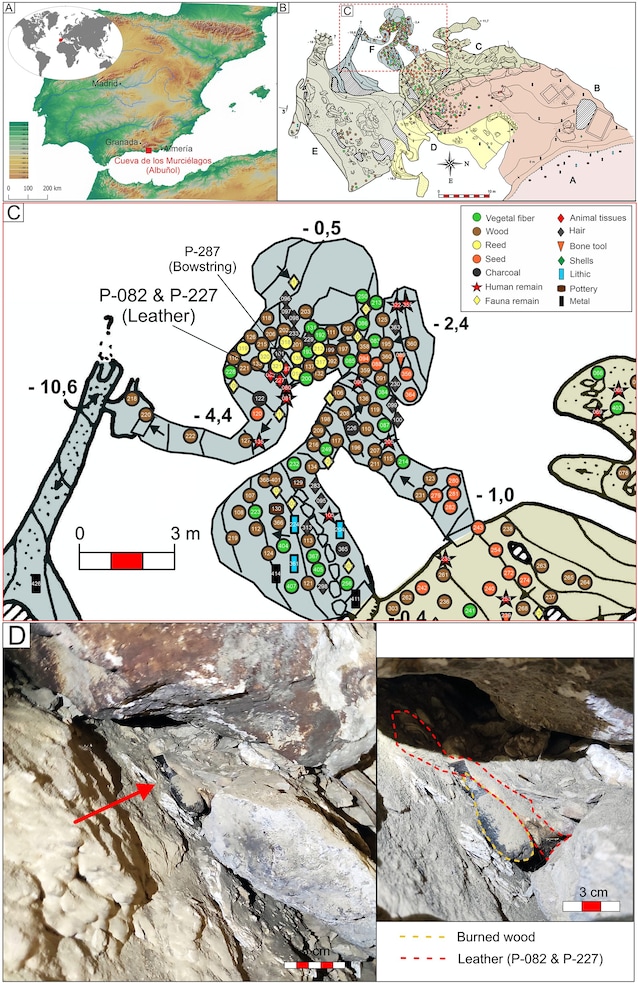
The Cueva de los Murciélagos (“Cave of the Bats”) is a karst cave located near Granadain southern Spain, and has been an archaeological site known since at least the mid-19th century. Studies have shown that it has been used as shelter or how burial place seamlessly between the final stages of Mesolithic el’Bronze Ageabout between 7500 BC and 1700 BC.
The cave has yielded a large amount of finds (a few years ago even arrows were found, the oldest evidence of archery in Europe), with those archaeozoological (archaeozoology is the discipline that deals with study of animal remains in archaeological contexts) of particular interest. The detail microclimate of the cave, as often happens, allowed the conservation of many organic finds, which in other conditions would have deteriorated.
The archaeozoological sample studied, named according to scientific practice Murciélagos1consists of two fragments probably belonging to the same company animal skin. The dating to radiocarbon he returned an age range between 7,246 and 7,008 calibrated years before the present, placing it in the Ancient Neolithic (6th-5th millennium BC). Archaeozoological analyzes have also identified the sample traces of processing: one side preserve the hairwhile the opposite one presents signs compatible with the tanningfour intentionally made perforations and traces of softening due to use.
In addition to the traceological study of the sample, one of the most important contributions concerns the Ancient DNA: research, in fact, has made it possible to extract and analyze ancient DNA preserved in organic material. The results identified the animal of origin of the skin as a domestic goat (Capra hircus) Of European ancestryexcluding an origin attributable to the Iberian wild goat (Pyrenaic goat). This suggests that goat populations introduced by human groups who frequented Cueva de los Murciélagos in the Neolithic they had not been domesticated from local wild speciesbut they were probably brought from the east, in Neolithic expansion process.
The genome comparison with them current populations highlighted a detail genetic affinity with the Bermeya breedtoday bred in the northern area of Spain. A result that suggests a genetic continuity between Neolithic goat populations and some contemporary Iberian herds, although without demonstrating direct descent.
In the extraordinary conservative context of the cave, the scholars also recovered the sample fragments of human and canid DNA. The human component could arise from the contact with the skin during its handling or usewhile the canine one would be linked to subsequent alterations of the archaeological deposit (A dog rummaging through the garbage, perhaps). The limited quantity of human DNA, however, did not allow us to obtain reliable information on the genetic identity of the person who came into contact with the find.
The Cueva de los Murciélagos was mainly used in funerary purpose during the Neolithic. The skin was found in sector F of the cavity, incorporated in one wall structure built by miners in the 19th century: his original position had therefore been altered. We will never know where it was originally located, whether it was associated with a burial or not.
The authors of the discovery underlined the exceptional value of the find, which demonstrates how organic materials other than bones and teeth can store nuclear DNA for millennia. Genetic analysis of leather artefacts thus opens up new possibilities for reconstruction the history of pets and raw material processing activities in prehistoric communities.
