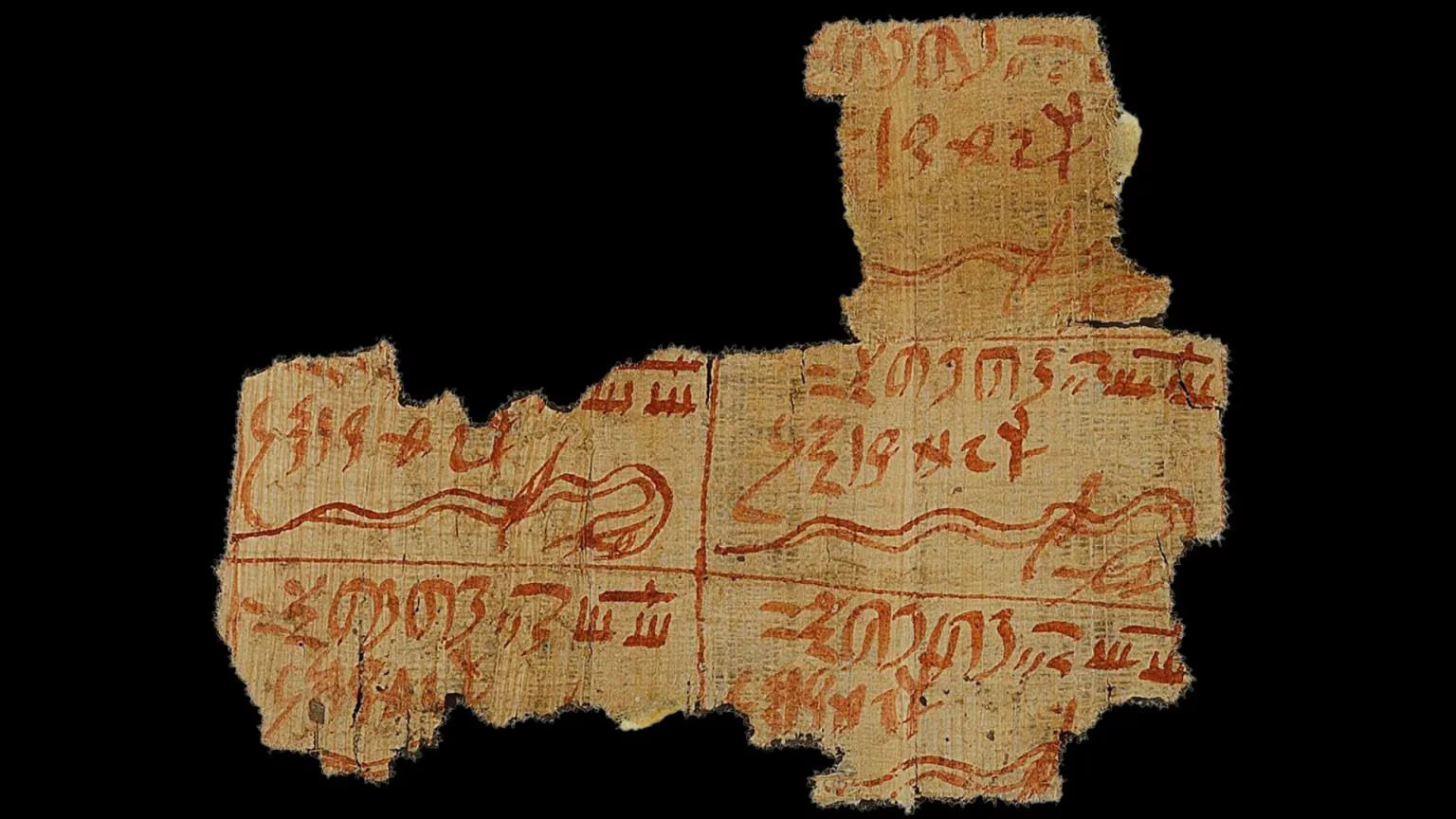
About 40 papyrus fragments dating back to over 3,400 years ago, found in the temple of Thutmose III in Thebes, document an ancient Egyptian ritual against Apophi, which involved piercing the serpent on the papyrus, and then burning the fragments, reciting magical formulas. Comparison with later texts clarifies the phases and the political and religious meaning of the rite.
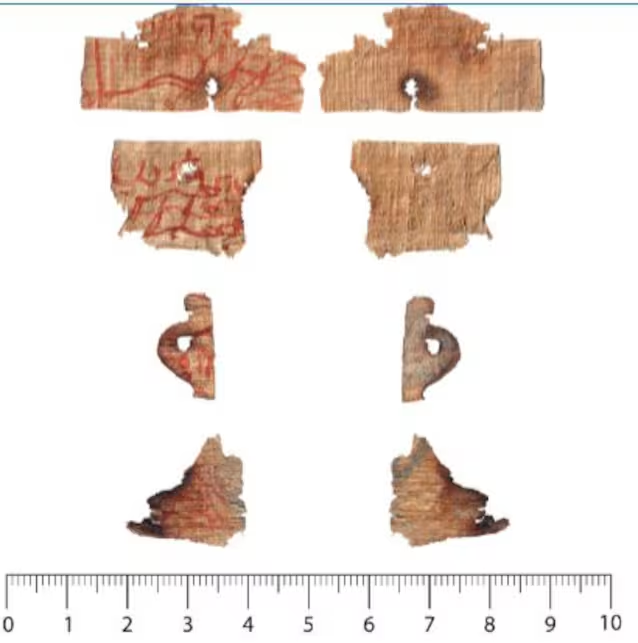
About forty burnt papyrus fragmentsthe size of a postage stamp, have re-emerged from an ancient landfill behind the funerary temple of Thutmose III, in Thebes: they are the remains of the oldest Egyptian curse ever founddating back 3400 years ago.
They are the material remains of the ritual called “Take down Apofi“, a ceremony in which the ancient Egyptians sought to symbolically destroy Apophi, the great serpent who in mythology threatened the solar god Ra during his journey into the underworld and attempted to prevent him from rising every morning.
Prior to this discovery, the only known document of the ritual was a manuscript from the 4th century BC: the new finds date the practice back by more than a millennium. This is revealed by a new study (by Fredrik Hagenfrom the University of Copenhagen, Carina Kühne-Wespiof the University of Heidelberg, e Myriam Seco Álvarezof the University of Seville) published in the journal Zeitschrift für Ägyptische Sprache und Altertumskunde (in German “magazine of Egyptian language and antiquities”), which reconstructs this ritual through the analysis of texts and archaeological finds.
But how the ritual worked?
The ceremony involved the making of wax figures depicting the serpent, on which his was written name. They also came prepared papyrus sheets with images and inscriptions which identified the enemy serpent.
These objects were subjected to a series of symbolic actions with the aim of destroying the serpent and the hostile forces it embodied: the figures came hit with a knife and finally burnttogether with the papyrus, in a fueled fire with specific plant materials.
The finds from the discovery in fact show traces of burning and perforations compatible with the actions described in the ritual texts. Some even preserve drawings of Apophi, represented as a serpent pierced by knivestogether with formulas and names attributed to him.
The testimonies older analyzed in the study come from the excavations of funerary temple of Thutmose IIIa Thebes. Thutmose III was a pharaoh of XVIII dynasty (1543-1292 BC), in the period of New Kingdom (1550-1069 BC), and reigned in first half of the 15th century to. C.
To rebuild it progress of the ceremony, the researchers compared these fragments with the so-called Bremner-Rhind Papyrusa very manuscript laterdel 3rd century BCin Ptolemaic erawhich preserves a collection of religious textsincluding different versions of the instructions for the ritual against Apophi.
The document describes the phases of preparationThe objects to use and the formulas to pronounce. The comparison allows us to interpret the older fragmentseven if, because of the temporal distance of more than a millennium, it is not possible to establish with certainty how much all the instructions reported in the most recent papyrus were already in use during the New Kingdom.
The ceremony it didn’t just have a religious function. The fight against Apofi also represented, on a symbolic levelthat of Pharaoh against his own enemies and against threats to the order of the kingdom. Some passages of the text they explicitly associate Ra’s protection with that of the sovereign. The ritual could be performed in specific moments of the day and night, in particular in correspondence with the phases of solar path and of mythological battles between the god and the serpent.
Sources also suggest that the practice was closely linked to priestly activity and the life of the templesbut which could also find application in funerary and private contexts. The fragments found in Thebes constitute, according to the authors, the oldest direct material testimony identified so far of the execution of this ritual.
Their analysis shows how the Egyptian magic was not limited to the recitation of formulas: words, images and concrete actions contributed to making it effective symbolic destruction of forces considered hostile to the cosmic order and the well-being of the country.