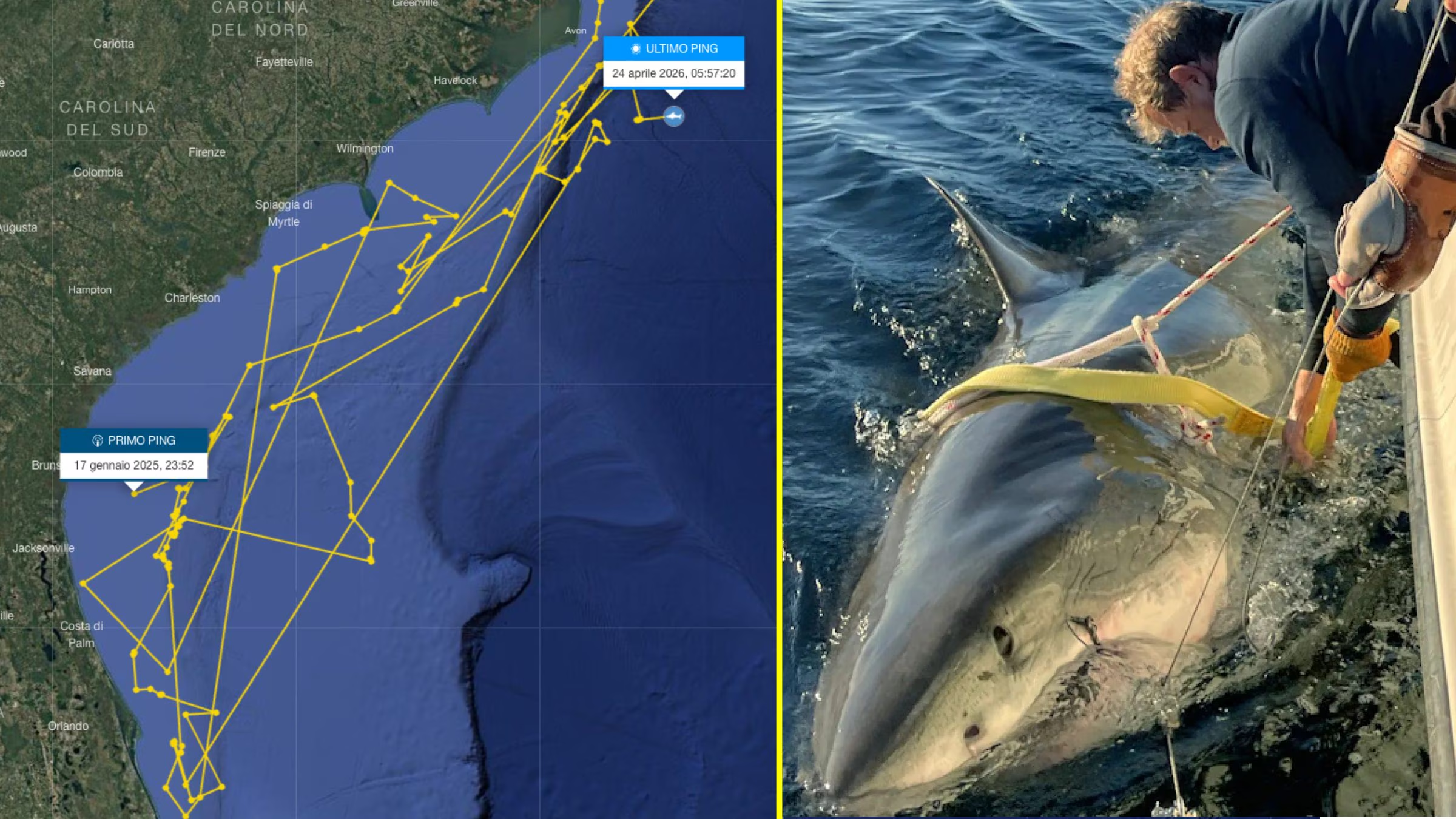
Is called Contender and is the largest male white shark (Carcharodon carcharias) ever tagged in the Northwest Atlantic by the non-profit organization OCEARCH. With his 4.2 meters long and 750 kg in weightthis imposing predator of more than 30 years old was equipped with a satellite tracker on its dorsal fin in January 2025. Since then, scientists have been monitoring its migration from the coasts between Florida and Georgia to North Carolina, hypothesizing its imminent return towards the colder seas of the north. Tracking occurs only when the fin emerges from the water: July 17 the system recorded one last weak signal (“Z-ping”), which confirms that the giant is alive and moving, although not revealing its exact position. Collecting this data is essential to map the movements of large apex predators and to study their biology, protect the species and maintain the balance of the entire marine food chain.
For those curious to follow Contender in real time, his movements can be consulted publicly on the OCEARCH tracker.
Who is Contender: record size
Contender was tagged on January 17, 2025 off the Florida-Georgia border, about 45 miles (72 km) offshore. At the time of tagging he weighed approximately 1,653 pounds (750kg) and was 13 feet 9 inches long, just over 4.2 meters. He is an adult male, estimated at around 30-32 years.
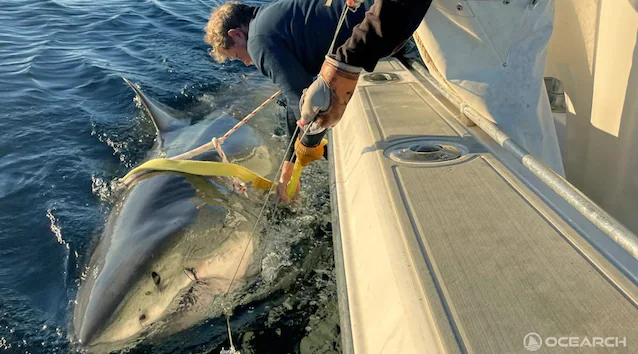
The fact that makes it truly remarkable is this: is the largest and heaviest male ever caught, tagged and released by OCEARCH in the Northwest Atlantic. It should be noted that female white sharks are generally larger than males (they can exceed 5-6 metres), so Contender is not “the largest shark ever” ever documented, but the record is still significant for its category.
His name is a tribute to Contender Boatshistorical partner of OCEARCH which supplies the boats used in research missions.
Where to find it: The journey of the Atlantic’s largest male white shark
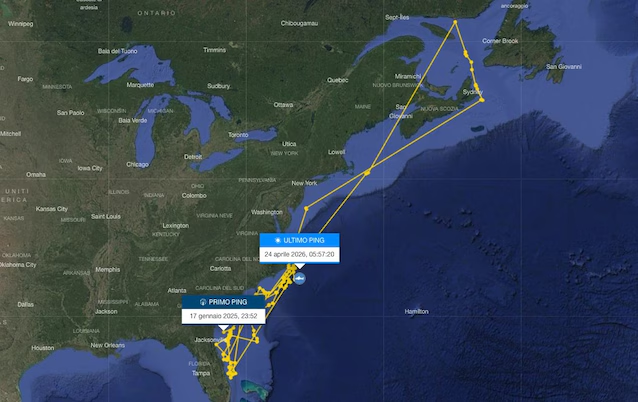
After tagging, Contender spent the first months between Florida and Georgia, then progressively moved up the coast: South Carolina, then North Carolina, with several ping recorded off Cape Hatteras and the Outer Banks between May and June 2025. That area, according to OCEARCH, is a sort of recurring “rest area” for migrating white sharks: waters rich in prey where the animal can replenish its energy before the longer stretch north.
From there the typical pattern involves heading towards the waters of Cape Cod (Massachusetts) or Atlantic Canada, where white sharks spend the summer and early autumn hunting, attracted by seals and large schools of fish. This behavior is known in zoology as philopatriathe drive of animals to return to the same place to feed or reproduce.
Contender’s last accurately confirmed location was in late April 2026, off the Outer Banks. Since then the tracker has produced only a few weak signals, the last one on July 17, which experts have been unable to translate into precise coordinates. So the idea that he is headed towards Cape Cod remains, at the moment, ahypothesis based on the typical migratory behavior of the speciesnot a confirmed position data. In total, in these 545 days of travel, the specimen traveled 11,439.22 km.
How the satellite tracking system works: the fin must re-emerge from the water
The technological “trick” behind all this is called SPOT tag (Smart Position or Temperature), a device attached to the shark’s dorsal fin that lasts about five years. The mechanism is simpler than it seems, but it has a physical limit that cannot be circumvented: the tag can communicate with satellites only when the fin emerges from the water.
When the surfacing lasts long enough to allow the exchange of at least three satellite messages, the system calculates a precise position. However, when the tag receives only a single message before the animal comes back down, the signal is classified as “Z-ping“: confirms that the shark is alive and moving, but not enough to establish where it is. That’s exactly what’s happened with Contender in recent weeks: we know it’s there, we know it’s moving, but we still don’t know where it’s headed for sure.
Behind the media curiosity about “the giant shark” there is very concrete scientific work. OCEARCH is a non-profit organization that tags white sharks (and other large marine predators) precisely to collect data that would otherwise be almost impossible to obtain: migratory routes, feeding areas, and in some cases biological samples (in the case of Contender, even urogenital material, useful for understanding its reproductive status). Why is this important? Because the white shark is an apex predator: its presence and behavior influence the entire marine food chain. Know where it reproduces, where it feeds And how it moves seasonally it is essential to protect the species and to correctly manage the coexistence between sharks and human activities along highly frequented coasts such as those of Massachusetts.
