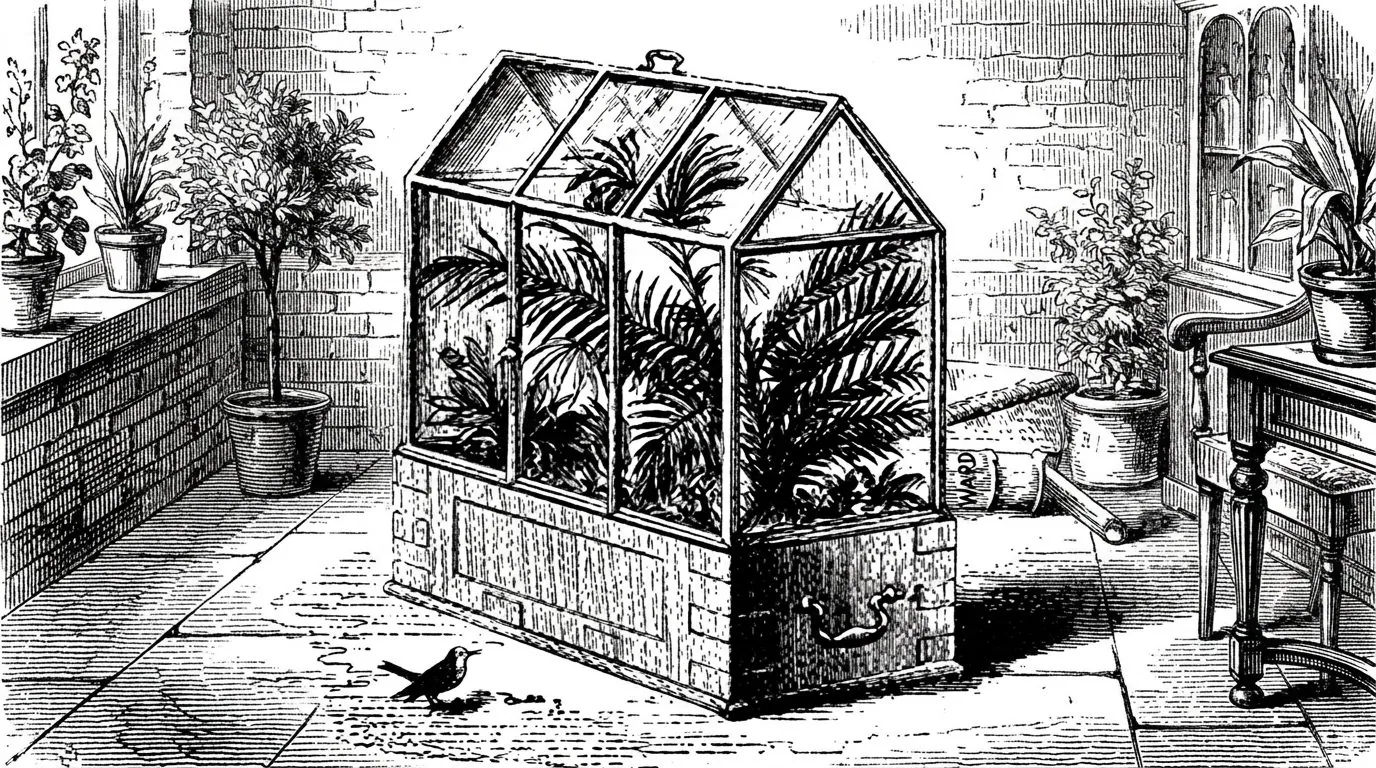
Today the terrarium it has become an embellishment object for shelves and desks, a small green corner that brings joy and makes you feel more connected with nature, in an increasingly artificial world. Originally, however, it was not conceived as a furnishing object.
The terrarium was born in a coal-choked London, and everything was born from the observation of metamorphosis of one moth. Behind that glass container with moss, earth and humidity there is a amazing story which combines medicine, botany, the industrial revolution, global trade and even our modern need to bring a fragment of nature back into enclosed spaces. Discovering it therefore means understanding not only the origin of this object, but also the relationship between humans and plants.
Nathaniel Bagshaw Ward and the construction of Wardian cases
The name almost universally associated with the invention of the terrarium is that of Nathaniel Bagshaw Warddoctor born in Sussex 1791 but who practiced in London. We say “almost” because a Scottish botanist, AA Maconochie, had created a similar terrarium almost ten years earlier, but his failure to make the news public meant that Ward received credit as the inventor.
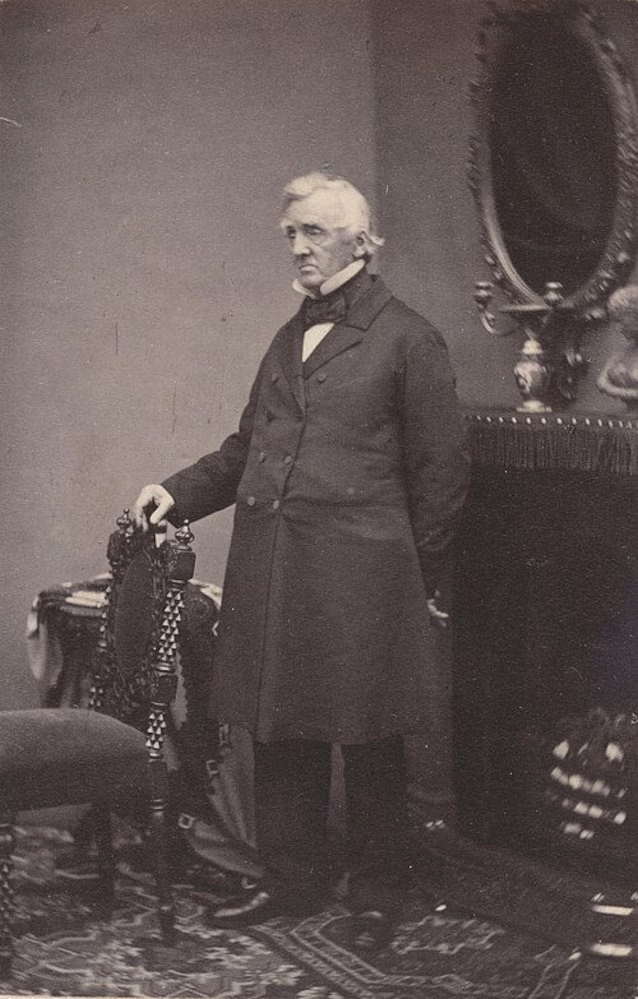
Ward was not a botanist by profession, but like many scholars of his time he was several naturalistic interests: entomology, plant observation, collection of rare species, and who knows how much more. Ward, however, lived in the wrong place for those who loved greenery: London in the first half of the nineteenth century, in fact, was a city almost completely enveloped in smoke, soot and dust produced by coal. THE’industrial air it damaged many delicate plant species, especially ferns and those ornamental plants that Ward tried unsuccessfully to cultivate.
According to historical reconstructions, the turning point came around 1829when Ward began to carefully observe a sphinx moth chrysalis that he had placed in a sealed vase to observe its metamorphosis, when he noticed that a fern and a blade of grass had spontaneously sprouted from the damp soil at the bottom. Both were growing well, protected from the outside world.
The idea of the terrarium
Observing this phenomenon, Ward saw a biological principle in it. In fact, inside that container a stable system had been formed: the humidity evaporated from the soil ➔ the water vapor condensed on the internal walls ➔ the water fell onto the substrate ➔ the plant continued to receive light and the microclimate remained more constant than outside. In practice, a small one water cycle enclosed in glass.
Ward then transformed that observation into larger, more functional structures, that is, enclosed glass boxes designed to grow and transport plants. These containers were called Wardian cases and are considered the direct ancestors of the modern terrarium.
One important point should be clarified: Ward did not invent the idea of growing plants under glass out of thin air. Even before there were greenhouses, bell jars and protective containers used in horticulture. The real innovation was another: create a closed and transportable system, capable of keeping plants alive for long periods with little maintenance. As often happens in the history of science, the merit lies not in the generic idea, but in the practical form that makes it useful.
However, it must be said that a perfect closed ecosystem does not completely exist. This is because even sealed terrariums depend on the outside for two basic factors, viz light (energy) and ambient temperature. If the light is insufficient or excessive or the heat rises too much, the balance is broken.
However, beyond the small water cycle, Ward realized that inside the terrarium there was much more to observe:
- Plant transpiration: plants released vapor through their leaves, contributing to internal humidity.
- The microclimate: the container reduced humidity dispersion and attenuated some environmental changes.
- Decomposition: microorganisms and small decomposers recycled organic matter into the substrate.
- Slow but stable growth: if light and humidity are correct, the system could remain balanced for a long time.
Why it was a revolutionary discovery and how it changed the world
Today a terrarium seems like a simple object, but in the nineteenth century it was a amazing eco-friendly technology.
In fact, it allowed us to solve multiple problems together:
- Protection from pollution (delicate plants were shielded from toxic urban air, soot and environmental shocks);
- Humidity conservation (in an era without sophisticated irrigation systems, maintaining constant humidity was a great advantage);
- Reduction of maintenance (the internal recycling of water required less care than traditional vases);
- Scientific observation (plants could be studied in a relatively controlled environment).
The most important consequence of the invention occurred not in living rooms, but in ports. In the 19th century transporting live plants by ship was very difficult. Long ocean voyages exposed specimens to salt, wind, dehydration, extreme heat and cold, and poor maintenance during the crossing.
Many plants died before arriving. The Wardian cases, however, enormously increased the survival of the plants during transport, and this made it easier to move useful or profitable species from one continent to another.
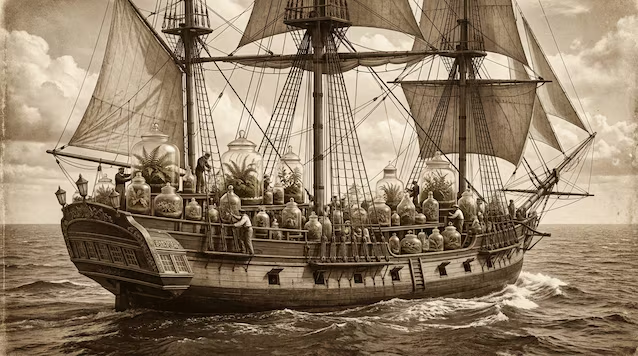
Many environmental historians have emphasized theirs above all concrete role in the global circulation of strategic crops.
Thanks to these travel terrariums, in fact, European countries – the British Empire first and foremost – managed to “steal” and transport precious plants from one continent to another to exploit them as they pleased. Just to give some examples:
- The tea (the possibility of transferring live plants contributed to the spread of crops to new regions of the British Empire, reducing dependence on areas already controlled by other markets);
- There natural rubber (especially like Hevea brasiliensisoriginally from South America, were transferred to Asian colonies where they would have fueled crucial industries);
- The tropical ornamental plants (many exotic species began to reach Europe more successfully).
The terrarium in homes: yesterday and today
Once practical usefulness was demonstrated, the cultural success.
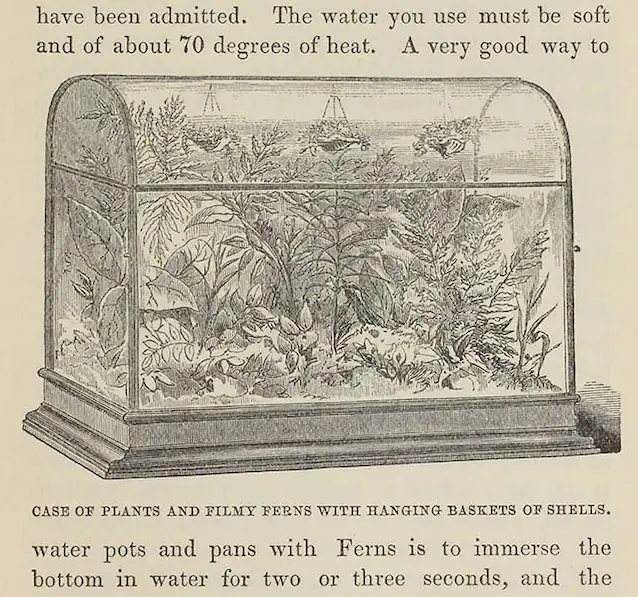
In the’Victorian age interest in natural collections, aquariums, indoor greenhouses and domestic botany grew. Bourgeois families began using glass containers to display ferns, mosses, and exotic plants in their living rooms. Indoor greenery became a sign of taste, education and refinement. It is no coincidence that the British 19th century even experienced a truly collective passion for ferns, often called pteridomaniathat is, a sort of botanical craze between fashion, collecting and design.
The terrarium is considered today living furniturebringing greenery into small spaces where a large pot would be inconvenient. But it is always of great interest to the scienceas it is perfect for explaining the water cycle, photosynthesis, humidity and ecological balance.
