
For the first time in the history of pre-Columbian studies, archaeologists have managed to give a name to a mathematician-astronomer of the Mayan civilization. The study, led by Franco D. Rossi of MIT, published in the journal Antiquitieshe identified in fact Sak Tahn Waax (“White-breasted Fox”) as the author of a series of astronomical calculations made in8th century AD and preserved on the walls of a building on the site of Xultunin the north of Guatemala.
The discovery comes from the rereading of the inscriptions painted in the Structure 10K-2an environment already known to host the oldest Mayan astronomical tables known so far. Thanks to new techniques digital documentation and to theepigraphic analysisresearchers have identified a glyph which does not simply indicate the owner of the room, but identifies the responsible of the calculations reported on the walls. The inscription in fact associates the name Sak Tahn Waax with a title attributable to a high-level scribe or scholar. According to the authors, it is the first direct testimony of an individually identifiable Mayan mathematician-astronomer, an achievement that offers a rare opportunity to get closer to the people who produced the scientific knowledge in the courts of the classical era of the Mayan civilization (3rd-9th century d. C.).
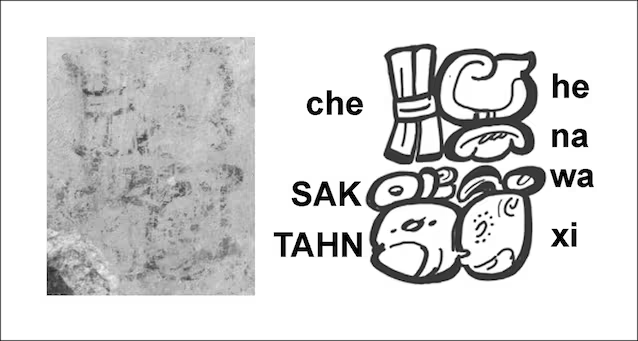
The walls of the building are covered with numerical and calendar-related annotations. Among these appears one complex formula which relates the cycles of Venus And Marsdemonstrating the high level reached by Mayan scholars inobservation of the sky. These calculations were fundamental not only to understand the motions of the stars, but also to establish the calendar of religious ceremoniesfrom the political activities and other events deemed important for the life of the community. The study also changes the traditional image of science Maya. Astronomical knowledge no longer appears as the result of an anonymous tradition handed down over time, but as the product of the work of highly qualified specialistsincluded in the political and cultural elites of society. The court scribes were in fact responsible of the compilation of calendars, of recording of historical events and the development of complex mathematical models based on systematic observation of the sky.
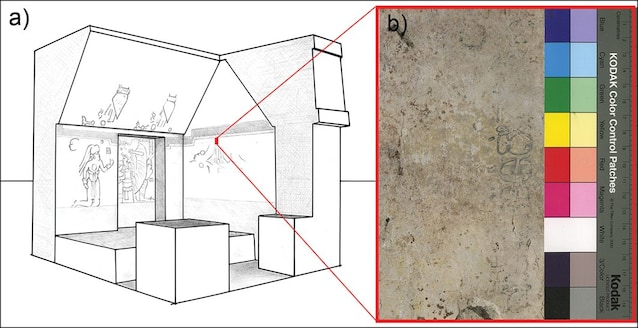
Although not the “first Mayan astronomer” in the absolute sense, Sak Tahn Waax he is the first whose identity it has been possible to reconstruct with certainty and activity thanks to archaeological sources. The discovery thus gives a human face to one of the most advanced scientific traditions of the pre-Columbian world and opens up new perspectives on the role of scholars in the Mayan courts of the 8th century.
