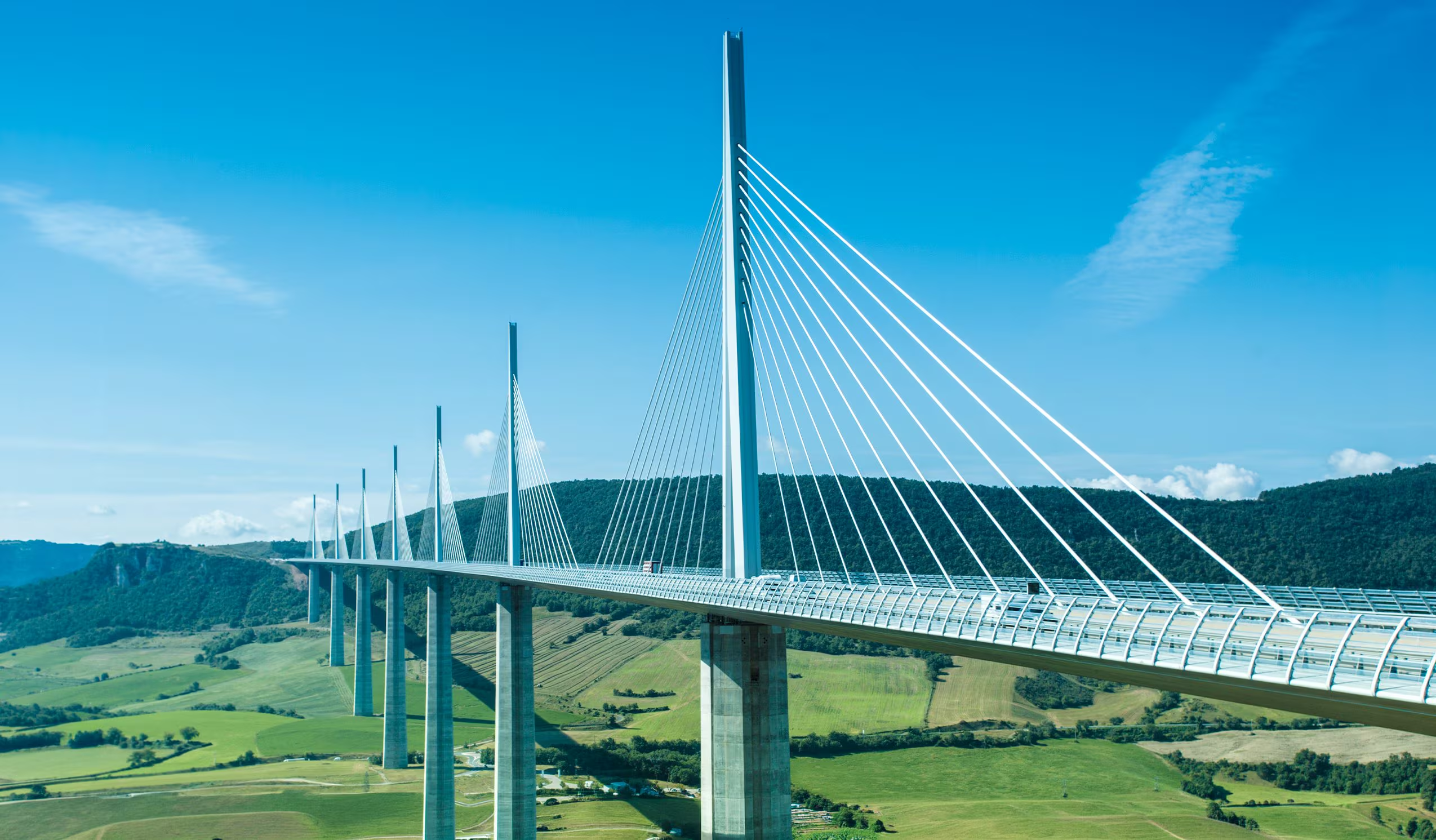
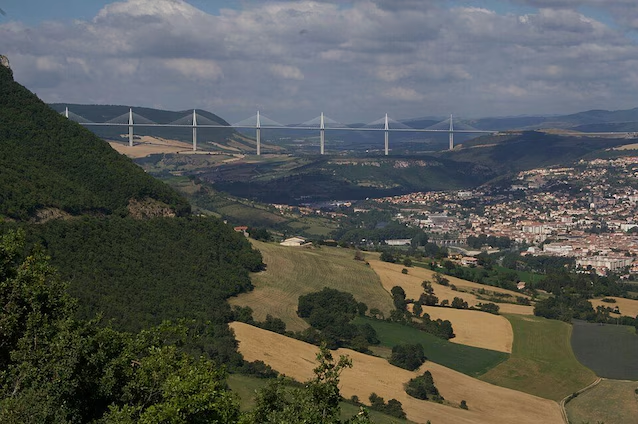
In the south of France, in the region ofOccitania (department of Aveyron), the Millau Viaduct (Viaduc de Millau) represents one of the highest points of contemporary structural engineering. Designed and created by the French structural engineer Michael Virlogeux and by the English architect Foster, the work crosses the Tarn river valley ensuring the continuity of the A75 motorway (La Méridienne) and acting as a motorway viaduct. With a summit point of 343 meters (more than the Eiffel Tower with its 330 meters) and with an overall length of 2,460 metersthe structure holds the world record for the overall height of the pylons of a cable-stayed bridge: furthermore, it is the highest French bridge ever, the highest vehicular bridge in Europe and one of the highest in the world. Built between October 10, 2001 and December 2004, it opened in December 2004 and has never collapsed since then, although some online users incorrectly report it.
The characteristics of the 343 m Millau Viaduct located in France
This viaduct is a multi-span cable-stayed bridge with a continuous deck with a total length of 2,460 metersdivided into eight bays (six central ones from 342 meters and two lateral ones from 204 meters). The work has a slight radius of curvature and a constant longitudinal slope of 3%, solutions adopted to improve the visibility of motorists and alleviate the feeling of emptiness.
The seven pylons (from P1 to P7) were made of high-strength concrete (C60/75) using the climbing formwork technique. The tallest pylon (P2) reaches a height of well 245 metresi alone and is doubled in the last ones 90 meters under the deck to guarantee elasticity and absorb the longitudinal thermal expansions of the structure.
To contain its own weight compared to a concrete alternative, a high aerodynamic metal box section was opted for 4.2 meters and wide 32 metersprofiled to resist horizontal stresses due to the wind which, in this area, can reach up to 250 km/h. The assembly of the deck was possible thanks to a cutting-edge technique: the two sections of the bridge were built on the ground on both sides of the valley and progressively pushed towards the cantilever center (with the aid of temporary steel support towers) using synchronized hydraulic jacks. The millimetric junction of the two stumps occurred at over 270 meters above sea level. Above each pylon stands an 87 meter steel antenna to which 11 pairs of stays arranged in a semi-fan form.
The economic impact of the world’s tallest cable-stayed bridge
Before the opening of the viaduct, the town of Millau and the Tarn Valley formed a notorious “bottleneck” along the A75 motorway corridor, which connects Paris to the Mediterranean coast and Spain. During the summer months, travel times and queues in urban areas could extend for hours. The work was carried out through a Project Finance concession (PPP) entrusted to the industrial group Eiffagewhich fully financed the approximately 400 million euro construction cost in exchange for managing the toll until 2079. Today the toll for crossing the Millau viaduct costs €13.80 for cars and light vehicles during the peak summer months, June to September and up to €47.70 for heavier vehicles.
The economic impact was on multiple levels. First of all, it reduced the logistical costs of the European North-South corridor, guaranteeing predictable travel times for heavy vehicles. The work itself has developed into a world-class architectural attraction, generating a constant flow of visitors to dedicated visitor centers and supporting the hospitality economy of the Aveyron region. Freed from heavy through traffic, the city has been able to redevelop its urban center and develop tourism oriented towards nature and outdoor activities.
The environmental impact of construction
The choice of the cable-stayed typology compared to other design solutions was dictated primarily by the desire to reduce the footprint on the ground in the Grandi Causses Regional Natural Park. The presence of just seven pylons was able to drastically reduce the impact on the water tables of the valley and on the vegetation of the Tarn gorge compared to traditional solutions with multiple supports. By eliminating frequent urban traffic congestion in Millau and allowing vehicles to travel at a constant speed, the viaduct saves thousands of tonnes of carbon dioxide emissions per year.
