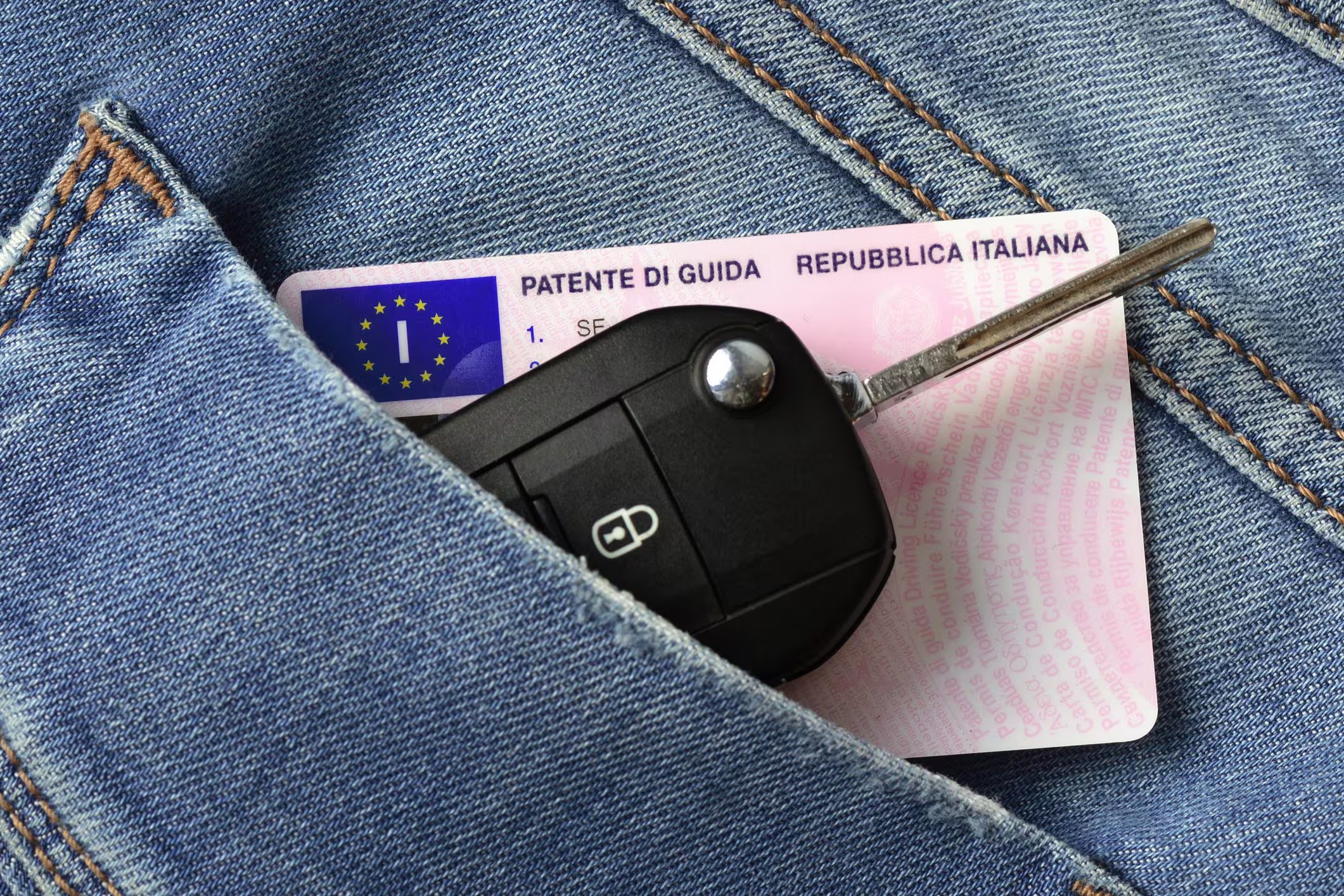
The license is used for security reasons And traffic regulation: it is necessary that anyone who drives a motor vehicle is able to control it and knows the rules of road traffic. The first “licensees” were introduced at the dawn of the history of the automobile, in the 1880sbut precise regulations were only issued during the twentieth century. In Italy the first national rules for obtaining a driving license were introduced in 1901. Since then the legislation has been modified several times, also to adapt to European standards. The most recent innovations, introduced in 2026, concern the methods of carrying out theexamination.
Because you need a license to drive
The license is necessary because driving a motor vehicle involves having to maneuver a potentially dangerous vehicle in a space shared with other people. More specifically, they can be identified three reasons which explain the need for a licence:
- There safety: a car, motorcycle or truck can cause serious damage to people or property. The license certifies that a person knows the rules of road traffic and is capable of controlling the vehicle.
- There traffic regulation: You can travel on the roads because everyone follows the same rules (rights of way, speed limits, signs, etc.): without mandatory training, which requires everyone to know the rules, traffic would become more chaotic and dangerous.
- There legal responsibility: the license allows the authorities to verify who is authorized to drive and to sanction those who do not respect the rules.
The driving licence, essentially, is used to reduce the risk of accidents and to make traffic more orderly and safe from a legal point of view.
The origins of the driving licence
The history of the license is logically intertwined with that of motor vehicles. The first “licences” were issued in the 1880s, the period of construction of the first automobiles. The first “permission to drive” was in fact issued in Paris to a builder, Leon Serpolletwhich produced steam tricycles. Five years later a traffic permit was issued in Germany Karl Benzthe engineer considered the inventor of the automobile, because he was the first to apply the combustion engine.
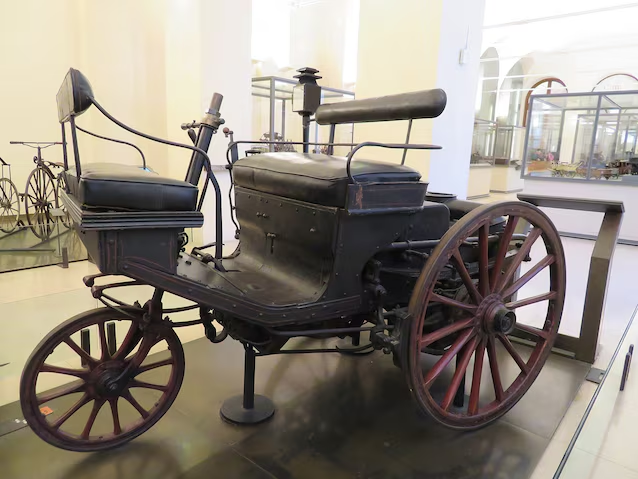
The first “licences”, however, were not regulated by specific laws, but were authorizations to driving specific vehicles on the roadsgenerally issued by local authorities using hand-filled sheets. Furthermore, as precise regulations do not yet exist, in numerous cases the circulation of vehicles (which were still very rare) it happened freelywithout the need for authorizations and licenses. For example, in the United States the first traffic permits were only issued in 1899, even though cars had already been on the road for some years.
As time passed, the number of vehicles in circulation increased and in many countries the institutions made driving license mandatory and introduced rules precise for its achievementproviding that, to obtain it, it was necessary to take a specific exam to demonstrate the ability to control a vehicle.
The driving license in Italy
In Italy the first driving permits were issued in 1898. The pioneer was municipality of Milanwhich in that year promulgated a “Regulation for the circulation of motor vehicles”, introducing the obligation to have a driving license on city roads and establishing that it had to be issued by a special commission.
There “national” driving license it was introduced three years later, in 1901, with Royal Decree nº 416 of 28 July, “Regulations for the circulation of automobiles on ordinary roads”. In article 12, the regulation established that anyone who wanted to drive a vehicle had to request the appropriate license from the prefect of the province of residence. To obtain the permit, the applicant had to pass a driving test at the Civil Engineering offices. In case of a positive outcome, a driving license was issued which, as today, had to always be carried with you while driving.
In the following decades, due to the increase in vehicles in circulation, they were introduced new rules. Among them, the obligation to have a license plate for each vehicle, the introduction of specific physical requirements for driving, the “pink sheet”, i.e. a temporary permit to practice together with an expert driver, and special licenses for driving public transport.
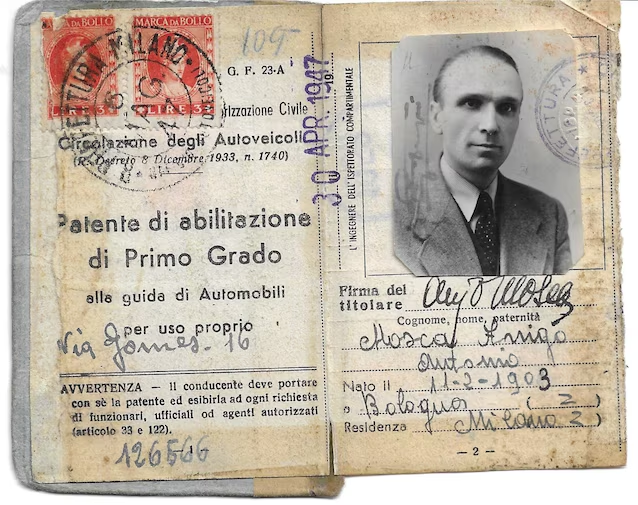
Post-World War II innovations and the European driving licence
After the Second World War, new international regulations were signed to regulate the validity of the driving license outside the territory of the issuing State: the Geneva Convention of 1949 And that of Vienna in 1968 (which updated a previous agreement from 1926). These are the agreements still in force today for obtaining the international driving licence.
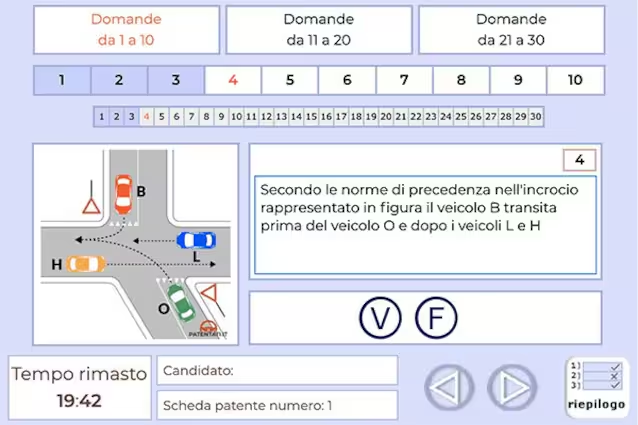
Furthermore, in many countries the rules have been updated. In Italy, among the various innovations, there was the new subdivision of the categories of licences and the modification ofexam for achievementwhich today, as we all know, requires not only the ability to drive, but also an in-depth knowledge of road traffic and related issues.
Since the 1990s, Italian legislation has had to adapt to the rules ofEuropean Union. In fact, the European driving license was introduced in 1996: the permits issued in the EU member states are automatically valid throughout the Union. The legislation also changed the format of the driving license again, making the credit card model, currently in use, mandatory. The legislation came fully into force in 2013, but is constantly evolving.
