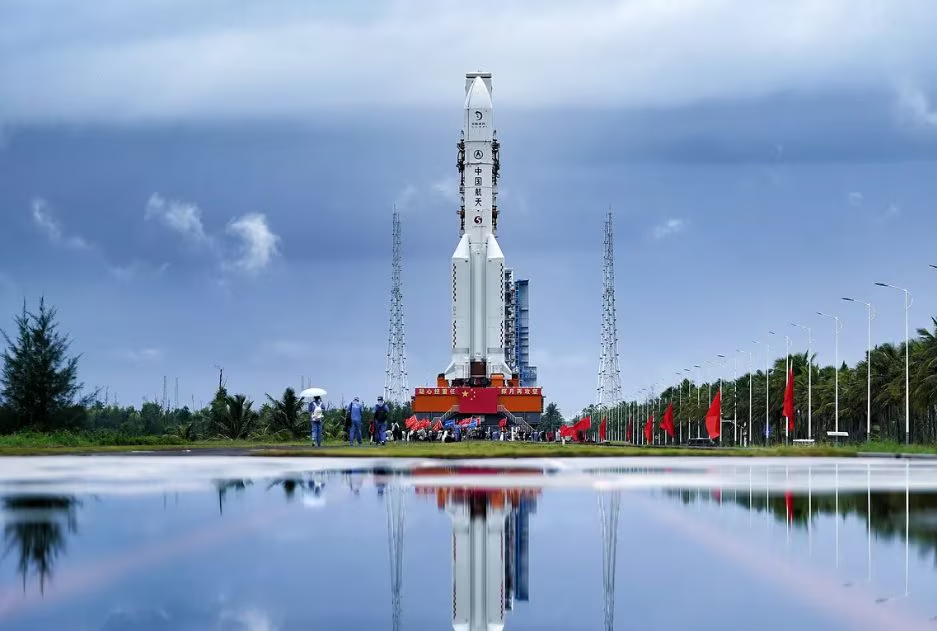
There Chinese mission Chang’e-7, directed to south pole of the Moonwas postponed and may not leave before 2027: it was announced by the China Manned Space Agency (CMSA), who explained that «the Chang’e-7 mission does not meet the launch conditions and cannot be carried out in the launch window scheduled for this year.” Meanwhile, the CMSA has not yet identified a suitable launch window.
This is a significant setback, because the mission aimed at a milestone never achieved before: be the first probe a attempt a landing on the edge of a crater on the lunar south poleto go to water ice hunting which is believed to be hidden in its depths.
Liftoff was scheduled for August 24th from the launch base in Wenchangon Hainan Island, aboard a rocket Chang Zheng 5. The carrier (with on board the probe, the lander and the rover which are part of the heart of Chang’e-7) had already been transferred to the ramp on 19 August awaiting final checks of the on-board systems. Unexpectedly, the launch was ultimately blocked just a few hours away from the countdown final.
The initial postponement for the arrival of the typhoon Narra, but the official causes are vague
The official causes of the postponement remain vague: the CMSA spoke generically about a thorough evaluation of launch safety conditionswithout specifying which technical, operational or meteorological conditions triggered the stop.
The most certain reason, however, seems to be the bad weather. In the days preceding the launch, the situation intensified tropical storm Narraformed in the Gulf of Tonkin right near Hainan Island, where the Wenchang base is located. Sustained winds at altitude I am one common cause of postponement for space launches. This meteorological unexpected event appears to be the most probable trigger, although without excluding the possibility that other technical complications may have been added.
The problem is that the useful launch window to reach the lunar south pole with the required orbital attitude and lighting conditions is a lot restrictedopens only for a few days a year: At this point, the mission actually might slide to 2027.
Searching for ice in Shackleton Crater
Chang’e-7 was conceived to be the most ambitious and complex mission in the Chang’e seriesthe Chinese lunar robotic program which so far has also had the distinction of having already brought gods lunar soil samples on Earth.
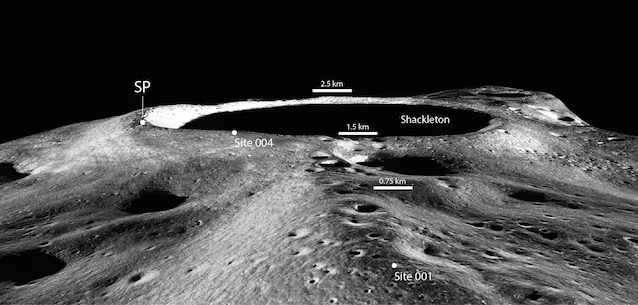
The central scientific objective of Chang’e-7 is the direct research of waterfall in the form of ice trapped in the lunar regolith. The Shackleton Crater measures approx 21 kilometers in diameter and it is potentially one of the most promising places on the Moon to look for frozen water trapped underground: in fact, the Sun’s light has not been able to penetrate the perpetually shadowed regions.
The area where the lander should land is named Peak Near Shackletona high relief on the edge of the crater of the same name, at the south pole of the Moon. It’s about a region never reached before by any mission and scientists consider it among the most difficult of all for a landing in terms of both robotic operations and land morphology.
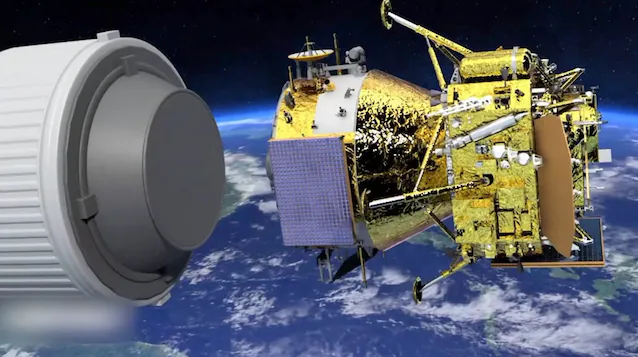
The mission is composed of four elements distinct, each with a specific task: a orbiter which will remain in lunar orbit for weeks or months to photograph potential landing sites in detail, a lander intended for the actual descent, a rover which will explore the surface and a small vehicle hoppercapable of making short flights and jumps to reach otherwise inaccessible areas, such as the permanently shadowed bottoms of craters.
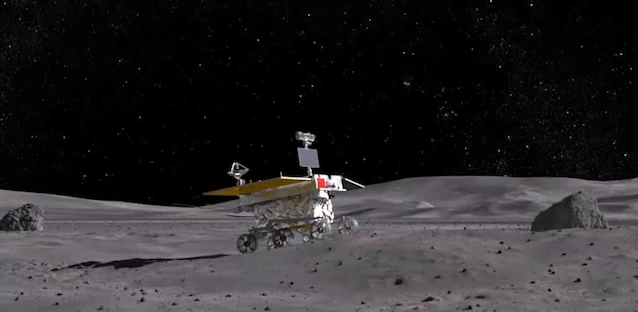
The rover, based on previous named lunar vehicles Yutu employed in the Chang’e-3 and Chang’e-4 missions, will move on the illuminated terrain taking picturesusing radar to scan the subsurface to several hundreds of meters deep and examining the ground for traces of ice.
THE’hopperon the other hand, is designed specifically to get where the rover won’t be able to. It will use small thrusters to accomplish jumps up to 15 kilometers at a time (taking advantage of the low lunar gravity) and landing on its six legs directly inside the craters always in the shadewhere temperatures remain so low as to allow the ice to be preserved for billions of years.
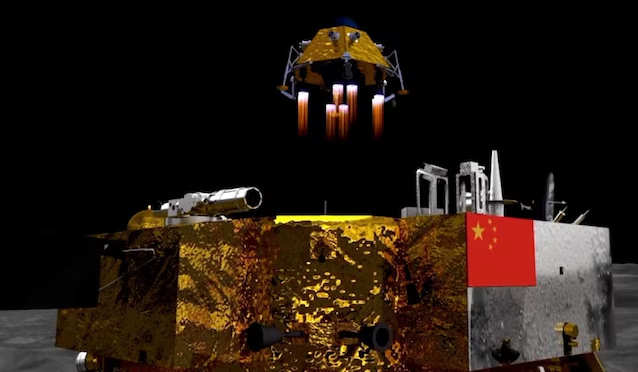
Once on the lunar surface, the hopper will use a drill for drilling frozen ground up to a meter deep, heating the samples taken and analyzing the gases released with a water molecule analyzer.
The space race to the lunar south pole
The postponement comes at a time when the race to the Moon is increasingly tight, between the American and Chinese space programs. The same region of Shackleton Crater at the lunar south pole from Chang’e-7 is in fact also at the center of the NASA’s Artemis programwhich aims to return astronauts to the Moon in that area. The possible presence of frozen water inside the perpetually shadowed craters and the favorable lighting conditions on the rim make the Shackleton crater region is the optimal zone where to establish human bases on the Moon.
The Chinese lunar planeknown as International Lunar Research Station (ILRS) and developed together with Russia, provides for the landing of the first astronauts by 2030, with the subsequent construction of a first robotic station based right in the south pole region by 2035followed by an extended model by 2045.
Chang’e-7 represents the first fundamental step to identify the resources and the site where to locate the base, followed in 2028 by Chang’e-8That will test the technologies to exploit lunar materials on site.
NASA, in parallel, aims to return human crews to the lunar surface with Artemis IVwhose moon landing manned in the south polar region is currently scheduled no earlier than 2028: for 2027, however, it is scheduled Artemis IIIwhich will serve as a preparatory mission, testing docking maneuvers between the Orion capsule and the moon landing system in low-Earth orbit.
