
The prejudice that wants the blonde woman as silly, light-hearted and not very witty it has no well-founded basis: yet, for about three centuries, it has belonged to popular culture. The idea that a blonde girl or woman is unintelligent comes from a combination of historical and cultural factorssuch as the iconography of angels, Madonnas and symbolic figures with blond hair associated with pure femininity, which then evolved into a “mockery” of blondes in France at the end of the 18th centurywhen a famous blonde courtesan got into the habit of not speaking at high-society events, and a one-woman character was then created comedy inspired by her, who became famous and contributed to the spread of the idea. Furthermore, with the famous 1953 film, Gentlemen prefer blondes (Gentlemen Prefer Blondes), in which Marilyn Monroe plays Lorelei Leean ambitious and superficial girl, and in general with Hollywood cinema prejudice consolidates until it becomes part of popular thought.
The historical and social idea underlying the thought on blondes
Blonde hair is associated with the idea of brightness and purity since ancient times: just think of the numerous representations of blond angels, the hair of Botticelli’s Spring and Venus, the representations of the Madonna, often painted with long blond hair.
The light colour, in fact, recalls light, therefore purity, symbolically understood as sincerity and goodness of heart: therefore the idea was born that associates blond with youth and female beauty ethereal and ideal.
The blond hair, therefore, becomes one aesthetic feature which, when belonging to a woman, already identifies her as a symbol which is probably why particular attention has been paid to it over the centuries.
Les Curiosities de la Foire (1775), a theatrical comedy that creates prejudice
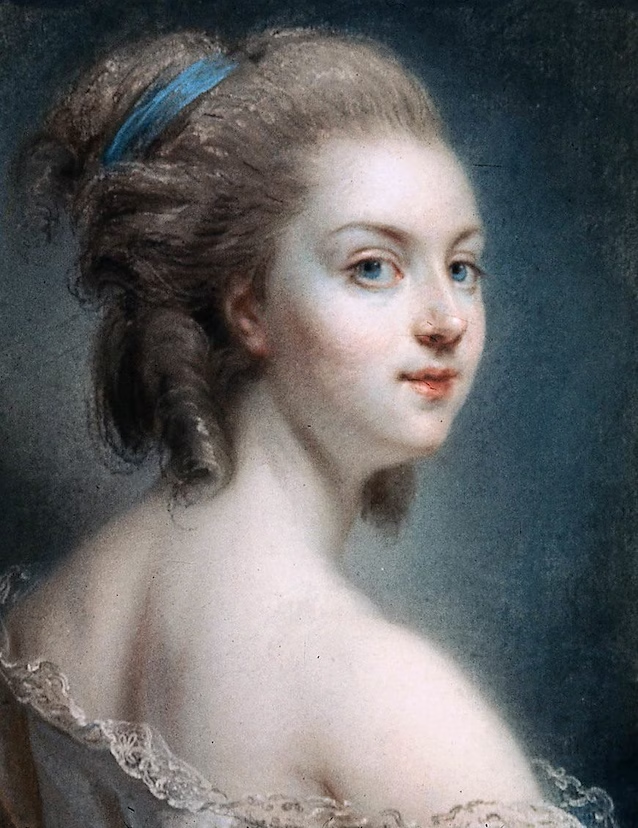
The transition between blonde hair as an almost “unattainable” ideal of purity and beauty and the association of “blonde woman” equals “silly woman” officially takes place at the end of the 18th century thanks to Rosalie Duthefamous blonde courtesan lover of kings and prominent men in Parisian high society. Rosalie often lent her image for portraits, even nude ones, which contributed to making her appearance and light hair famous.
Furthermore, to get by among the gossips of Parisian society, Rosalie was in the habit of doing long pauses before speaking: this characteristic earned her the nickname “dumb blonde” and, consequently, she was called superficial and unintelligent.
The “silly/naive blonde woman” association goes down in history thanks to a character inspired by Rosalie in the play Les Curiosities de la Foire (The Curiosities of the Fair) performed in 1775: the protagonist was indeed one blonde and silly courtesanand the cultural model from France began to spread and became fixed in popular rumors as a mockery.
Men prefer blondes (1925) consolidates the idea of the silly blonde
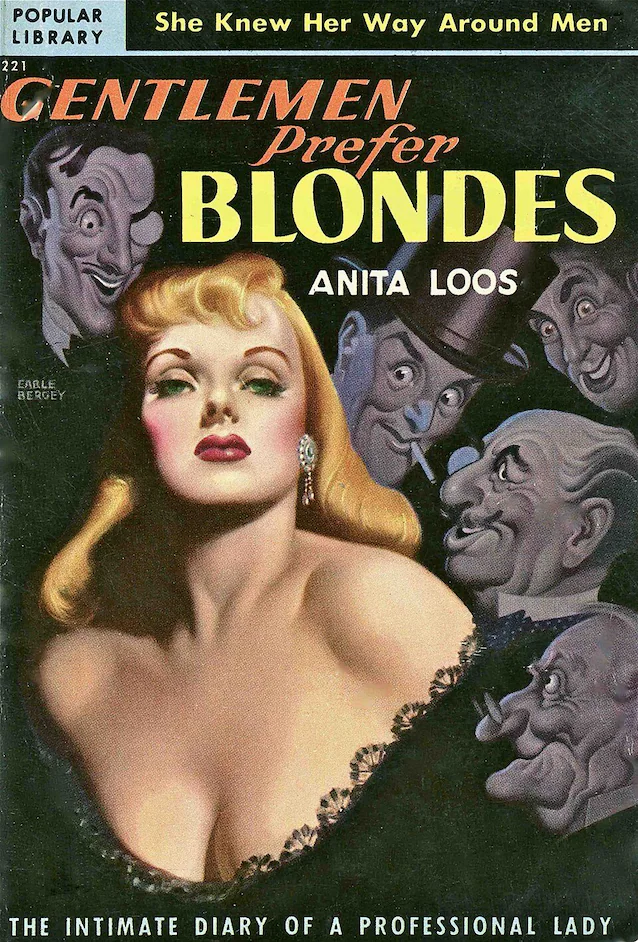
The blonde cliché it then consolidated during the 20th century with the novel Gentlemen prefer blondes (1925) by Anita Loos, later adapted into a theatrical comedy and in 1953 into a film with Marilyn Monroe. The book and film tell the stories of Lorelei Leeyoung blonde chasing love with lightness and naivetyattracted by luxury and money.
The book by Anita Loos, the play and then the famous Hollywood film contributed to increasing prejudice, just as happened in the 18th century with the French theatrical comedy inspired by Rosalie Duthé, demonstrating how, in the diffusion of this idea, also thecommunicative and media aspect played a notable role.
This also happened because, to interpret Lorelei Leeit was chosen exactly Marilyn Monroeexcelled at playing a character seductive and apparently superficialbut in reality capable of highlighting an interesting social criticism, which however remained in the background, while the prejudice against the silly blonde instead consolidated – despite the lack of real connections.
Blondes today: media evolution and positive examples against the cliché
From the 2000s onwards, pop culture has rightly started to deconstruct the prejudice against blondes. The film is iconic Legally Blonde (in Italian Legally Blonde) released in Italy in 2002, where the protagonist Elle Woods, played by Reese Witherspoon, dismantles prejudices about blondes one by one by embarking on a brilliant legal career as a challenge to her ex-boyfriend, who considered her stupid.
In the recent film by Barbiedirected by Greta Gerwig, released in 2023, the very blonde doll from Barbieland, where all the women are confident and very successful, finds herself facing the challenges and problems of being a woman (and a blonde!) in the real world. The film shows how prejudices, consumerism and toxic consideration of physical appearance influence today’s thinking: the final proposal is that of a more balanced and less superficial society.
