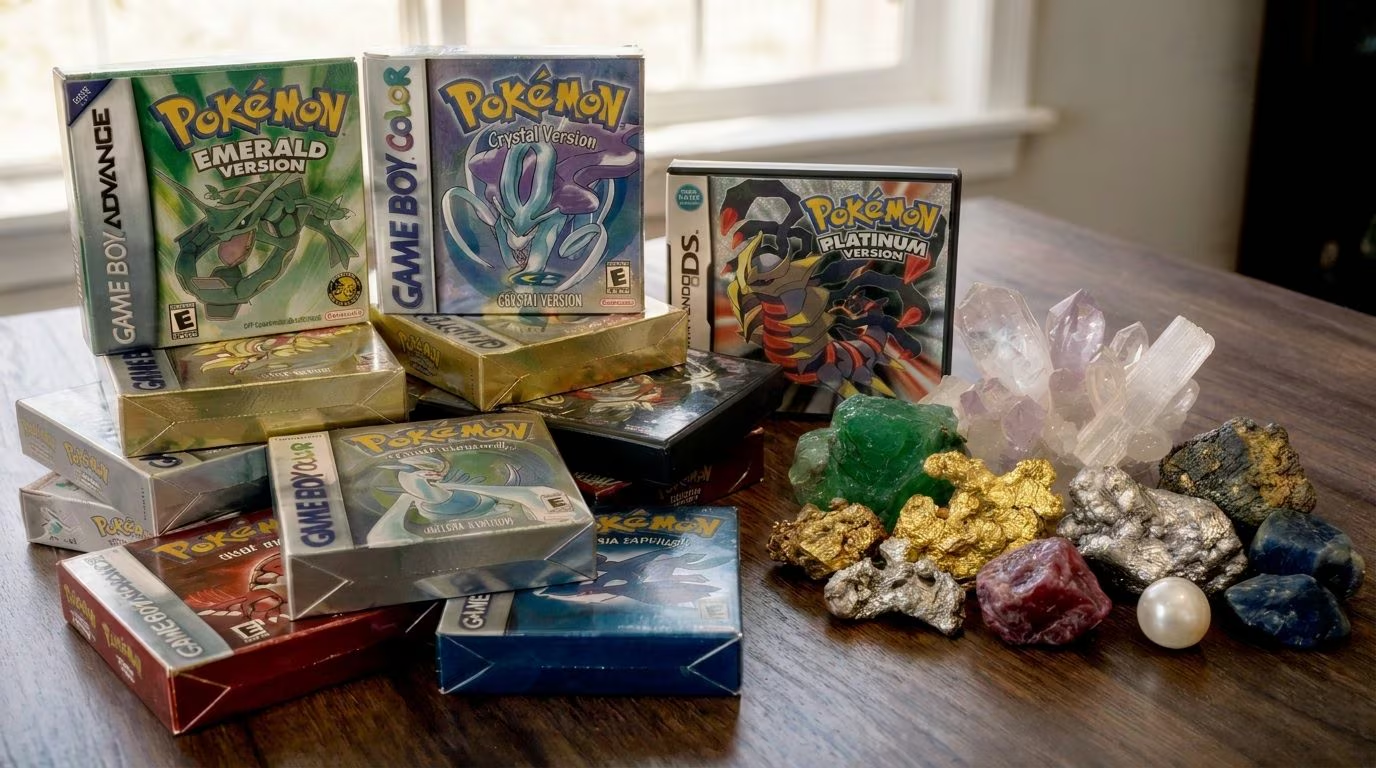
If you opened this article it’s because you too probably spent your childhood (and not only) together with Pokémon. For decades the main video games of the saga have been associated with minerals, metals And precious stonesbut the science behind these titles hides dynamics as fascinating as the pocket “monsters” themselves. Indeed, behind the covers of these famous cartridges are hidden geological processes, chemical anomalies And natural wonders. Just think of the microscopic impurities of chromium and iron that transform the same basic mineral into a red ruby or in one blue sapphireor the journey of over 150 kilometers from the depths of the Earth’s mantle necessary to bring to light a diamond. What is the true nature of these materials?
Pokémon Gold
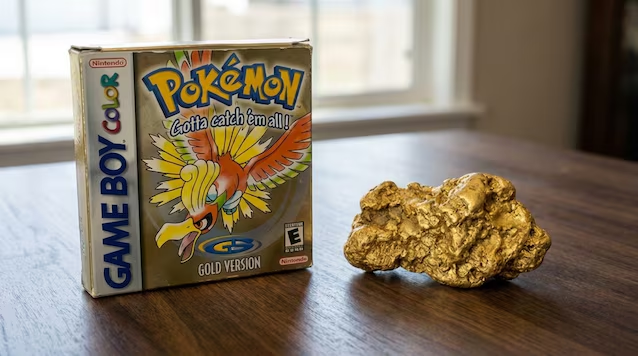
THE’gold native (chemical symbol Au) is a metal noble which, over the centuries, has fascinated all of humanity, above all thanks to its properties: it does not oxidize, it does not react with almost anything and it is extremely malleable. This allows it to be worked with ease, managing to obtain jewels and artefacts of incredible beauty. From a geological point of view, it is formed mainly thanks to precipitation of hydrothermal fluids at high temperatures within fractures, often concentrating within veins and veins. When these break down, the gold is often deposited in river beds in the form of nuggets or strawswhich can be collected.
Pokémon Silver
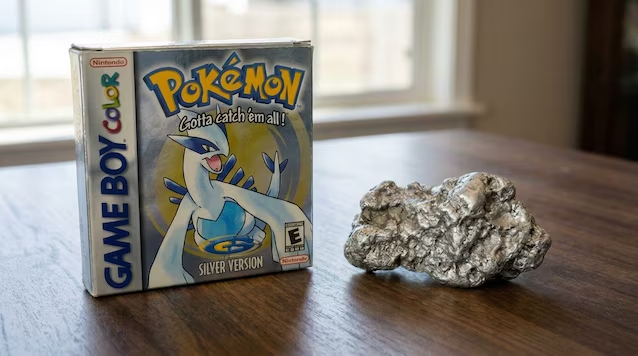
THE’native silver (chemical symbol Ag) is also a noble metalalthough unlike gold it tends to react much more easily with other elements. For example, in contact with sulfur present in the air it tends to darken – who hasn’t had an old half-black silver cutlery at home? From a geological point of view, even in this case we are talking about precipitation within hydrothermal veinsoften associated with minerals such as zinc, copper and lead. It has a lower economic value than gold but, in terms of physical properties, it has the higher electrical and thermal conductivity among all known metals.
Pokémon Crystal
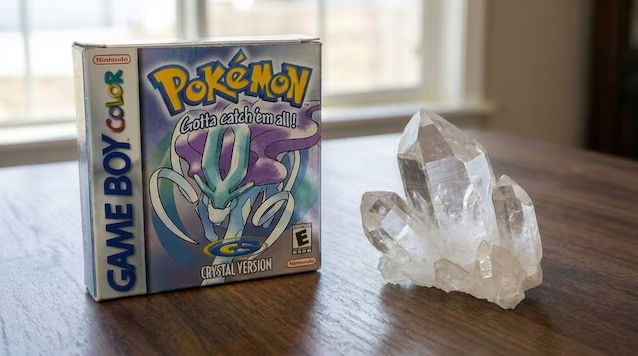
With the crystal, we are faced with an ambiguous meaning. In the commercial field the crystalunlike what some might think, is nothing more than a particular type of glass – therefore composed of silicon dioxide (SiO2). What makes it so special is the presence of lead inside, capable of giving the material a particularly shiny and brilliant appearance. However, if we remain in the field of geology in the strict sense, we can also refer to “rock crystal”, which is nothing other than hyaline quartz – the most transparent and impurity-free form of silicon dioxide. In nature, this mineral originates when silicon-rich hydrothermal fluids cool Very slowly. If the molecules have the time and space necessary to arrange themselves without interference, they give life to clear and transparent hexagonal prisms.
Pokémon Ruby
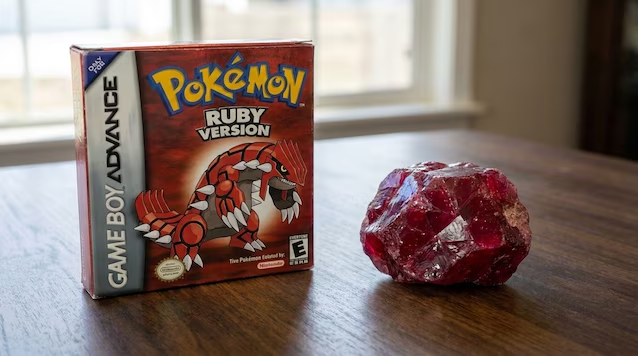
The rubyfrom a mineralogical point of view, is none other than the red variety of corundum (Al2OR3), a mineral consisting of aluminum oxide. It is one of the hardest minerals in the world – second only to diamond on the Mohs scale – and what makes it so vivid is the presence of microscopic impurities of chrome inside it. As for his training, he is typical of environments metamorphicwhere the rocks are subjected to very high pressures and temperatures.
Pokémon Sapphire
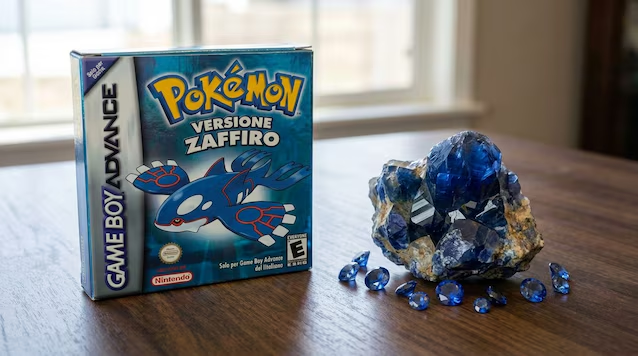
The sapphire it is the blue variety of corundum – or, better said, the non-red variety, given that it can also be pink, yellow, orange or other colors. From a mineralogical point of view, therefore, what has just been seen applies, with the only difference of the impurities: in the case of blue sapphire, for example, these are mainly composed of iron And titanium.
Pokémon Emerald
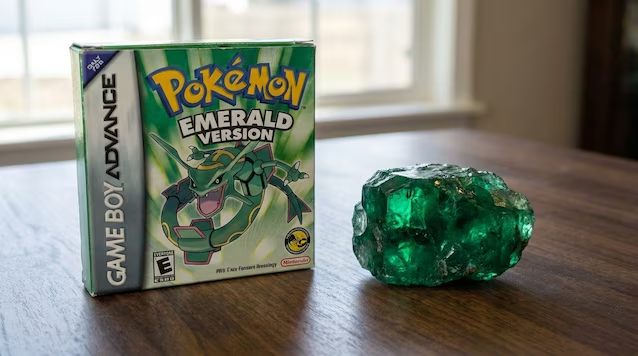
The emerald it is the green variant of the beryla mineral composed mainly of beryllium (a typical element of granitic magmas) and by the presence of impurities of chrome or vanadium (typical instead of the rocks of the earth’s mantle). These three elements, therefore, hardly come into direct contact with each other, and for this very reason, the emerald is considered a real rarity in the gemological world.
Pokémon Diamond
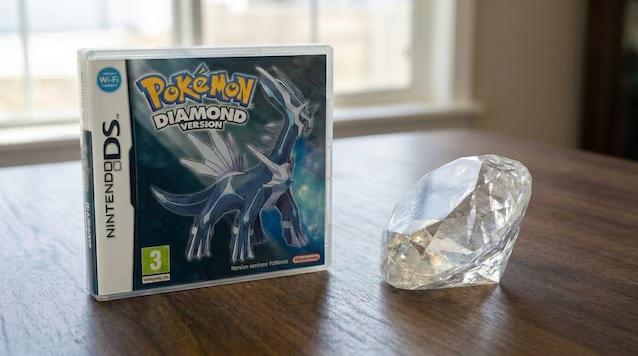
The diamond It certainly needs no introduction. It is a mineral composed entirely of carbonis the hardest in the world and its value can reach staggering figures. It is formed beyond 150 km deep inside the mantle and can be brought to the surface through particular volcanic eruptions. These give life to real chimneys rich in diamonds which are called “fireplaces kimberlites” – the largest of which are still found in South Africa today.
Pokémon Pearl
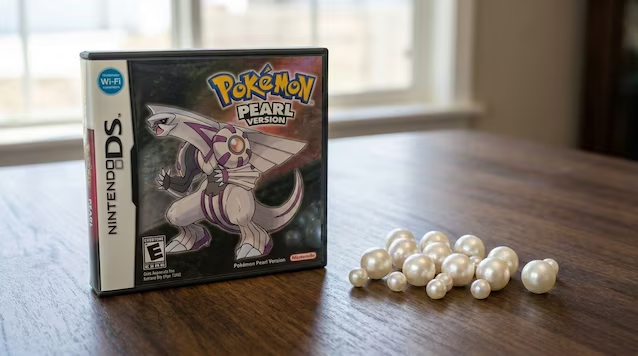
There pearl it is not a mineral in the strict geological sense, but rather a biomineral of organic origin. It is produced by some molluscs as a defense reaction against a foreign body intruding into the shell. The mollusk in fact secretes concentric layers of born (mother of pearl), composed of microscopic crystals of aragonite (calcium carbonate). These are welded together by a particular protein known as conchiolina and it is precisely this that allows the characteristic iridescent shine to be obtained.
Pokémon Platinum
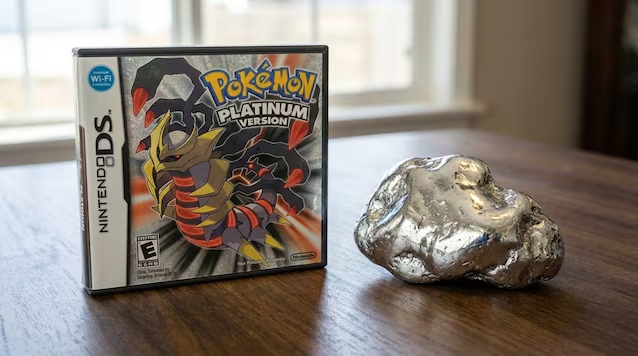
The native platinum (Pt) is an extremely rare and dense transition metal, belonging to the group of metals nobles. It has a very high melting point and is almost completely immune to corrosion: precisely for this reason its use in the industrial field is of primary importance – and this is also why its value is incredibly high. It originates in very high energy magmatic contexts or is deposited, due to its weight, in heavy alluvial sands.
