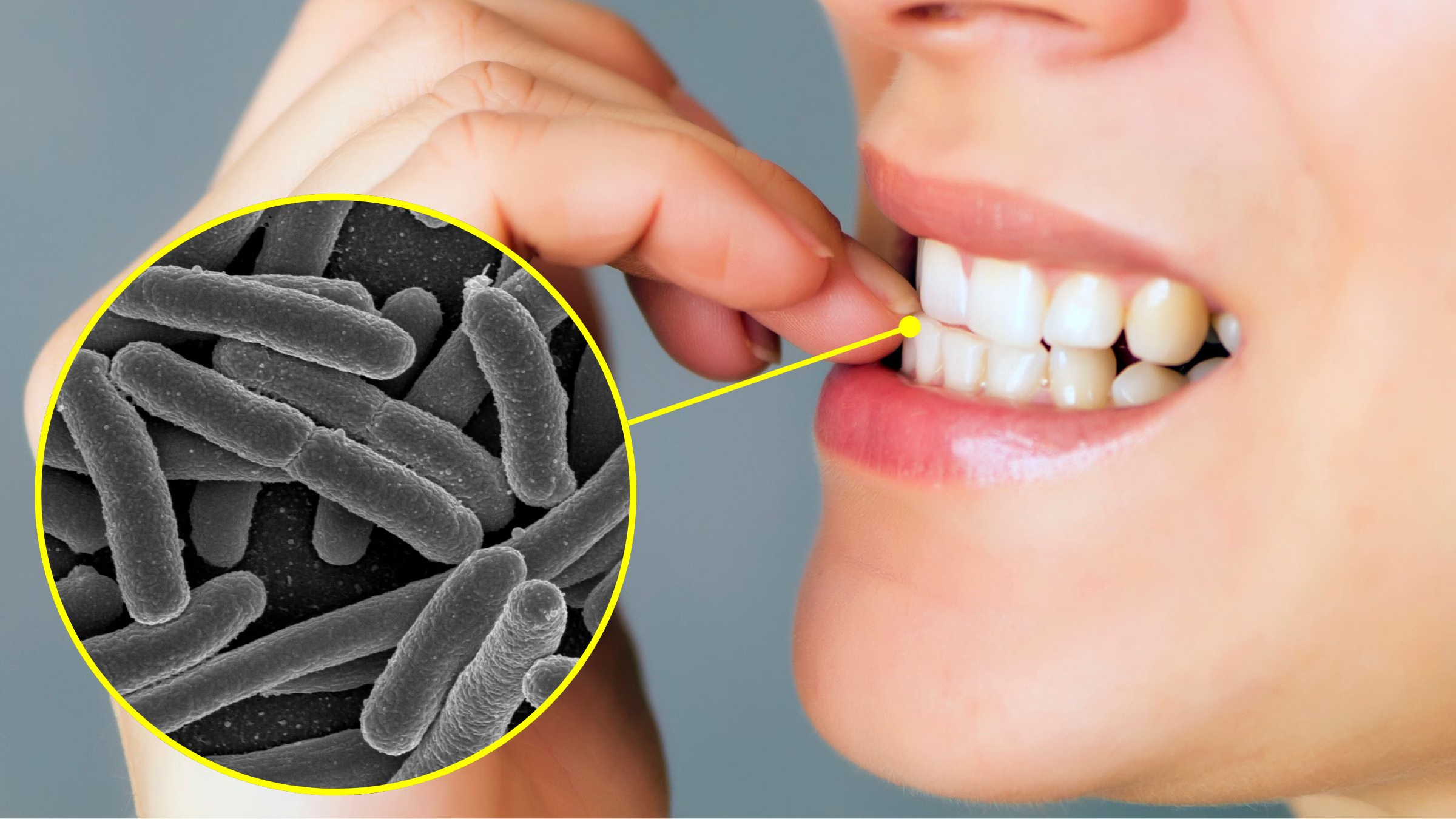
THE’chronic onychophagia (the repetitive habit of biting your nails) compromises both dental hygiene and hand health, becoming a vehicle for the continuous transfer of pathogens between the fingers, the oral cavity and the digestive system. As demonstrated by a study published in Journal of Clinical Microbiologyit subungual space (the small pocket under the free edge of the nail) hosts a much higher bacterial load than the rest of the hand. This sheltered and humid area acts as an ideal reservoir for staphylococci, Gram-negative bacilli and fungi, which are difficult to eliminate even with careful washing.
Disclaimer: This article is for informational purposes only and does not constitute medical advice. It is essential to contact your own doctor carer or to one qualified specialist for diagnoses, treatments or concerns regarding your health.
The study from the Journal of Clinical Microbiology: the bacterial map of the hands
THE’nail it is a sheet of keratin, the same protein that also forms hair, with a protective function: shields the fingertips from impacts and microtraumas and increases tactile sensitivity. The free edge of the nail, the one that protrudes beyond the fingertip, creates a small pocket called subungual spacethat is, a sheltered area that is humid and difficult to reach even with thorough hand washing.
The most cited scientific reference on this topic is a 1988 study by Kathleen J. McGinley, Elaine L. Larson, and James J. Leyden, “Composition and density of microflora in the subungual space of the hand“, published on Journal of Clinical Microbiology. The researchers took samples from different areas of the hands of 26 adult volunteers, comparing the bacterial load of the space under the nail with that of other areas of the skin of the hand.
Under the nail the average bacterial density measured was log10 5.39 CFU (Colony Forming Unitsthe unit with which the number of cultivable bacteria is counted), against an interval of 2.55-3.53 in other areas of the hand. Translated into simple numbers, it means a bacterial load up to a few hundred times higher than the rest of the skin on the hand.
The ones who dominate are coagulase-negative staphylococci (in particular Staphylococcus epidermidis, S. haemolyticus And S. hominis), normally present on the skin. But in the 42.3% Gram-negative bacilli, in particular, were also isolated from the subjects Pseudomonas (a genus of bacteria that is more difficult to eliminate with simple washing and is more often associated with infections) and in many cases 69% yeastsfor over half of the cases identified as Candida parapsilosisthe same fungus involved in some nail infections.
The American CDC cites them in its own hand hygiene guidelines for healthcare personnelrecommending keeping natural nails within a quarter of an inch (about 6 mm) in length and not wearing artificial nails in contact with high-risk patients, precisely because even careful washing with soap and water cannot completely reach the subungual space.
The CDC guidelines for the general population they are simpler but they go in the same direction: keep your nails short, clean them with a special toothbrush every time you wash your hands and, above all, avoid putting your fingers in your mouth to eliminate direct contact between the area of the hand with the highest bacterial load and the oral mucosa.
Enterobacteriaceae in the oral cavity: what dental studies say
A second line of research has verified what happens when the bacterial load ends up in the mouth, focusing in particular on Enterobacteriaceae, a family of bacteria (including Escherichia coli) typically of intestinal origin, the presence of which in saliva signals contact with feces, soil or contaminated surfaces.
The authors of a study published in Oral Microbiology and Immunology in 2007 they compared saliva samples from 25 subjects with a chronic habit of nail biting and 34 subjects without this habit, with an average age of approximately 13-14 years. The result was the presence of E. coli and other genera of the family (Enterobacter aerogenes, E. cloacae, E. gergoviae) in the saliva of the 76% of nail bitersversus just the 26.5% of non nail biters.
A 2015 study (Contemporary Clinical Dentistry) conducted on 100 children (between 8 and 15 years old) compared those who bite their nails with those who have the habit of thumb sucking and those who have neither of the two vices. In chronic nail biters it is there much more dental plaque and a greater concentration of intestinal bacteria (Enterobacteriaceae). According to researchers, this habit doesn’t just carry germs from your hands to your mouth, but worsens general oral hygienecreating a perfect ecosystem for bacteria to proliferate.
The physical consequences on the mouth and hands
In the vast majority of cases this exchange of microorganisms does not produce any perceptible effect: the immune system handles exposure without problems. But when onychophagia becomes chronic and the tissues around the nail are repeatedly damaged, the picture can become complicated.
UCLA Healtha major academic health and medical system based in Los Angeles, lists among the most common consequences of chronic nail biting: dental damage such as chipped or misaligned teeth, fungal infections of the nail bed, injuries to the soft tissues of the mouth and cuticlesAnd local skin infections caused by the transfer of bacteria from the fingers to the mouth and vice versa. One of the most frequent complications is paronychiathe inflammation of the skin fold around the nail, favored by the micro-lesions that repeated biting causes to the cuticle. In rarer cases, the same bacterial entry route can lead to deeper infections of the finger tissues. Again according to UCLA Health, regularly ingesting detached nails also carries the risk of introducing the same bacteria into the digestive system.
How to prevent nail biting according to the American Academy of Dermatology
The AAD offers a practical, step-by-step approach to stopping nail biting:
- Keep your nails short: less material available means less temptation, and less subungual space to colonize.
- Apply a nail polish with a bitter tastedesigned specifically to discourage biting.
- Treat or cover your nails (normal nail polish, tape, gloves), so as to make them less “attractive” to ruin.
- Replace the gesture with an alternative habit, like clutching a stress ball, when the urge hits.
- Identify your triggers (boredom, stress, concentration on a task) to intervene before the automatic gesture is triggered.
- Proceed step by stepfirst eliminating the bite on one finger or hand at a time, until the control is extended to all the nails.
If, despite these precautions, the habit persists uncontrollably or causes visible damage to the skin and nails, the specialists’ recommendation is always to consult a doctor. Chronic nail biting is clinically classified as a repetitive behavior focused on the body, often linked to anxiety or, in some cases, a obsessive-compulsive disorder.
