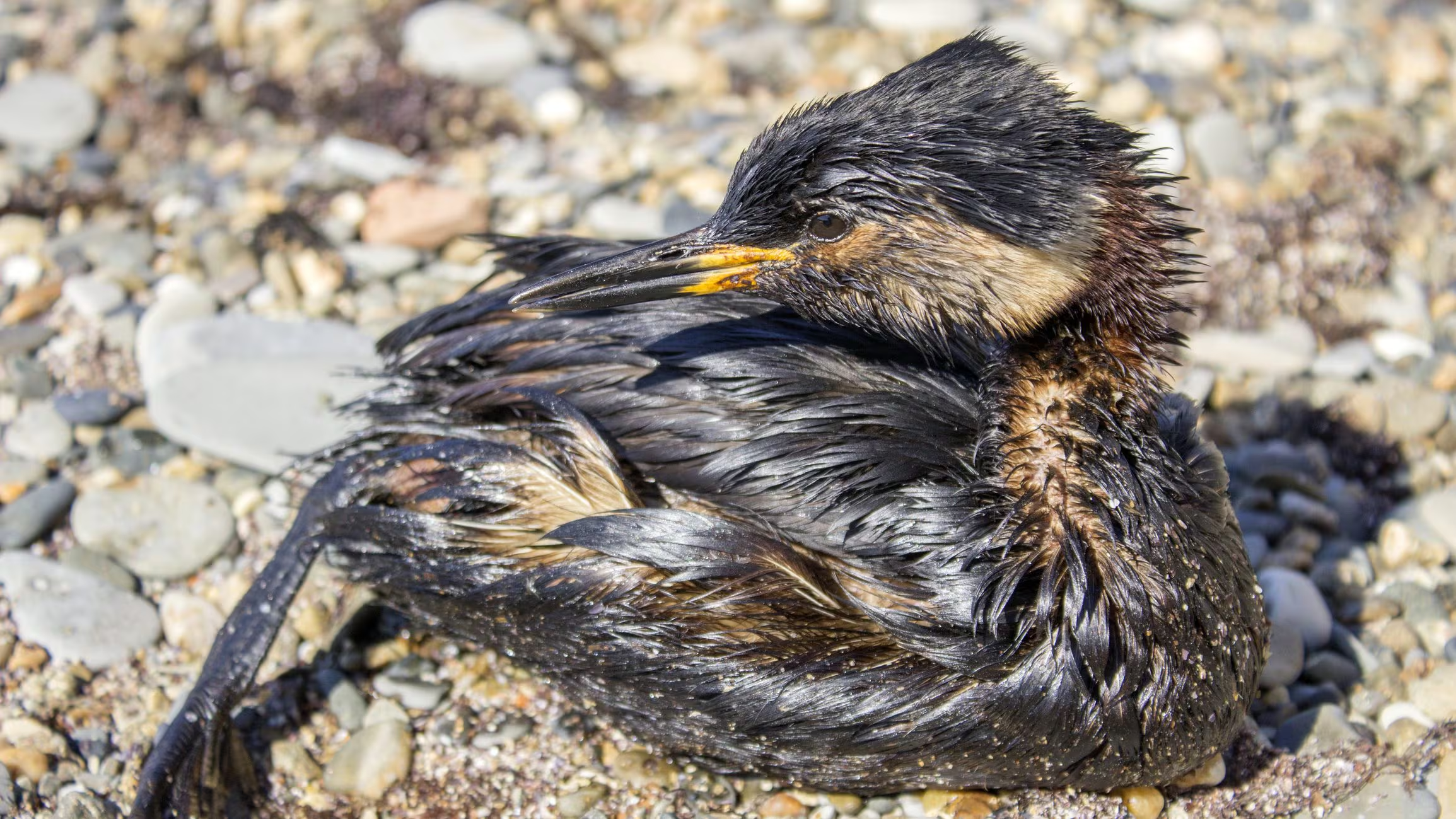
A few days ago a serious episode of hydrocarbon spillage (probably diesel) occurred in the waters of the Naviglio Grande in Pontevecchio, a hamlet of the municipality of Magenta, in the western part of Milan. A black oily stain spread for about a few hours 28km almost up to the Darsena of Milan. One of the most immediate and impressive effects of the disaster was on the waterfowl (mallards, swans, moorhens) which often frequent the banks and waters of the Naviglio. The images of the specimens found completely smeared by the polluting material are perfectly reminiscent of the dramatic photos of seabirds recovered from the sea completely covered by oilafter accidents caused by oil tankers. Following such a disaster, a large number of animals, not only birds, but also fish, amphibians or small mammals, die because they are covered in the oily liquid or because they are intoxicated by ingesting or inhaling volatile substances. Birds in particular are not only “poisoned”, but immediately lose the water-repellent properties of their plumage: a factor of vital importance. The intervention necessary to save them is very complex and must be carried out promptly by expert hands. To find out the methods used and understand the complexity of the operations to be implemented, we consulted the Dr. Stefania Pulici of the Wildlife Recovery Center of the Italian Bird Protection League (LIPU) of Magentathe very Center where experts and volunteers intervened in recent days to rescue the animals contaminated by the hydrocarbon spill.
What are the effects of hydrocarbons on birds
Hydrocarbons have a double effect on birds, viz they soil them and intoxicate them. Obviously the effects on the animal depend on the nature of the hydrocarbons and their concentration, but even modest quantities cause significant damage. Studies conducted on the Shearwater (Puffinus puffinus), a seabird that spends much of its time at the surface of the water, have shown that a surface oil layer of only 0.1 µm is sufficient to increase the permeability of feathers and irreparable damage results from oil slicks with a thickness of 3 µm. Consider that we are talking about a layer 100 times thinner of plastic film for food, yet it is capable of altering the structure of the plumage. In fact, in the event of contamination, a series of chain effects occur with disastrous consequences: the hydrocarbons cause a immediate reduction in the impermeability of the plumagethe water absorbed by feathers and feathers begins to penetrate towards the skinweighing down the animal and reducing its thermal insulation. This leads to damage to thermoregulation and the bird goes in hypothermia. Furthermore, toxic effects occur by inhalation or by ingestion resulting in liver and kidney damage and with haemolytic anemia phenomena which can lead to death in a short time.
Bird plumage: an excellent raincoat
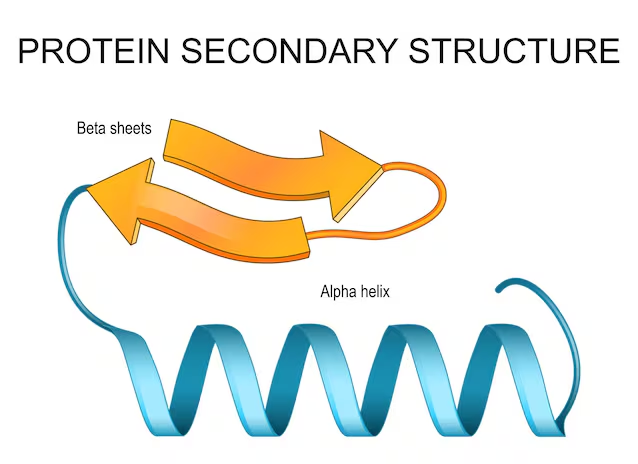
The plumage of birds is a true concentrate of technology: it is insulating and waterproof, as well as protecting the animal from wind and sun. These properties derive mainly from the microstructure of the feathers rather than from the chemical composition considering that the main structural component is the β-keratin, very similar to the one that makes up our nails and hair, which however is called α-keratin and has a different and more flexible secondary structure (alpha-helix).
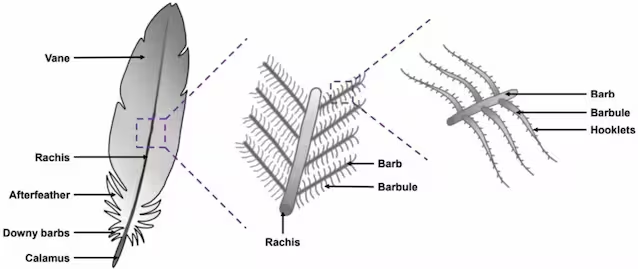
A feather has a very complex three-dimensional architecture and it is precisely this that gives the plumage many peculiarities. By observing a feather or a pen we recognize the Calamothe hollow and cylindrical part inserted into the skin, functions as a structural base, the one that was used when feathers were used for writing (hence the term inkwell). Its extension is said Rachisrigid but light, constitutes the central axis of the pen and supports it entirely. The wide, flat and flexible part on both sides of the spine, called Banneris formed by a dense series of filaments parallel to each other, the Beards and, from these, the Barbule, further tiny lateral branches. In feathers, however, the beards are softer and less tightly connected, creating a soft structure that retains air and allows thermal insulation. However, the good conditions of each branch are essential to maintain its functionality and to allow birds both thermoregulation and the possibility of diving without getting soaked or sinking and then immediately resuming flight.
How to clean and care for a bird soiled by diesel fuel: the LIPU protocol adopted in the Naviglio
Unfortunately we need to intervene quickly and an emergency intervention on the unfortunate contaminated birds it absolutely cannot be carried out by non-expert personnel. Home remedies are counterproductive and they risk worsening an already very serious situation in itself. Finding a bird in these conditions is necessary repair it in a cardboard box in which ventilation holes must be drilled e transport it to the nearest wildlife recovery centre. The LIPU protocol also recommends using gloves, because these substances are often toxic to humans too.
The Doctor Stefania Pulicinaturalist from the LIPU Wildlife Recovery Centre, illustrated the details of the LIPU operational protocol. The hospitalized animal is immediately subjected to various clinical tests and must be kept in a heated place. Cleaning must be quick, methodical and with highly effective surfactant detergents, but it doesn’t have to never exceed 30 minutes to minimize stress on the animal.
A combination of related, non-toxic solvents, such as Vaseline and is used detergents with high surfactant efficacyto “dissolve” even the densest lumps of contaminants and allow them to be removed with water. Once the clinical conditions of the animal have been stabilised, the next steps indicated by Dr Pulici are washing in series tanks with hot water at 45°C. and perfect drying of the animal, to ensure correct thermoregulation. The operation must be repeated several times in order to clean feathers and feathers completely and ensure they are completely waterproof, a process that takes several days to complete. Supportive therapy primarily involves fluid therapy, using warm fluids. It is also important to ensure adequate thermal support, through external heating systems, such as heating lamps.
As for nutrition, this can be administered via route enteral (directly into the stomach) if the body temperature is above 38 °C, or via parenteral (directly into the bloodstream) when the body temperature is below 38°C. In both cases, the food must be supplied at a temperature of approximately 40°C. As further support, the administration of antibiotics, vitamins and antioxidants may be useful, depending on the patient’s needs. Another important aspect is the reduction of the absorption of the substance possibly responsible for the intoxication. For this purpose it can be administered activated charcoal orallywhich acts at a gastrointestinal level. Furthermore, it is important to clean the mucous membranes, so as to remove any residues of the substance.
