
Every time the earth shakes violently, we are suddenly reminded of how alive, dynamic and unpredictable our planet is. In the collective imagination, the risk of a devastating earthquake is often associated with distant places: the mega-earthquakes along the Pacific Ring of Fire in Japan or the spectacular rifts of the San Andreas Fault in California. Yet, the geographical reality in which we live tells a very different story and much closer to us. Europe, and in particular the whole of it Mediterranean basinis one of the most geologically turbulent and active regions on the planet. Give it to her faults that plow the Italian peninsula to the seismic arcs of Greece And Türkiyeup to the complex mountain systems of Balkans and of Iberian Peninsulathe history of the continent has always been marked by earthquakes that have redefined territories and destroyed entire cities.
Faced with the scientific certainty that the earth will shake forcefully again, the crucial question to ask is not whether it will happen, but… When and, above all, how prepared we will be to face the consequences, considering the available technologies and the vulnerability of the existing building stock.
Seismic risk in Europe
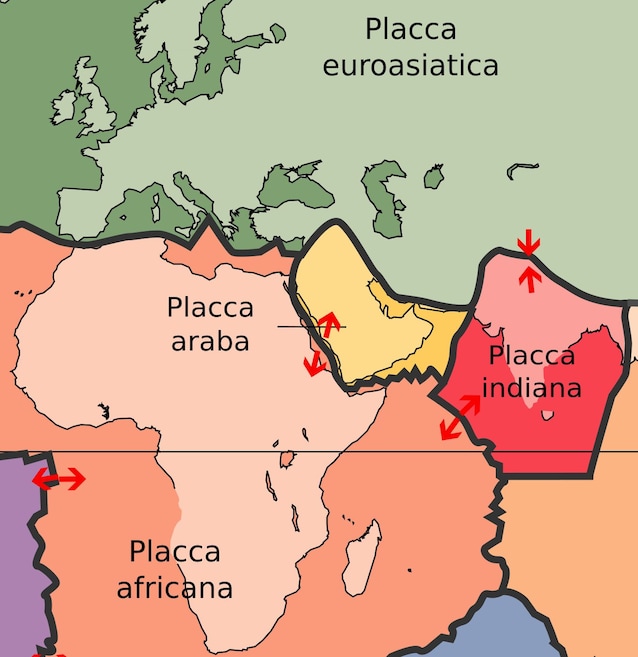
When analyzing Europe’s seismic risk, we must first look at what is happening beneath our feet. The Mediterranean area is a real geological laboratory in continuous movement. The primary driver of this instability is the slow but inexorable movement of African platewhich pushes northwards by moving approximately 4-10 millimeters per year and compressing against the Eurasian plate. This gigantic tectonic grip does not unload along a single line, but fragments the crust into a complex web of active faults and microplates – such as the Adriatic or Aegean ones – extending from Anatolia to the Apennines, up to the Balkans and the Hellenic arc.
From a scientific and monitoring point of view, our knowledge of the phenomenon has made great strides. Today the continental scientific community has first-rate integrated tools, such asESHM20 (European Seismic Hazard Model), one map at very high resolution developed by processing centuries of historical seismic catalogues, satellite surveys GPS and data on active faults from Lisbon to Athens. This model allows us to precisely calculate the peak ground acceleration that we can expect in a given area. By combining these geological data with the rigid technical design regulations, i.e. the Eurocodeswe know with considerable scientific rigor what accelerations the ground may undergo. However, theoretical knowledge and computational ability are only half the battle.
What if a big earthquake hits? The weak point is the building stock
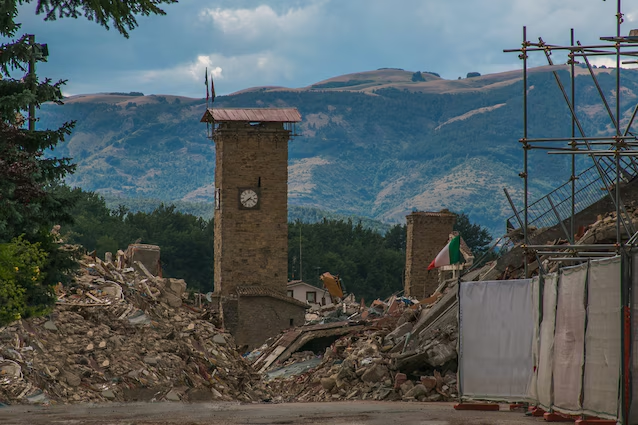
Europe’s real weak point is past. While in countries like Japan most of the structures come renewed periodicallythe European urban fabric is characterized by historic villages, ancient centres and millions of buildings built before the introduction of modern anti-seismic standards. Upgrade or reinforce a historic center in stone or in unreinforced masonry it is a titanic challenge, both from an economic and engineering point of view. When an earthquake with a magnitude greater than 6.0 strikes, it is precisely these inadequate buildings that suffer the most damage.
However, preparing for the next big earthquake does not just mean building well, but… create an integrated defense ecosystem:
- Seismic adaptation: targeted interventions such as tie rods, base insulators, reinforced plasters and carbon fiber nets can make the difference between the collapse and preservation of a house.
- Early Warning Systems: the integration of latest generation seismic sensors allows automatic alerts to be sent a few seconds before the arrival of the most destructive seismic waves, allowing high-speed trains to be blocked, gas pipelines to be closed and industrial plants to be made safe.
- Risk culture: the population must know exactly how to behave during and after an earthquake. Prevention is not just engineering, but awareness.
Europe has all the scientific and regulatory tools to be ready. However, the seismic safety it is not a goal achieved, but a work in progress. The next big earthquake will arrive, it is up to us to accelerate the transition towards securing the existing heritage to ensure that a natural phenomenon does not transform, once again, into a human tragedy.
