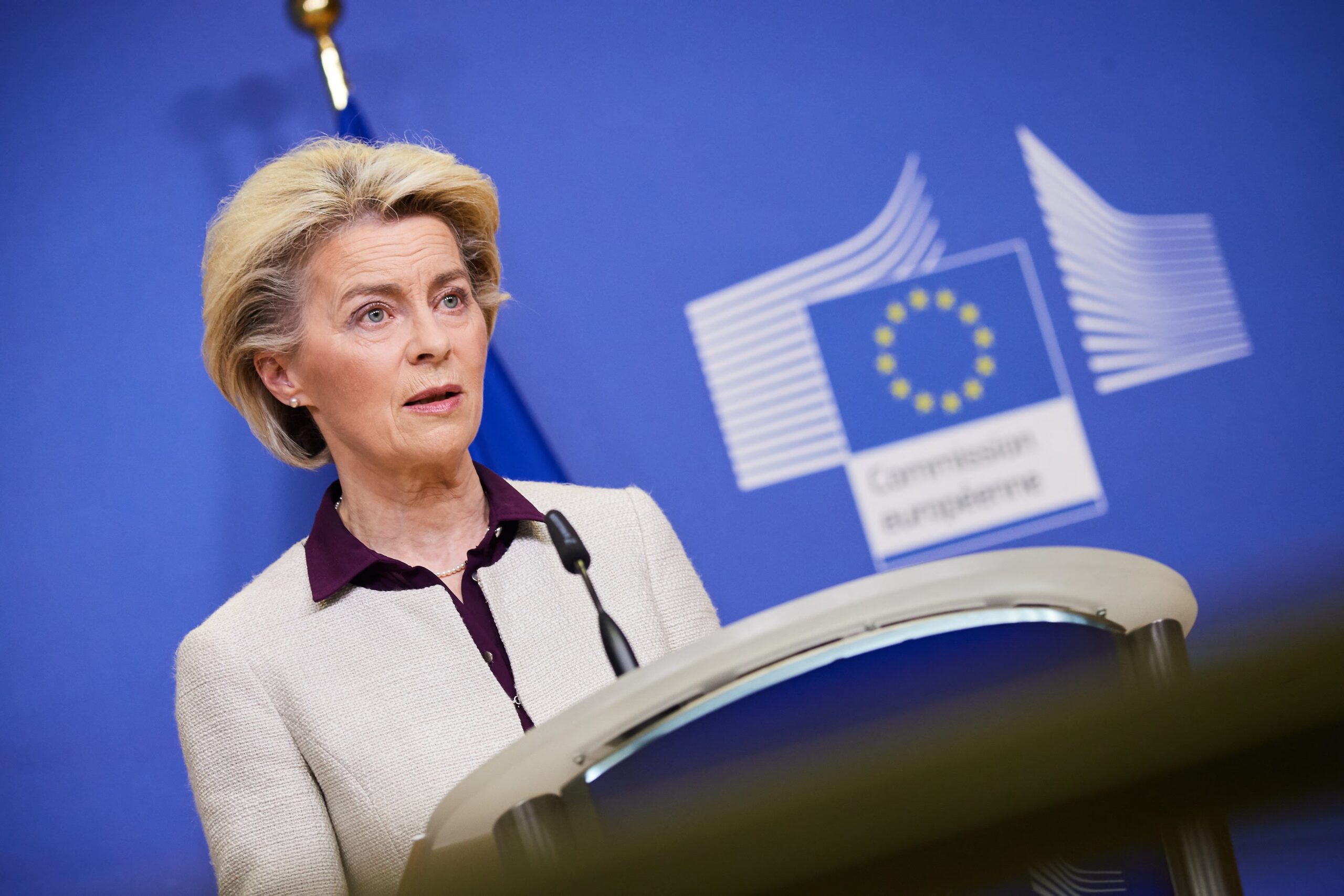
The speech on the state of the European Union is a intervention annual of/of President from the European Commission before the European Parliament, aimed at defining the Union’s priorities for the coming year. The President of the European Commission Ursula Von Der Leyn in his speech on 16 September he defined theEuropean Union like “stronger than ever”, although it may also appear “more precarious than ever”. The European Union wants to reduce its own strategic dependencies and transform the economic weight of the single market into a greater capacity to act independently, and in recent days there has been talk of Canada’s possible entry as an associate member. Let’s analyze together what the main ones were macro-themes addressed and the current ones challenges for Member States – while you can find the full video here.
Energy limit problem: double electricity by 2040
One of the central points and priorities of the European Union is‘energy: after the drastic reduction in imports of gas from Russiathe European Union has diversified its supplies and increased the production of renewable and nuclear energy. But for President Von der Leyen the problem is not solved: European energy remains expensive and this represents a limit to competitiveness of the industry.
The proposal is a major one electrification of the economy: according to the estimates cited by the Commission, double the share of electricity by 2040 could reduce by approx 260 billion euros per year the European expenditure for the import of fossil fuels. However, there is a less visible problem: the electricity grid: in 2025 Europe would have installed more than that 80 GW of new renewable capacity, but an amount of capacity approximately six times higher than that installed in the year would still be waiting to be connected to the grid. The challenge is therefore not only to produce clean energy, but transport it and make it available when needed. The Commission intends to intervene by accelerating authorizations and investments in networks.
Dependence on China: the raw materials issue
Another big theme is the dependence industrial from China. Von der Leyen defined the current situation as unsustainable trade imbalance: according to the data cited in the speech, the EU’s deficit towards China is equivalent to approximately one billion euros a day. The problem is not just what Europe imports, but also How much they are concentrate someone supply chains.
The Commission indicates a dependence on China exceeding80% for many critical raw materials and up to 90% for some rare earths. These materials are fundamental for very different technologies: batteries, electric vehicles, semiconductors, energy systems And defense applications. Because of this Brussels wants to create a new European structure dedicated to strategic raw materials, with the aim of diversifying supplies and building reserves: it is a significant change compared to traditional economic logic. For years globalization has favored above all efficiency and low costs, now instead he is introducing another variable, namely the resilience of production chains. For example, a slightly more expensive raw material can become strategically convenient if it avoids an entire supply chain being dependent on a single country.
The new European strategy for defense and security
The war in Ukraine has highlighted another European dependence: that of military capabilities of allies, especially in the most expensive and technologically complex sectors. In her speech, President Von der Leyen proposed a new European strategy for the safety and a consultation mechanism similar, in logic, to theArticle 4 of NATO.
The Parties will consult each other whenever, in the opinion of either of them, the territorial integrity, political independence or security of any of the Parties is threatened.
Article 4 North Atlantic Treaty
The idea is to be able to coordinate a European response even to threats that do not yet constitute a direct military attack: drones, sabotage, cyberattacks and other forms of hybrid warfare. The Commission also wants to strengthen capabilities defined as “strategic enablers”: air and anti-missile defense, strategic transport, air refueling, space and cybersecurity. The point is not only to increase military spending, but to develop capabilities that require enormous investments and that each state can hardly build independently. There European defense is therefore increasingly presented as a problem of industrial coordination And technologicalas well as military.
Artificial intelligence: safety and the ability to use it correctly are at the center
Another priority is theartificial intelligence. The European strategy is also to develop European computing capabilities, infrastructures and industrial applications, using AI in sectors where Europe already has expertise: healthcare, transportation, agriculture, manufacturing, defense and space. At the same time, Brussels wants to continue to intervene on the safety of artificial intelligence and the risks of the most advanced models. The challenge for the EU, therefore, is to be able to do both without regulation increasing costs too much for European businesses or, on the contrary, the search for competitiveness reduces the ability to control risks.
A climate that has now changed: what does adaptation consist of
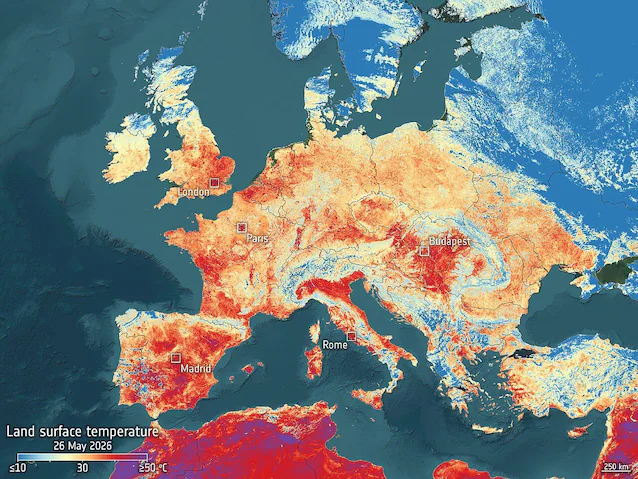
In the speech the climate change occupies a significant space, but with a different emphasis than in the Green Deal years. Von der Leyen called summer 2026 the “summer of truth”, quoting i 660,000 hectares burned by fires, approximately 12 million tons of lost crops and more 35,000 deaths associated with heat waves. The message is that the climate policy it can no longer just concern the reduction of emissions: must also take care of adaptation, namely city protection, water management, agriculture, fire prevention, infrastructure and health systems. Mitigation seeks to limit future warming by reducing emissions, whileadaptation tries to reduce the damage caused by a climate that has already changedoe will continue to change.
A more integrated and strong Europe even outside the EU
Among the most surprising proposals is the one relating to Canada: Von der Leyen opened up about the possibility of him becoming the first “associate member” of theEuropean Uniona formula which at the moment does not correspond to real membership and whose institutional details have yet to be defined. The goal would be to build much closer cooperation on technology, energy, defense, Arctic, critical raw materials, batteries, artificial intelligence and economic security. It is a proposal that fits into the same logic as the other initiatives in the discussion: if the world becomes more competitive and fragmented, Europe tries to increase one’s ability to cooperate with partners considered strategic without necessarily integrating them into the Union.
https://www.istockphoto.com/it/foto/the-teenager-in-the-bed-is-listening-to-music-gm2135912860-568260357?searchscope=image%2Cfilm
No social media for children under 13
Among the most relevant proposals for European citizens is the EU Kids Act: the Commission has proposed a limit of 13 years old for social media access, 15 years for personal and major accounts safety obligations and designing platforms for teenagers. It is a sector in which the scientific debate is particularly complex: the association between the use of social media, sleep, mental health and risky behavior is documented in numerous studies, but establishing a causal relationship with the use of social media is much more difficult. The problem therefore concerns not only the time spent online, but also the type of content, the methods of use and the individual characteristics of users.
The state of the art: a Europe seeking autonomy
Looking at the entire speech, one emerges common strategy behind apparently very different themes. The question is how much can it be Europe is autonomous in a world in which the economic dependencies they can quickly turn into strategic vulnerabilities? Among all the topics mentioned, some already have ongoing programs, others still need to be transformed into legislative proposalsfinancing or agreements between Member States. And this is precisely the main unknown: the speech defines one direction, but its effectiveness will depend on the ability of the 27 member countries to finance and implement concretely these policies. The State of the Union described by von der Leyen, therefore, is not that of a European Union that is simply trying to return to the situation prior to the crises of recent years, but which is attempting to adapt to a new one international environmentin which energy, technology, industry, climate and security they are increasingly intertwined. The question for the next few years will be to understand whether this greater autonomy it will remain above all a political objective or he will manage to transform himself into industrial, energy and strategic capacity concrete and above all common and uniform to all Member States.
