The eruptions volcanic they are spectacles of nature as fascinating as they are terrifying. However, there are experts who are responsible for going near erupting volcanoes and collecting shreds of lava still hot to be able to study it. But for what reason? This is not a test of courage but a fundamental study methodology to increase our knowledge about volcanoes and effusive eruptions.
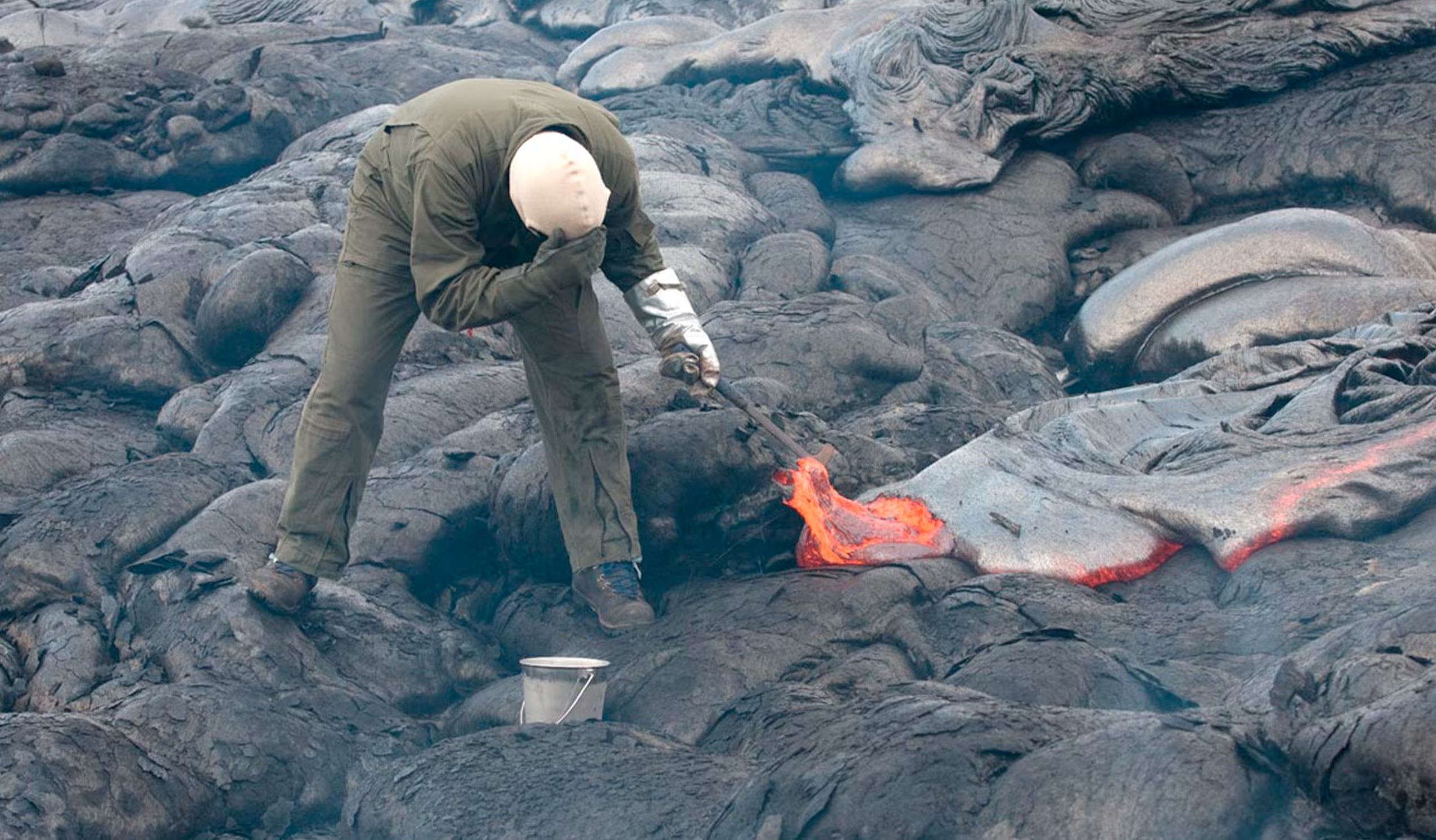
To get close to an active flow means dealing with brutal radiant heat. The geologists ofHawaiian Volcano Observatory (HVO) of the USGS – accustomed to this type of practice – equip themselves with thick gloves, face masks and clothing fireproof technicians (like Nomex) or in robust fiber natural (typically dense cotton or wool). The choice of the type of clothing is linked to the type of sampling that must be carried out and the expected time: for this reason, given that these are almost always very quick operations, it is preferable to use natural fiber clothing.
The harvesting technique, explained in the video below, is surprisingly simple. The first phase is that of withdrawal: with the geologist’s hammer you hit a piece of fluid lava, collecting a glowing blob at the tip – using special gloves and the aforementioned long clothes. At this point the boiling sample is immediately dropped into a metal bucket full of waterwhich cools the sample incredibly quickly. This step is essential to “freeze” the state of the lava for preserve the exact content and size of the crystals present in the active flow at the time of sampling. What you get in fact is a volcanic glass and it is precisely this, not the rock as a whole, that is analyzed in the laboratory.
From a research perspective, scientists use the content Of magnesium (MgO) in volcanic glass as a real thermometer. There is even a report, calibrated by decades of measurements on Kīlauea and Mauna Loa, that tells us how more magnesium in the glass is equivalent to one higher temperature of the liquid at the time of collection. In addition to this, the analysis of the samples allows us to understand how the composition of lava changes over timemanaging to indirectly reconstruct what is happening in depth.
Finally, these studies on volcanic glass also allow us to study the viscosity of the lava – that is, in simple words, how easily it is able to flow. This is critically important to understand where the casting will end and to model the flow more precisely.
