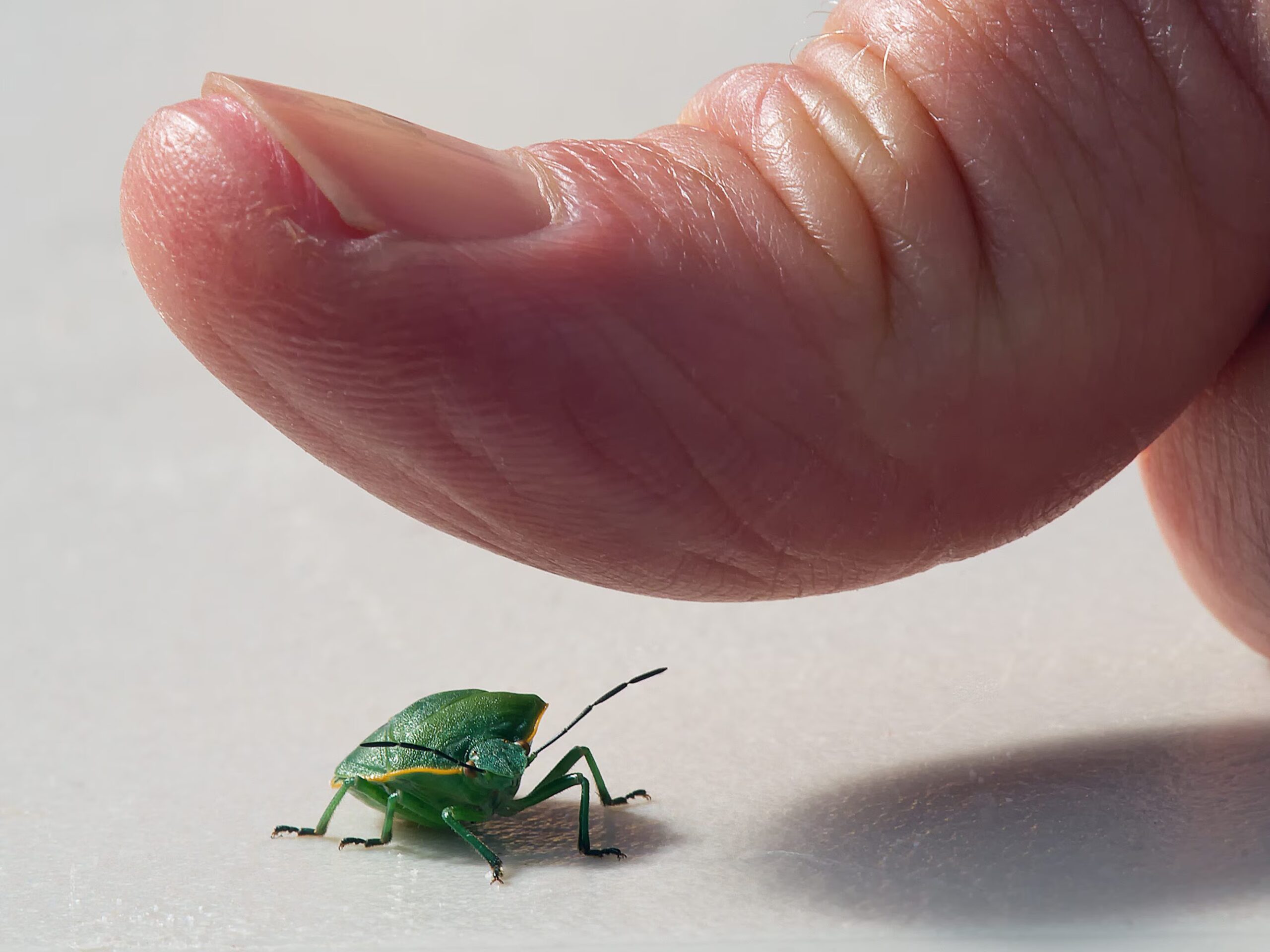
We see a bug on a wall of the house and instinctively try to crush it, but the action stops when, just a moment before the fatal impact, we remember that the insect will fill the room with a I smell nauseating. Why is this mechanism activated? The odorous secretions emitted by bedbugs are an effective defense system against predators, but they can also have antimicrobial effects or be used as chemical signals between individuals of the same species (pheromones). Not all bedbugs are the same, some are known around the world today around 5,000 species. However, they all emit odorous chemicalssummarized directly within the secretory glandsspecialized organs, positioned on the dorsal side of the abdomen in the juvenile stages and at the level of the thorax in a ventral position in the adult. The three species that we frequently find in our homes are: the brown bug or Asian bedbug (Halyomorpha halys), invasive alien species from temperate areas of eastern Asia, the Southern green stink bug (Nezara viridula) and the common green bug (Palomena prasina). Bedbugs, or the Hemiptera of the Pentatomidae family, represent a group of insects that are extremely feared in agriculture given the damage they cause to a large number of crops, but let’s remember that they are completely harmless to humans.
The “stink” strategy for communicating
The chemicals emitted by bedbug glands essentially serve to communicate. The main advantage of the emission of these compounds is their ability to provide rapid and effective protection against both predators and pathogens. In fact, they allow you to chase away enemies such as birds and reptiles discouraged from eating insects with such a disgusting smell and, according to a review published in Annual Review of Entomologythey may also have antimicrobial properties. Some compounds in particular show strong antibacterial and antifungal activity. Some odorous emissions are, however, used for attract other individuals of the same species. For example, the Asian bug forms large aggregations of specimens before entering diapause, around mid-October, and each insect uses chemical signals to attract the others to gather in a safe and sheltered place to spend the winter. Recently, research teams such as the one at Lincoln University in New Zealand are trying to identify the types of pheromones emitted by bedbugs as a way to detect the presence of these harmful insects during cargo inspections in warehouses and airports.
The composition of the secretions
The scent glands of bedbugs are real chemical “mini factories” considering the number and diversity of organic molecules they can produce. It’s about volatile organic compounds (Volatile Organic Compounds, VOCs) which therefore tend to disperse into the environment: mainly aldehydes and ketones, but also alcohols, esters and in some cases hydrocarbons (short-chain alkanes). Aldehydes and esters have strong odors and properties irritatingsuggesting their role as defensive signals, while hydrocarbons likely function as substrates to regulate the release of other compounds. Ketones have a less intense and sweetish smell (think of acetone, a typical ketone, to get an idea). Many are synthesized from scratch, directly into the glandstarting from the glucose introduced with the insect’s diet. For example, a gas chromatograph analysis of emissions from Asian stink bugs revealed a complex chemical profile with 10 compounds in males And as many as 11 in females. Studying the composition of secretions is also proving to be very useful for ways of combating these plant parasites.
What to do to prevent them from entering your home
Given that the real problem of the presence of bedbugs is for fruit plants and not for humansit is still possible to take some precautions to avoid or at least limit their presence in the home. There green bug it does not actively seek shelter in homes, but tends to congregate in humid places under dry leaves and is attracted to artificial lighting that emits cold white light. It’s good, then, remove accumulations of foliagemulches and materials where humidity is concentrated near the external walls and prefer yellow light lighting (2700–3000 K). There Asian bedbug instead, it actively seeks out closed places to spend the winter and therefore enters the house more easily in autumn. In this case, it is better to use mosquito nets and seal possible entry points in window frames or shutter boxes.
