There bone marrow donation (or hematopoietic stem cells) is a voluntary, free and anonymous act that can save the lives of patients suffering from leukemia and other blood diseases. To become a bone marrow donor in Italy you must be between 18 and 35 years old, weigh at least 50 kg and be in good health. Enrollment in the IBMDR Registry requires only a medical interview and a blood draw or saliva swab. If one day you are found to be compatible with a patient, the donation takes place in the vast majority of cases from blood, without anesthesia: in 2025 this was the case for 92% of blood samples. Here’s how the whole process works and why there is so much need for new donors.
What is bone marrow and what are hematopoietic stem cells
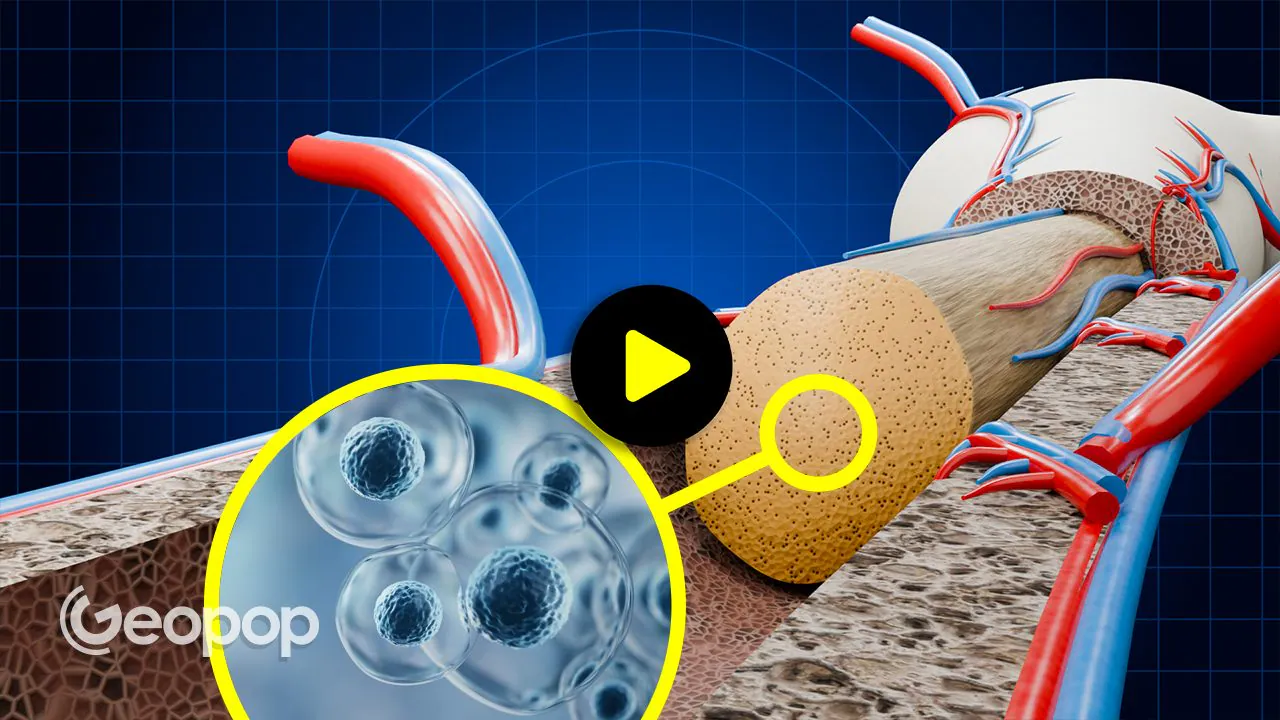
The bone marrow it is a spongy and soft tissue found mainly in flat bones, such as the pelvis, sternum, ribs and shoulder blades, and at the ends of long bones such as the femur and humerus. It should not be confused with the spinal cord, which is part of the nervous system. Inside there are the hematopoietic stem cellscells not yet specialized from which all the cells of the blood: red blood cells, white blood cells And platelets. The name comes from Greek and means, literally, “that produce blood”.
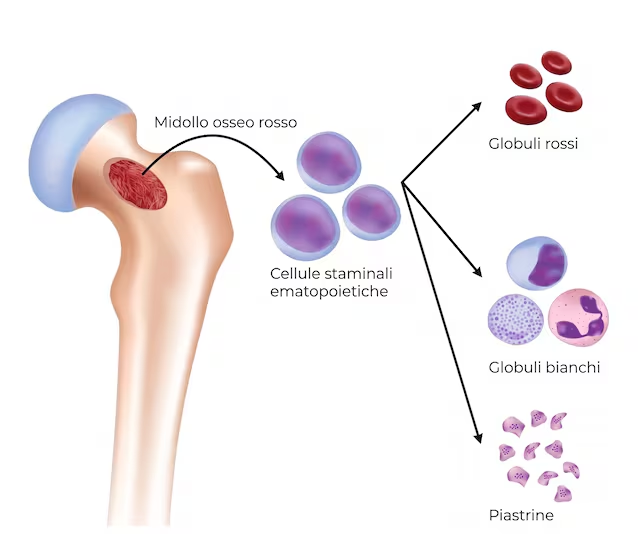
Precisely because they do not yet have a defined task, these cells function as an internal repair system, capable of continuously renewing the blood. And it is this characteristic that makes them precious for transplanting.
What is the transplant for?
The donor hematopoietic stem cell transplant replaces a diseased marrow or not working with healthy cells, yes multiply and they start again produce all blood cells. It is especially indicated in three groups of diseases: i blood tumorslike the leukemiasin which the new immune system can also help eliminate residual tumor cells; someone genetic blood diseasessuch as thalassemia or some serious immunodeficiencies; and the spinal cord insufficiencysuch as marrow aplasia, in which the marrow stops producing cells.
For the patient, the actual transplant consists of aintravenous infusionsimilar to a transfusion, preceded by a preparatory treatment (chemotherapy and possibly radiotherapy). The infused stem cells reach the marrow guided by the chemical signals that the bones release and begin to multiply: it is there‘rootingwhich is typically observed after two to three weeks, with median values between 16 and 20 days for neutrophils in a European study.
Why is it so difficult to find a compatible donor
For a marrow transplant it is not enough to have the same blood type: genetic compatibility is needed. Among brothers and sisters the probability of being fully compatible is 25%. Among unrelated people, compatibility is much rarer: the order of magnitude is one person in one hundred thousand, i.e. 0.001%.
This is why registers with many members are needed. As of December 31, 2025 the IBMDR Registry had 525,682 active members.
How to become a bone marrow donor: the step-by-step process
- Registration and typing. You can pre-register online on the IBMDR website or the ADMO and ADoCeS associations, or during street events. The Donor Center in your city then arranges a medical interview and a blood sample or saliva swab, from which the HLA typingthe “genetic identity card” which will be compared with that of the patients.
- Waiting and calling. You remain available until you reach the age of 55. Many members will never be called; if you are compatible, you will be contacted again for a new confirmation sample.
- Work-ups. Before donating, the donor carries out a complete and free check-up, with blood tests, electrocardiogram, x-rays and ultrasounds, to protect both him and the patient. Employees are entitled to paid leave for the necessary days (Law 52/2001).
- Donation. It occurs with one of the two methods described below, chosen by the patient’s doctor based on his needs. After the donation, the donor is followed up with periodic checks.
How the donation takes place: peripheral blood or iliac crests
From peripheral blood. It is the most used method: in 2025 it involved 92% of withdrawals. In the previous 4-5 days the donor receives subcutaneous injections of a growth factor which causes the stem cells to leave the bones and bring them into the blood. The cells are then collected with apheresis: the blood passes into a cell separator which retains the stem cells and is returned from the other arm. The procedure lasts a few hours and does not require anesthesia.
From the bone marrow. It is reserved for a minority of cases, for example when the recipient is a small child or for specific pathologies. The sampling takes place in the operating room, under anesthesia, with punctures of the posterior iliac crests, i.e. the bones of the pelvis, and not of the spinal column. The surgery lasts about an hour and hospitalization is generally 24-48 hours.
Is donating risky?
Zero risk does not exist in medicine, but the risks for the donor are minimal. In peripheral blood donation, the main disorder is linked to the growth factor, which can cause tiredness, bone pain and sometimes fever, symptoms that disappear at the end of the administration. In donating from the iliac crests the risks, which are rare, are linked to anesthesia or hematomas and infections at the site of the collection, and upon waking you may feel soreness in the pelvis.
It is a topic on which there is a lot of misinformation: according to a survey carried out for the National Transplant Center, 41% of young people believe that donation is painful and 45% that it is risky for their health.
The IBMDR registry is in contact with 139 registries around the world, not just in Italy
Unlike blood donation, which is organized on a national basis, marrow donation works as a global network. IBMDR is in contact with 139 registries around the world and, if a compatible donor is not found in Italy, the search extends abroad. The opposite is also true: an Italian donor can donate to a patient who lives on the other side of the planet. In 2025, IBMDR initiated 2,440 searches for patients treated in Italy. Globally, in 2023 the World Marrow Donor Association’s registries made 2,750 marrow donations and 20,759 peripheral blood donations possible.
Record year for Italy: the numbers
2025 was a record year, with 490 actual donations (+19.5% compared to 2024) and 1,161 transplants from non-family donors (+6%) (CNT, Preliminary Report 2025). There were 30,872 new registrations, after the 32,184 in 2024. The register, however, needs replacement: every year over 17 thousand members leave due to age limits, unsuitability or withdrawal of consent. The signs for 2026 are positive: in the first eight months of the year, 24,002 young people between 18 and 35 years old signed up, almost 4 thousand more than in the same period in 2025.
Those aged between 18 and 35 can find all the information on registration on the IBMDR website, on choosedidonare.it and on the websites of trade associations such as ADMO and ADOCES.
