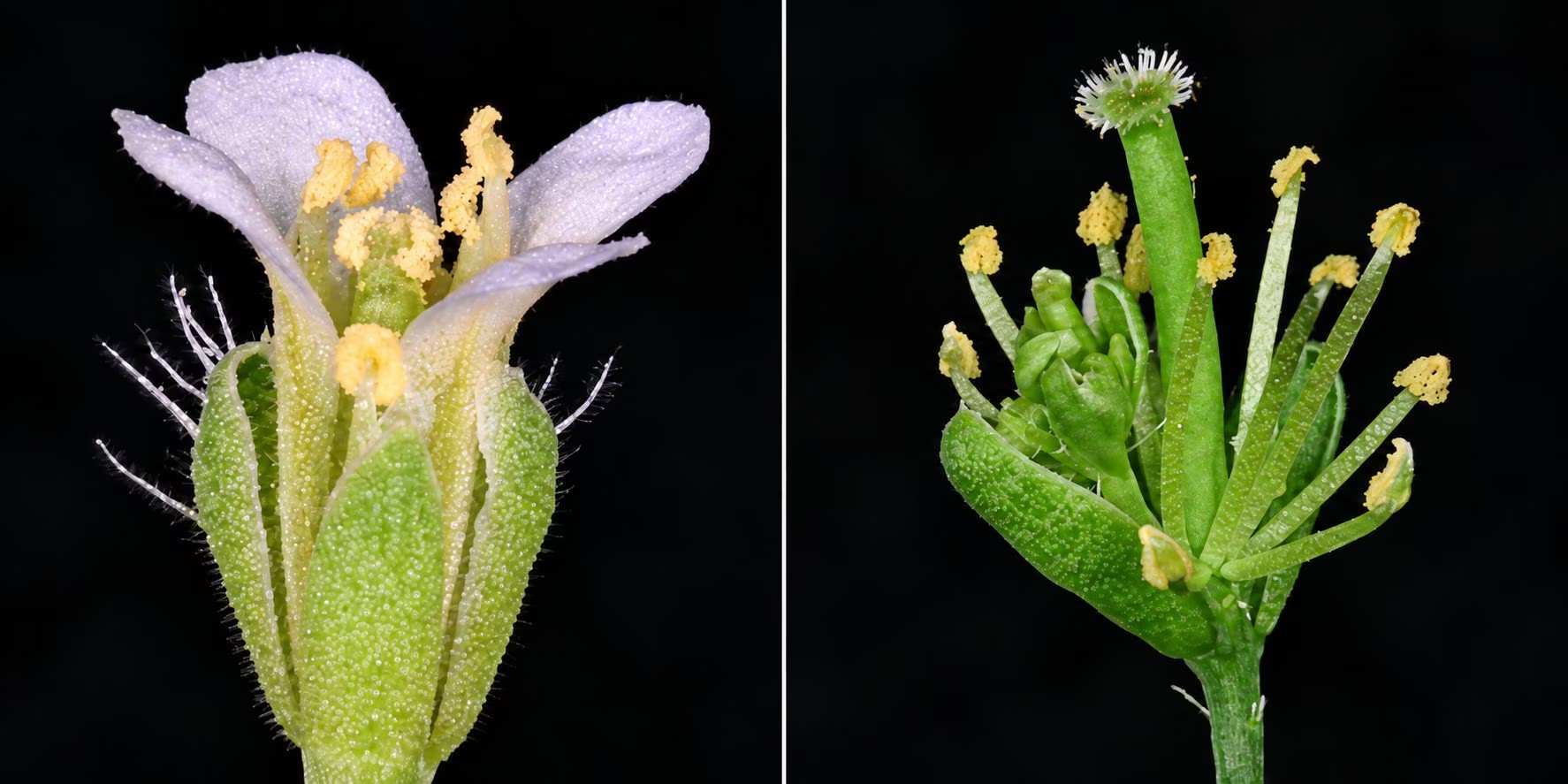
The molecular mechanism by which some bacteria can transform flowers into leaves has been discovered. For a plant, building a flower means executing a program extremely precise. During development, in fact, each organ must appear in the right place and take on the correct shape, following the instructions of a complex network of genes and proteins. Yet, some parasites manage to upset this mechanism to the point of making the flowers lose their identity, transforming them into leaf-like structures. It’s about the phyllodya phenomenon that has long been known and often caused by bacteria called phytoplasmaswhich in the most extreme cases can make the plant unable to reproduce.
Until now, it was not entirely clear how these pathogens managed to manipulate the system that controls flower formation so precisely. A recent study published in Journal of Biological Chemistryhowever, reconstructed this mechanism at the molecular level, showing that phytoplasmas can mimic some proteins of the plant fundamental for the development of the flower and thus sabotaging its correct functioning.
What are phytoplasmas and how they transform flowers into leaves
To understand this mechanism well, however, we must first understand exactly what phytoplasmas are. These are pathogenic bacteria that live inside plants and come transmitted mainly by insects that feed on their sap. Infections can cause various effects on plant development, including dwarfism, abnormal growth of shoots and, indeed, alteration of flowers. Phyllody, i.e. the transformation of floral organs into leaf-like structures, is among the most spectacular effects, because it makes a profound alteration of the plant’s development program visible to the naked eye.
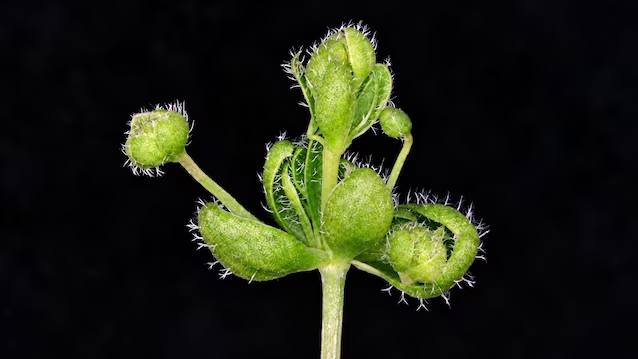
But how does this fascinating phenomenon happen? Phytoplasmas are able to reprogram the development of the plant thanks to small proteins called effectorsor virulence factors, which are produced by the bacterium during infection and interfere with the host’s normal regulatory systems. Among these are the phyllogensa family of proteins responsible for phyllody. Once they reach the tissues in which the flowers develop, these effectors interact with some fundamental proteins to determine their shape and identity: the MADS transcription factors.
Like PHYLOY mimics MADS proteins and alters their development
The key point is that MADS transcription factors they don’t work alone: to correctly control the development of the flower they must associate with each other forming complexesOften tetramerswhich bind to DNA and activate the genetic programs necessary to define the identity of the different floral organs. The new study shows that the phyllogen PHYLOY manages to fit into this system, binding to the same region used by MADS factors to associate with each other.
Basically, PHYLOY it works as a sort of molecular imitator: reproduces some structural characteristics of MADS transcription factors and takes their place, occupying the interaction surface necessary for the formation of the complexes. By doing so, hinders the correct formation of tetramers and alters the flower’s development schedule.
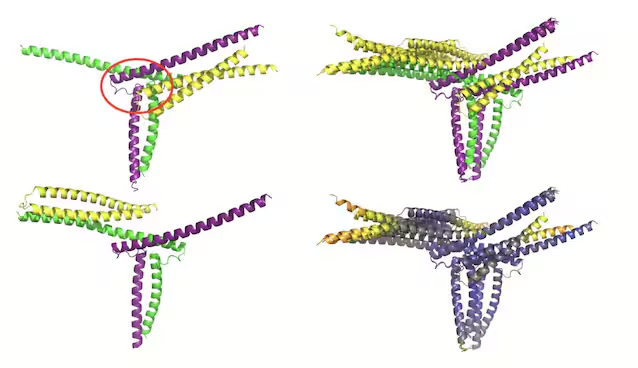
The authors also identified some amino acids hydrophobic (who don’t like water, so to speak) fundamental for this coupling: by modifying them, they managed to both to prevent interaction with PHYLOY and, on the contrary, to make it possible in a protein that is not normally recognized by the phyllogen.
Phyllody, agriculture and climate change: the importance of the phenomenon
Understanding this mechanism is important because phyllody can be very problematic for plants: by altering the reproductive organs of the flower, in fact, it can compromising the production of seeds and fruits and, in the most serious cases, prevent the plant from reproducing normally. Precisely for this reason the question also becomes agriculturalgiven that phytoplasmas affect numerous cultivated species and can cause significant economic losses.
Furthermore, according to the authors, the problem could become even more relevant with the climate change. Phytoplasmas live in the phloem, the tissue that transports sugars and other nutrients within the plant, and are mainly transmitted by insects which feed on the lymph present in these vessels. If the increase in temperatures allowed these insect vectors to survive and spread in areas previously too cold for them, phytoplasmas could also reach more northern regions, increasing the risk of new infections, an expansion which, again according to the researchers, is already underway.
The study, however, is not only useful for better understanding how phytoplasmas act. Precisely because PHYLOY interferes in a very selective way with some proteins that regulate floral development, it could also become a tool for studying in greater depth how a plant “builds” its own flowers and what role different MADS factors play at various stages of development.
Sources
Bertaccini, A., & Duduk, B. (2009). Phytoplasma and phytoplasma diseases: a review of recent research. Phytopathologia mediterranea, 48(3), 355-378. Galien, A., Hutin, S., Le Hir, S., Paul, M., Albanese, P., Kieffer-Jaquinod, S., … & Zubieta, C. (2026). The phytoplasma effector, Phyllogen, structurally mimics host plant MADS transcription factors. Journal of Biological Chemistry, 302(10). Hogenhout, S. A., Oshima, K., Ammar, E. D., Kakizawa, S., Kingdom, H. N., & Namba, S. (2008). Phytoplasmas: bacteria that manipulate plants and insects. Molecular plant pathology, 9(4), 403-423. Kumari, S., Nagendran, K., Rai, A. B., Singh, B., Rao, G. P., & Bertaccini, A. (2019). Global status of phytoplasma diseases in vegetable crops. Frontiers in microbiology, 10, 1349.
