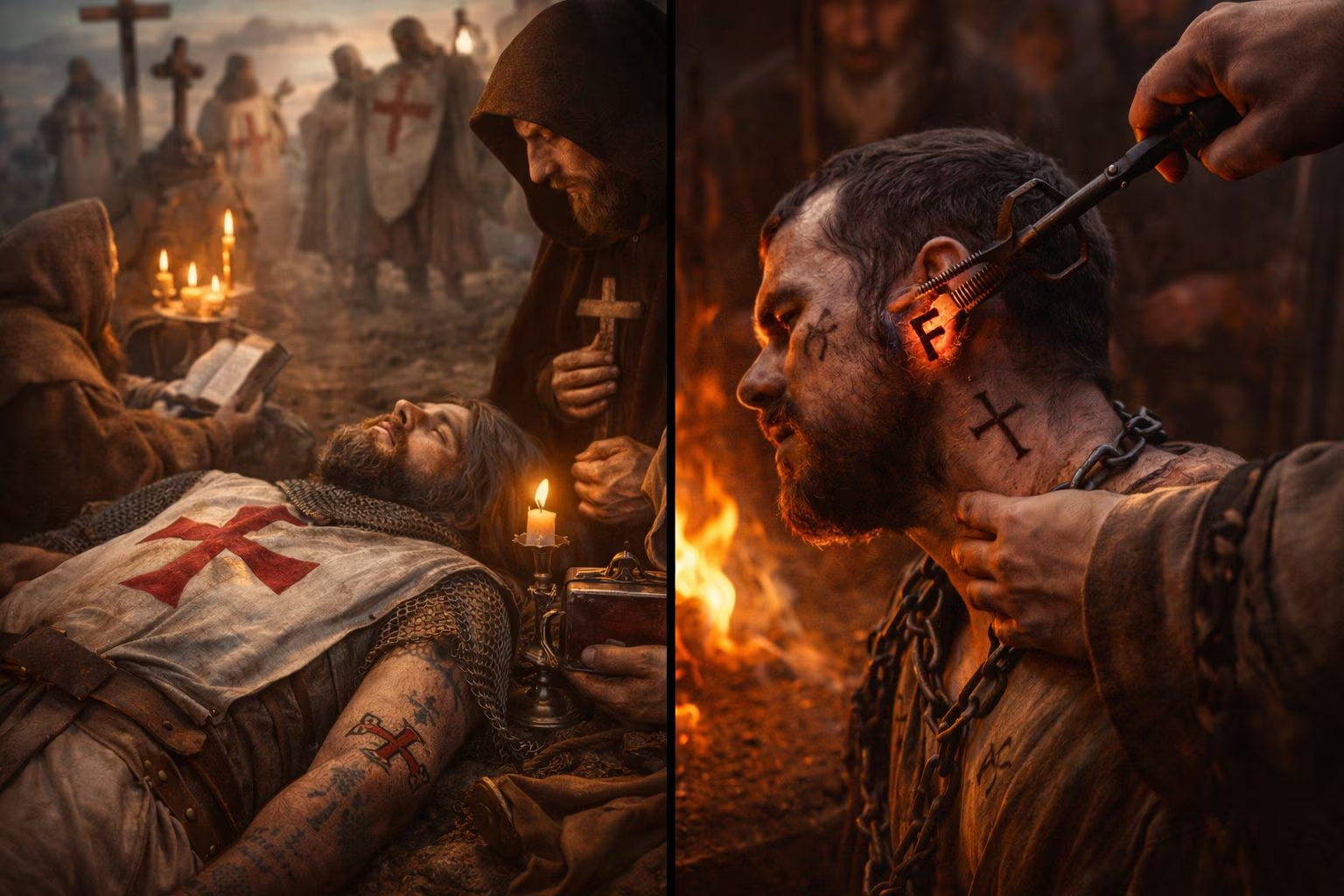
In the Middle Ages, tattoos had practical functions: for crusaders and pilgrims they were signs of faith useful to guarantee a Christian burial, while for criminals and marginals they became punitive marks. The body was thus an instrument of identity, protection and social control.
In the Middle Ages the practice of tattooing was not an aesthetic choice, but a social tool. He could save dignity in deathguaranteeing a Christian burial for crusaders and pilgrims, or transforming into a permanent sign of condemnationused to make criminals and marginalized people recognizable. By tattooing one’s body in some world one wanted to make known something that had a unique social meaning: protection for some, stigma for others.
Crusaders and pilgrims: the symbols to be recognized
During the Crusades (11th–13th century) many Christian soldiers got tattoos there Cross of Jerusalem.
In the event of their death far from home, in battle or during an assault, that sign allowed their companions to identify them as Christians and to guarantee burial according to their religious beliefsavoiding profanations or non-Christian rites.
The same logic guided i pilgrims directed to the great sacred places, such as Santiago de Compostela, Jerusalem or Loreto. The journeys were long and dangerous: pirates and raiders often stripped travelers of crucifixes and devotional objects. A tattoo, however, could not be removed. This is why they cut themselves on the body crosses and sacred symbolstattooed mainly on hands and wrists, with the idea of ensuring one burial in consecrated ground.
A particular case is that of the image of Madonna of Loreto. In Loreto, in fact, there was a real tradition: the so-called “friars markers”who used boxwood tablets and awls to make these signs. The practice continued for centuries, even when the Church tried to limit it, referring to the biblical prohibition of marks on the body:
“You shall not make cuts in your flesh for the dead, nor shall you have tattoos on yourselves. I am the Lord.” Quote from Leviticus, 19:28
The body as a mark: criminals’ tattoos
If for devotees the tattoo was a form of protection, for transgressors it became an instrument of punishment. In many cases they were not real tattoos, but brandedas per ancient Roman practices.
Runaway slaves, prisoners and criminals were marked up face, hands or ankles with symbols indicating the crime or condition. The body thus became one public documenta sort of identity card ante litteramvisible everywhere and impossible to hide.
In later times, but following already consolidated traditions, some European rulers used letters to identify crimes: a “V” for vagrantsone “F” for brawlers and other similar signs. The goal was to prevent escapes and relapses, but also make social marginalization immediate. Despite the Church’s official condemnation of these practices, the brands continued to be used, often informally or clandestinely.
A sign that divides: faith, identity and stigma
The Middle Ages knew well the double meaning of the tattoo. For some it was a gesture of devotion and a form of spiritual protection; for others it represented a permanent sentence. Similar practices also existed in other contexts: i Coptic Christians they tattooed a small cross on their wrist to affirm their religious identity, while in Europe some artisans used distinctive signs linked to their trade.
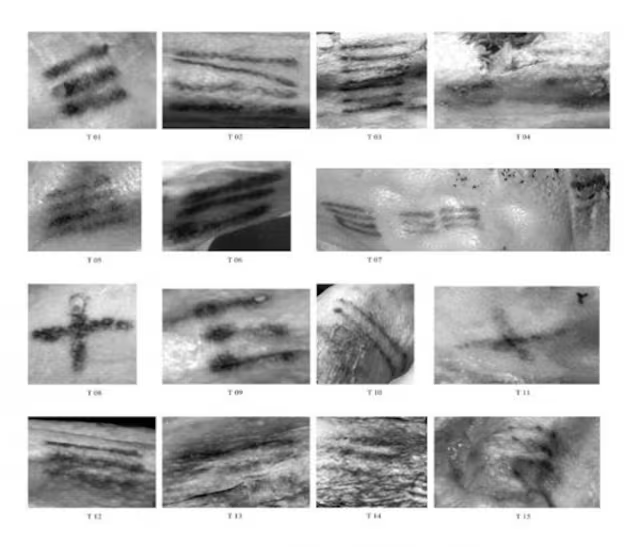
Even older are the therapeutic tattoos of Ötzithe iceman who lived over 5,000 years ago, which show how the marked body had practical functions already in remote times.
Medieval tattoos were not decorations, but concrete tools: protection for believers, control and stigmatization for “deviants”. This ambivalence tells a lot about the relationship between the individual and society in the past. On the body one could bear witness with a concrete trace of one’s own belonging, faith, guilt and hope. A small and indelible sign, capable of deciding how one was recognized while alive and, sometimes, even after death.
