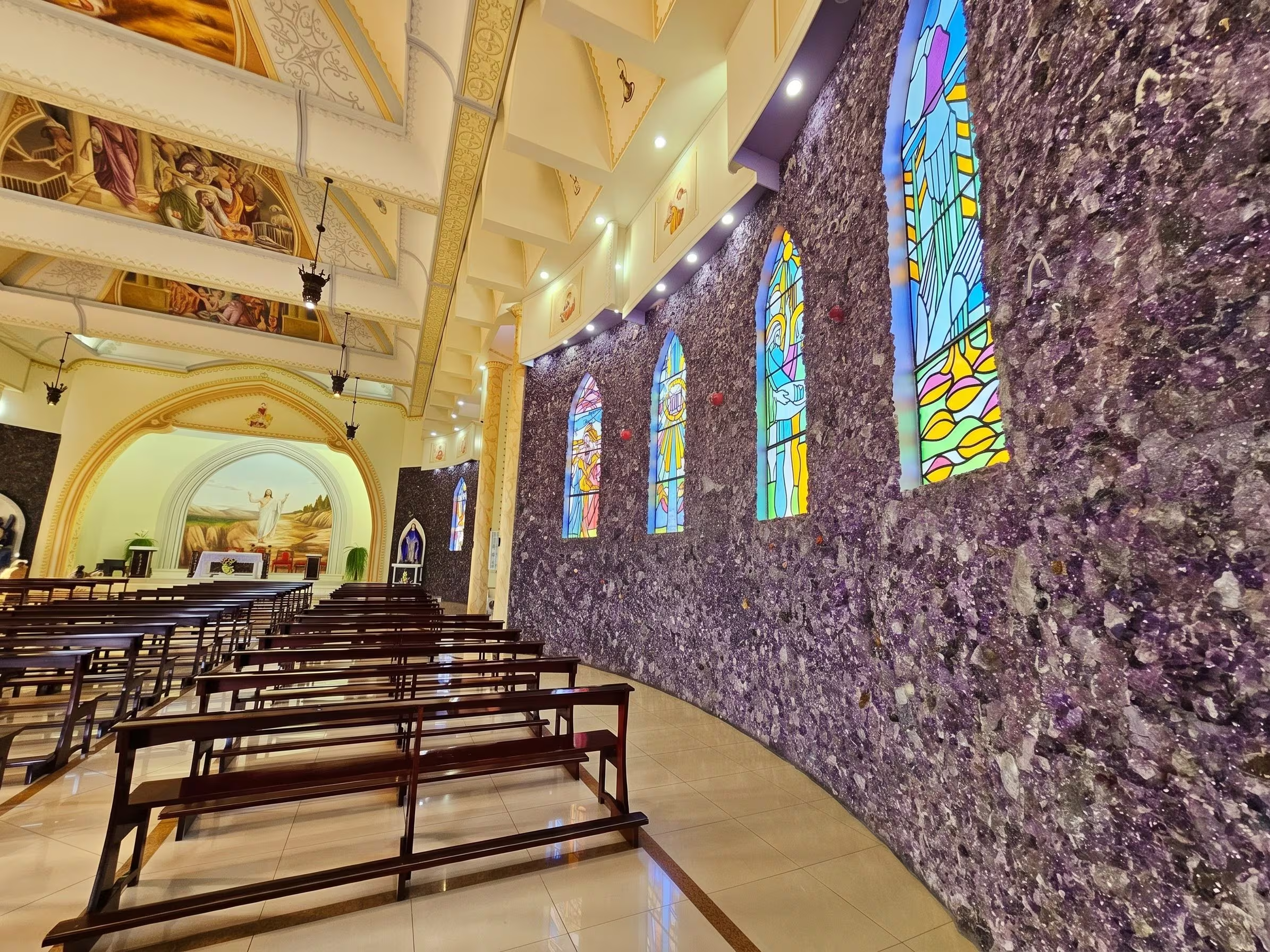
In the south of Brazilin the state of Rio Grande do Sulthere is a church whose interiors are almost entirely covered in purple amethysts: it’s about theIgreja Matriz São GabrielMother Church of São Gabriel. During its last restoration, which took place between 2003 and 2008, over 40 tons of geodes and crystals of purple amethysts and citrines were used to cover the internal walls and the altar. Inside the building there are also geodes “cathedrals” and other decorative crystals, while the same baptismal font it is nothing more than a amethyst geode about one meter large.
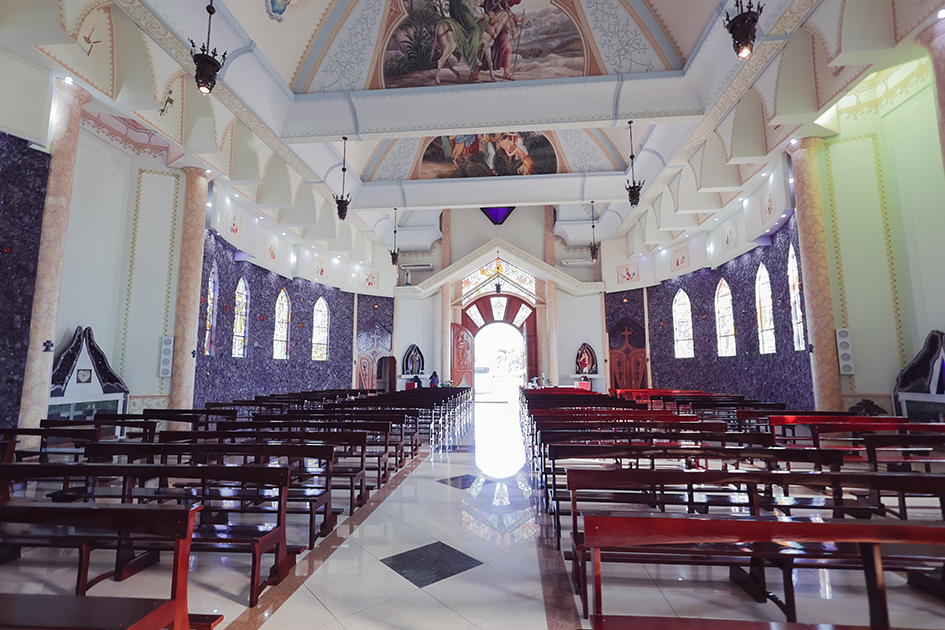
Ametista do Sul, the city of amethysts where the São Gabriel church is located
The use of amethysts it’s not just an aesthetic choice. The Mother Church of São Gabriel is located, in fact, in the city of Amethyst do Suloften considered the world capital of the same name gemstone due to the large deposits present in its subsoil. Here, the first amethysts were discovered in the first half of the last century, when the village still had the name of São Gabriel. These were mostly geodes and semi-surfacing crystals on the surface, perhaps near the banks of watercourses or in the midst of the roots of protruding trees. Industrial mining activity began only in the 1970s with the construction of a dense network of underground tunnels, each of which today can produce up to 2 tons per month of precious gems. Overall, the entire mining district of southern Brazil produces up to 400 tons of amethysts per monthmaking it the main exporter on a global scale and therefore making amethyst a cornerstone of the local economy.
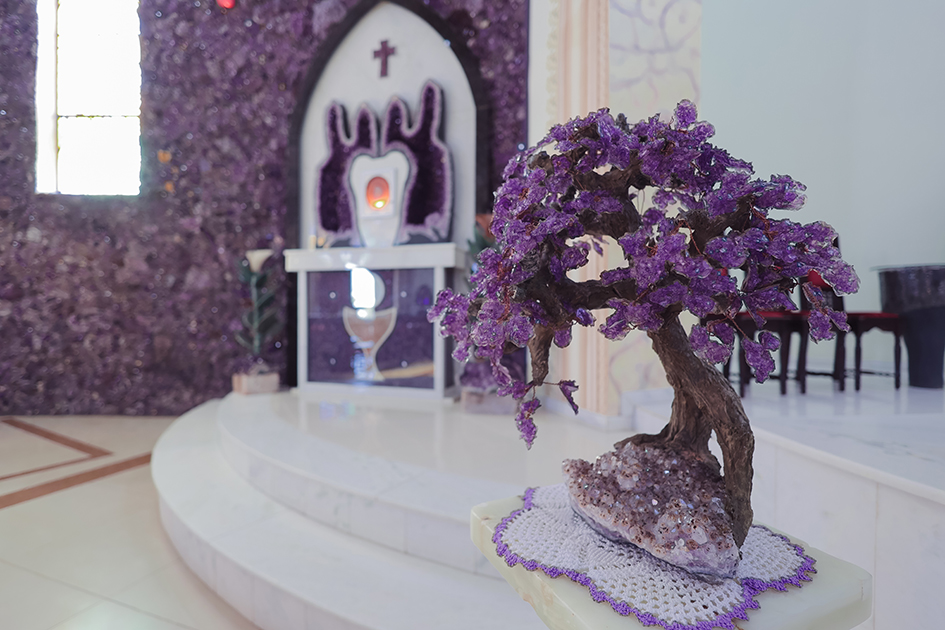
In particular, the over 40 tons of amethysts and citrines used inside the Mother Church of São Gabriel were mainly donate give it inhabitants of the city and from local mining companies. Next to the church there is a tower approximately 60 meters high which houses a panoramic point with a view of the entire city and the mining areas.
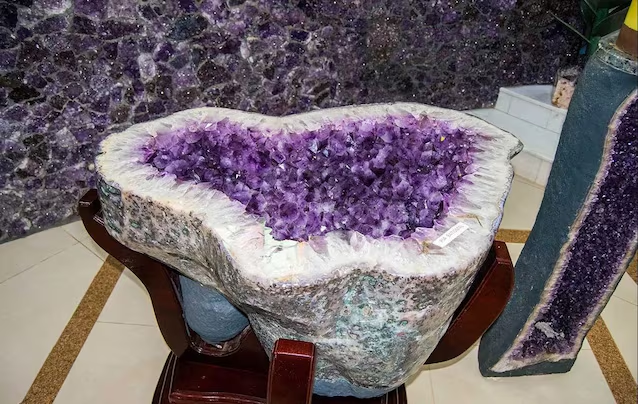
How southern Brazilian amethysts were formed
Geologically, southern Brazil and the northern portion of Uruguay fall into the Paraná Basinwhere amethyst-containing geodes are primarily associated with lava flows and conduits of basaltic-andesitic composition belonging to Great Igneous Province of Paraná-Etendeka.
According to a recent study, amethysts were formed through a long-lasting, low-temperature post-magmatic hydrothermal system, fueled by episodic circulation of groundwater of meteoric origin. Their formation would therefore follow the emplacement of the basaltic flows, which occurred approximately 135 million years ago.
