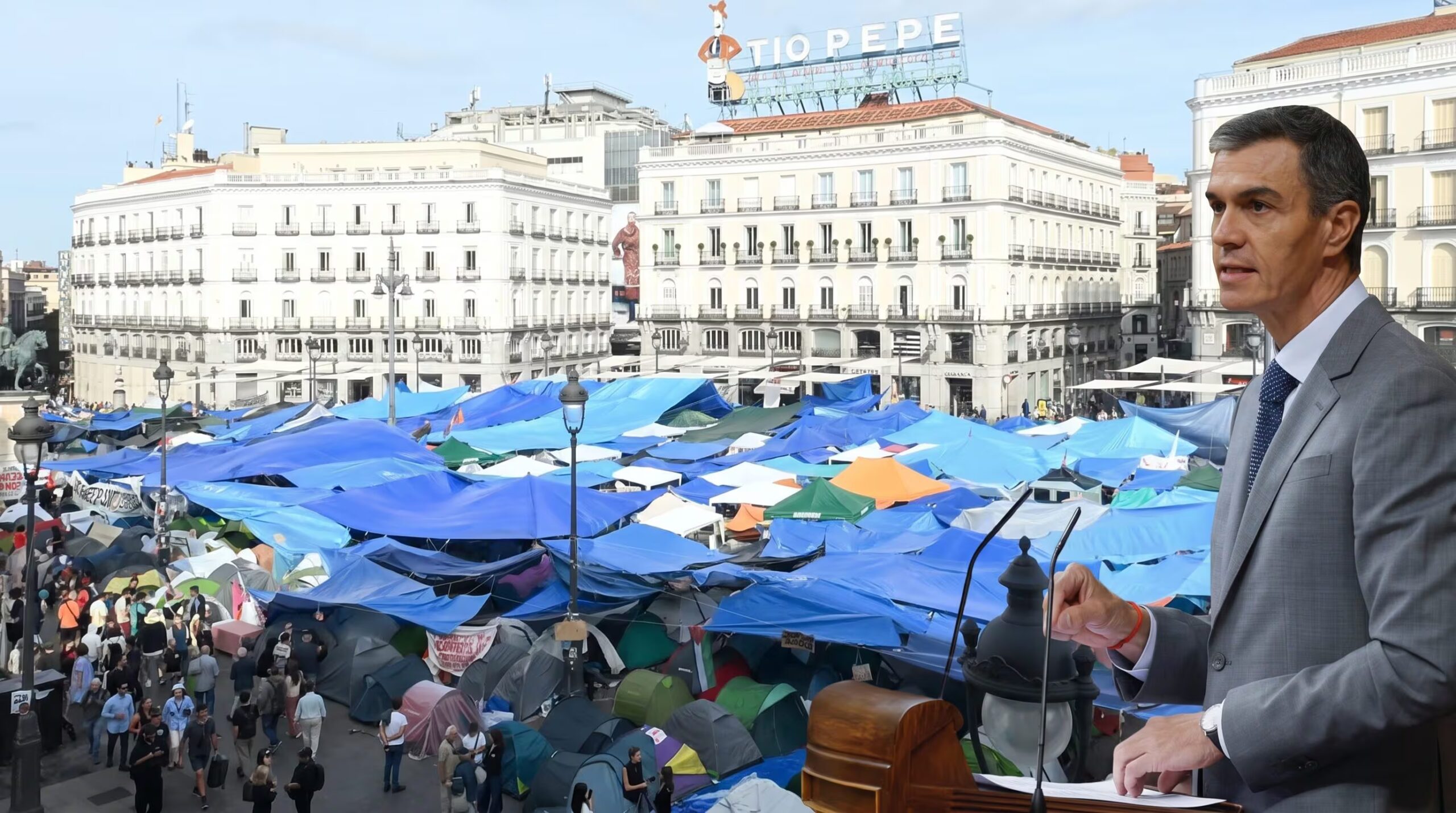
The Spanish Prime Minister Pedro Sanchez announced the calling of early elections for November 29th, dissolving both bedrooms of Parliament with a statement from the Moncloa Palace. The decision comes after weeks of growing tensions in the country, with tens of thousands of people taking to the streets to protest against the housing crisis and, above all, after the rejection of two law decrees with which the government intended to strengthen protection for tenants and combat real estate speculation.
The vote against by some parties such as the Partido Popular (PP), Vox and Junts per Catalunya has made clear what has been perceived for months: the fragile parliamentary majority which in 2023 had brought Sánchez’s progressive party to government today it doesn’t work anymore. The socialist prime minister therefore decided to leave the choice to the voters, trying to exploit social discontent to face the electoral battle in slightly better conditions than a few weeks ago, when the poor management of the Ceuta crisis had caused consensus towards Sánchez’s party, the PSOE, to collapse.
The protests that are shaking Spain and the case of Maricarmen
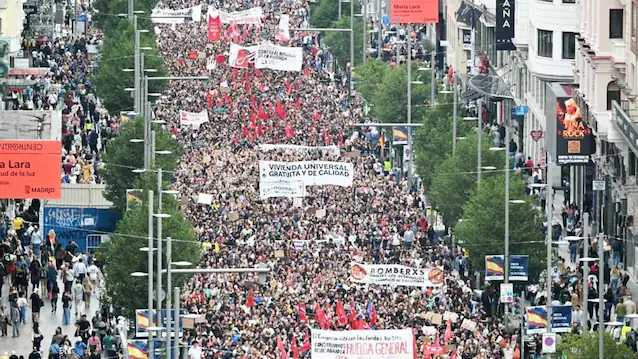
To understand why this decision has come now, we need to take a step back: peaceful protests against the housing crisis have been underway in the Iberian country for almost two weeks. The fuse that lit the mobilizations was the eviction of Maricarmen Abascalan 87-year-old woman forced to leave the apartment in Madrid, where she had lived for over seventy years, after a real estate investment company (in Spanish defined as abuitre bottom”, or a vulture fund) had purchased the property and increased the rent of more 230%making the old woman’s stay unsustainable. The images of Maricarmen being carried away on a stretcher, after the police had broken down the door, sparked a wave of indignation that quickly spread beyond the borders of the capital.
Already on September 26, tens of thousands of people had begun to march through the streets of Madrid: a group of demonstrators then set up tents in the Puerta del Solthe central square symbol of the capital (which is also the seat of the Presidency of the Community of Madrid, governed by the conservative Isabel Díaz Ayuso). The encampment, visible in the video below, has become the visual symbol of the protest and has resisted eviction attempts: today, 5 October, the Superior Court of Justice of Madrid has rejected the request of the Madrid regional government of force the eviction of the square, protecting the demonstrators’ right to assembly.
But the protest did not remain confined to Madrid, spreading to over 50 cities (from Bilbao to Salamanca, from Oviedo to Palma de Mallorca) after the Congress of Diputados (the Spanish equivalent of our Chamber of Deputies) rejected the two law decrees proposed by the government coalition dedicated to housing. More specifically, the decrees aimed to limit the increase in rent pricesincluding the ban on evictions until 2030 and banning hedge funds from buying properties at less than 70% of their value until 2028.
The two texts did not reach the necessary majority due to party opposition Junts for Catalunyaa centre-right Catalan independence party whose votes, as we will see, are essential for the governing coalition.
They registered in Valencia clashes between protesters and policewith arrests and injured officers, when a procession tried to reach the Palau de les Arts, where a convention of real estate companies was being held. In other cities the protests were peaceful, with demonstrators waving their house keys (which became the symbol of the mobilization) and called for a general strike, a moratorium on evictions and structural interventions on the rental market. In Madrid, four columns of protesters from the north, south, east and west of the capital converged on the station Plaza de Cibeles.
Because Sánchez called early elections right now
The main problem is that Sánchez’s government does not have large numbers in Parliament: in the 2023 elections, in fact, the most voted party was the Popular Party (PP), but Sánchez’s Socialist Party (PSOE) had managed to form a coalition government with Sumar (who will stand in the November 29 elections under the name Frente Amplio). For the first time in Spain’s recent history, the leader of the party with the highest number of votes, in this case the PPwas not sworn in as president, with Sánchez retaining the presidency through a complex web of pacts.
In practice, this government coalition provides Congress with just 147 deputies out of 350far below the absolute majority of 176. To approve any measure, Sánchez was forced to build variable majoritieslooking for votes from time to time regionalist parties and independentists such as Junts, ERC, EH Bildu and PNV. In short, an extremely fragile context to govern.
The crucial issue was the role of Junts for Catalunyathe party of the former Catalan president Carles Puigdemont. Junts had agreed to support Sánchez as the new prime minister in 2023 in exchange for an amnesty law for those convicted of the “procés”, the Catalan secessionist crisis of 2017. But as the months passed, and with the progressive shift of the agenda from the territorial to the economic and social level, the distance between Junts and the majority grew, leading the Catalan party to vote more and more often with PP and Vox, its historic opponents.
There failure of the two housing decrees he put the government in front of one now undeniable reality: with these numbers in Parliament, Sánchez’s party does not has no possibility of approving measures of real importancenor the ability to present the first budgets of the legislature (after three years without a budget law, an unprecedented fact in the recent history of Spain).
After a weekend of consultations with ministers, PSOE leaders and allies, Sánchez then decided to dissolve the Cortez (the Chambers that make up the Spanish Parliament). According to experts, the socialist party would like exploit social discontent for the housing crisis to get a larger pool of votes (and therefore a more solid majority than the current one), in a more politically favorable moment compared to other crises that had involved the government, from the Ceuta migration issue to the corruption scandals that affected some of the people closest to Sánchez. Polls, in fact, show that a majority of citizens (including right-wing voters) are in favor of measures such as limiting rental prices.
Sánchez’s bet, therefore, is clear: try to mobilize that progressive electorate disillusioned by a particularly agitated legislature, so as to obtain the “much larger progressive majority” that he invoked in his declaration. The premises, however, are not simple: according to i most recent polls, PP and Vox added together would exceed 50% of the votes, with the PP around 143 seats and Vox at 61, while the PSOE would stop at around 103-106. To make the picture even more complicated, the left-wing Sumar party (future Frente Amplio) does not yet have a defined candidate.
