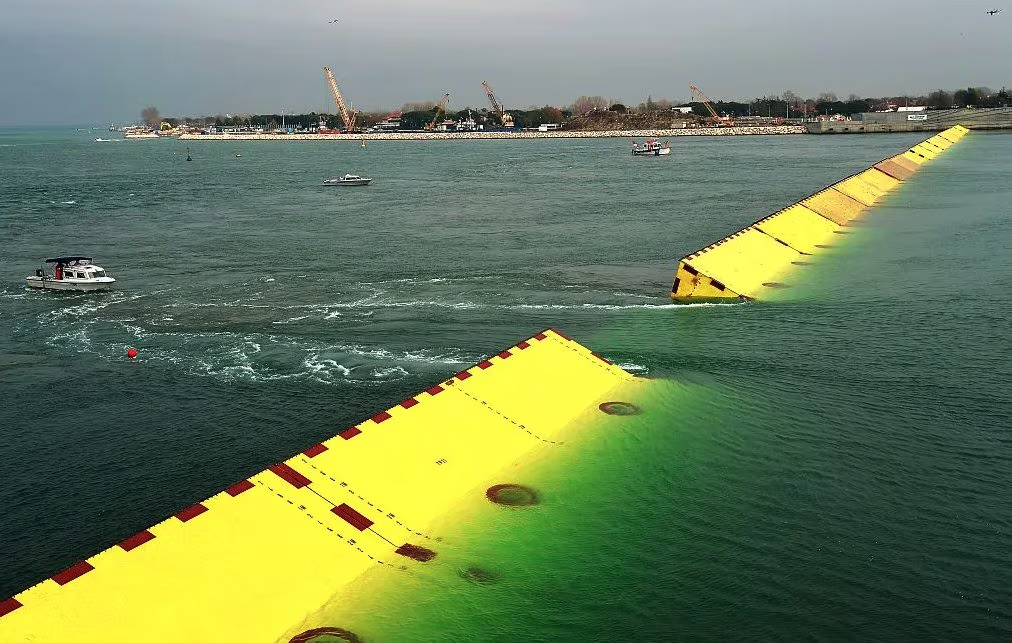
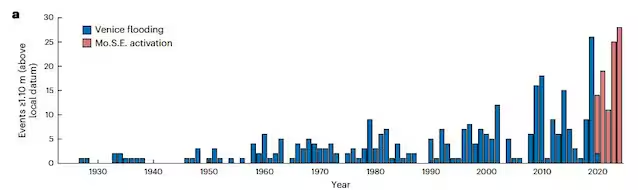
The Mo.SE (Electromechanical Experimental Module) represents thecurrent coastal defense line of Venice against rising sea levels and extreme weather events. Since a possible relocation of the population would not represent a viable option, the system mobile gates is currently the main one solution For protect the city from the risk of flooding. While these barriers work effectively, a recent study published in Nature Water showed that their functioning can have consequences on lagoon ecosystemswith possible long-term implications for the surrounding coastal balances.
What are “shoals” in a lagoon
The partially emerged areas of the lagoon environment are called sandbanks. Colonized by salt-tolerant vegetation, these ecosystems play a crucial role in the balance of the entire lagoon. Their growth over time depends on continuous deposition of mineral sedimentsan essential process that allows these wetlands to progressively adapt to rising average sea levels. Salt marshes also help improve water quality, regulate nutrient cycling, attenuate storm surge energy, and function as important carbon sequestration sinks.
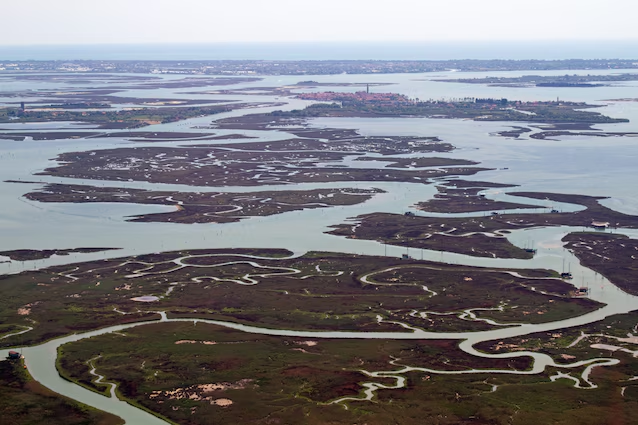
The physical increase in the thickness of this partially submerged lagoon layer depends on a hydraulic process linked to storm surges. In certain periods of the year, in fact, the water level increases and the movement of the fluid carries with it a fraction of solid material which, when the speed of the current decreases, tends to sediment. The continuous deposition of these sediments thus contributes to generating a sufficient thickness compensate for the rise in average sea levelcurrently estimated at approx 4.4 mm per year. In the absence of this progressive growth, the difference in height between the surface of the sandbanks and the water level would tend to reduce, to the point of determining the possible disappearance of these emerged areas over time.
The researchers are therefore evaluating a alternative strategytocall AThOS (Adaptive Threshold Operating Strategy), which provides amore limited activation from the mobile gates and encourage the flooding of salt marshes.
How the Mo.SE works in Venice and what happens by activating it
The continuous activation of the Mo.SE represents today an obstacle to the natural flooding of the salt marshes. Blocking the tides does not only mean protecting the city from floods, but also reducing the supply of sediment, thus preventing these ecosystems from growing and adapting to the progressive rise in sea levels. The result, in the long term, it is a progressive erosionwhich can culminate in the disappearance of this fundamental component of the lagoon environment. Starting from this problem, some Italian researchers from the University of Padua, the University of Southampton (UK) and ISPRA have analyzed the data collected from the first activation of the Mo.SE to today, illustrating the results in a recent scientific article published in Nature Water.
The numerical simulations and data analysis conducted by the researchers, published in June 2026, quantify the ecological impact described so far in general terms: compared to a hypothetical scenario without activations of the Mo.SE, the current protocol operating reduces on average the extension of the salt marshes by 27.5%. affected by floods. During specific events, however, this reduction can exceed 75%, depending on closure timing and wind conditions.
But what are the consequences on the accumulation of sediments and the vertical growth of salt marshes? The study estimates that the closures that occurred between 2020 and 2023 reduced sedimentation by approximately 32% compared to an unregulated scenario, i.e. in the absence of artificial closures. This decrease results in a lower vertical growth of salt marshes equal to 2.6 millimeters per year.
The AThOS strategy
The research summarized here sends a clear message to the scientific community: reduction of hydraulic risk for urban areas cannot ignore it morphological survival of the lagoon. However, at present, the engineering solution offered by Mo.SE appears indispensable. For this reason, the researchers evaluated a possible optimized operational strategycall AThOS (Adaptive Threshold Operating Strategy). It is a protocol that provides amore limited activation of the mobile gates and, in particular, the entry into operation of the Mo.SE only when the water levels exceed safety thresholds specific for the three main urban centers: Venice, Chioggia and Burano.
By retrospectively applying this protocol to available historical data, it was found that the AThOS procedure could have reduce the overall number of closures by 30% about. The researchers also highlight that, with the current management, the cumulative annual closing time is on average higher by 107.2% than what is strictly necessary to guarantee the safety of urban centres.
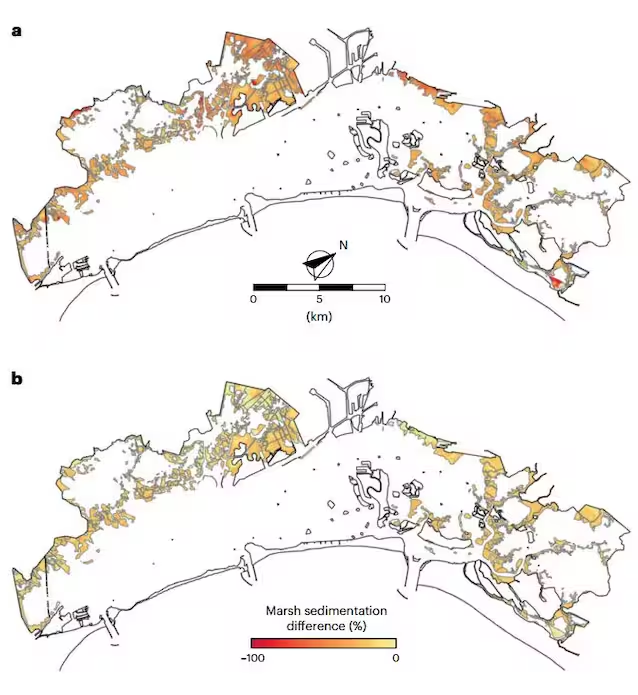
By adopting it AThOS scenariothe reduction of areas inundated by salt marshes yes would limit it to a modest 2.9%. At the same time, this optimized management would increase sedimentation on the wetlands of the 19% compared to the current operating scenario. The study therefore demonstrates that a more careful management of the flood gates can promote a sustainable balance between urban protection and ecosystem integrity, defusing long-term damage.
