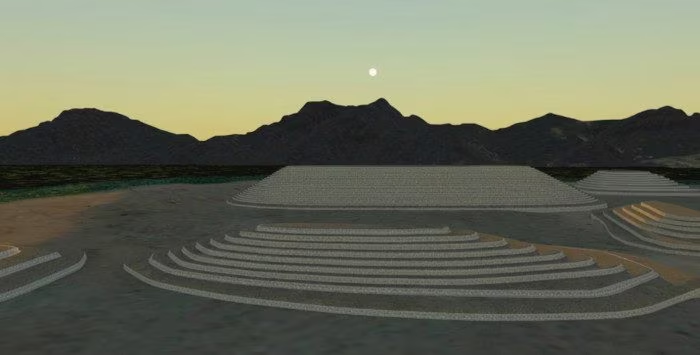
In the Mexican state of Puebla, INAH has confirmed the existence of a complex dating back to the 1st millennium BC. C., with two platforms arranged so that the sunrise indicated solstices, equinoxes and key moments of the agricultural calendar. It is the first of its kind found outside the Mayan area, a sign that that knowledge circulated further than previously believed.
In the archaeological site of Teteles de Ávila Castillothe ancient one Tetelihticin the Mexican state of Puebla, in the central part of the country, a pre-Columbian architectural complex has been identified as a possible solar observatory dating back to over 2,500 years ago. The news was announced byInstituto Nacional de Antropología e Historia (INAH), based on architectural features of the complex andorientation of the structures. It would be the first ever found outside the territories of the Maya.
The Tetelihtic site, discovered in 1939is one of the most interesting archaeological contexts in central Mexico. This city reached its peak splendor during Preclassic periodIn the 1st millennium BC. C. The ensemble came abandoned starting from the 1st century. d. C.but continued to be partially frequented for religious purposes. The main element of the astronomical interpretation proposed by INAH scholars is the so-called Group E. This is a very particular group of buildings, located near the Central Squareeast of this. The complex presents two bases arranged along an east-west axis. The east one is 90 meters long and 40 meters wide, while the west one is 46 meters long and 27 meters wideprobably the real one observatory.
This structure yes compare with that of the Mayan observatory of Uaxactúnin Guatemala, dating back to more or less the same era. According to archaeologists, this configuration would have allowed for observe the apparent movement of the Sun at dawn, and to locate significant moments of the annual cycleessential for organizing important activities such as sowing or harvesting. Second Alberto Diez Barroso Repizodirector of the archaeological project in Teteles de Ávila Castillo, the spatial configuration of the Tetehlitic observatory is compatible with the sunrises of Februarywhen it began traditional Mesoamerican calendarand those of Octoberthe harvest time. THE’observation of the Sun in fact, it had an important role in Mesoamerican agricultural societies: recognizing seasonal changes allowed the organization of activities related to cultivation and to establish shared time references. An architecture oriented according to astronomical events could therefore perform a function both practical and ritual.
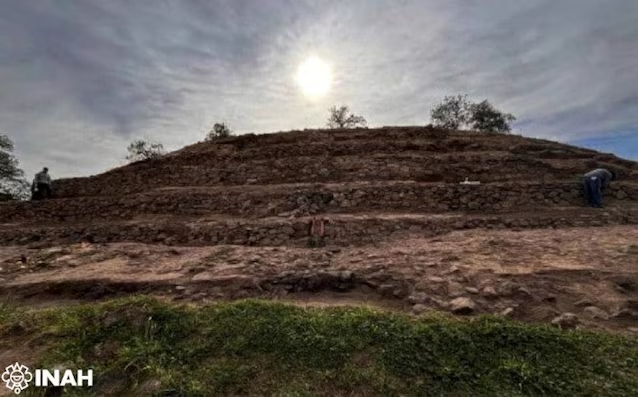
If the one found in ancient Tetelihtic was truly an astronomical observatory built on a Mayan modelthis would demonstrate that thecultural influence that this civilization exerted on other more northern peoples was greater than what was known to date. It is not known in fact which Mesoamerican people built the city almost 3000 years ago. Some scholars link Tetelihtic to the HuaxtechiMayan-speaking people but differentiated of much from the Yucatan civilization, while still others to the ancestors of the Totonachiwarrior people formed in a later era.
The study of the observatory of the Tetelihtic site, however, still remains at a stage preliminary. The possible astronomical function of the buildings in Group E offers for now only a starting point for further investigation the relationship between architecture, calendar and organization of agricultural activities in the region. To clarify the functioning of the complex and the concrete methods of observations Further archaeological data and in-depth analyzes of the structures will be necessary.
