Sheets accumulate skin residues that feed dust mites, while in towels the humidity can encourage microbial proliferation. Regular washing and correct drying help limit these phenomena, even if there is no universal time threshold beyond which fabrics become dangerous.
The American Cleaning Institute (ACI) speaks clearly: the sheets should be washed every two weekswhile the towels after 3-5 uses. What is the explanation? Sheets and towels retain some of what the body eliminates daily, such as skin scales, sebum and sweat. In the sheets, the skin fragments contribute to the nourishment of the dust mitesresponsible for allergies in predisposed subjects, while bacteria and fungi can increase already during the first week of use. In towels, however, it is above all the water retained in the fibers that favors the persistence of microorganisms, some of which can organize themselves into structures called biofilm. But the studies also tell us something else: finding microbes on a fabric does not necessarily mean running a health risk. The indications on when to wash the clothes are therefore preventive recommendationsnot deadlines beyond which it suddenly becomes dangerous.
Frequency of changing sheets in winter and summer
According to theAmerican Cleaning Institutean American association that represents the cleaning products industry and promotes domestic hygiene practices, sheets should be washed every two weeksand to understand why we must start from how we are made. There skin it is the largest organ in our body and represents a real protective barrier. The outermost part, called epidermishas a stratified organization: the deepest level is the basal layermade up of continuously dividing stem cells, which mature in the upward movement keratinocytes (cells so called because they produce keratin) increasingly differentiated, until they transform into corneocytesnow dead cells that make up the outermost layer of the skin, said stratum corneum. We are therefore talking about a continuous fabric renewal: the stem cells of the basal layer divide continuously and “push” the new cells towards the outermost layers, leading those of the stratum corneum to detach from the epidermis and disperse into the environment. This phenomenon is known as cell turnover.
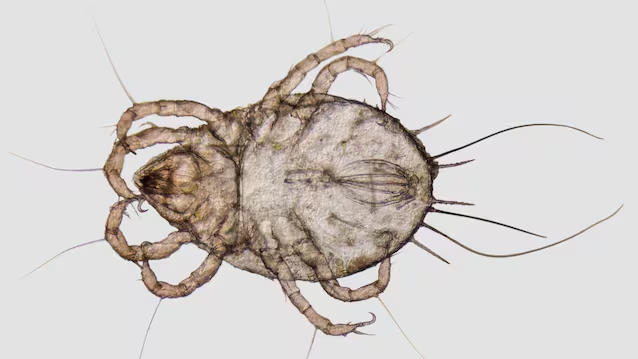
Sure, we don’t shed like snakes, but our skin sheds anyway tiny scales which are dispersed around, like on our sponge, in our clothes… and even in our sheets. The problem is that these skin flakes are the main nourishment of the so-called dust mitesmicroscopic animals related to spiders and ticks, but which, unlike them, do not bite or suck blood. What represents a problem instead are the allergens that these animals produce, such as some proteins contained in their bodily and faecal residues, capable of triggering, in predisposed subjects, allergic reactions responsible for symptoms such as rhinitis, asthma and skin rashes. So: the less we wash the sheets, the more skin scales remain in the fabric, helping to create an environment favorable to the proliferation of dust mites.
Then, obviously, skin residues are not the only traces of us that we leave between the sheets. During the night, in fact, our body also releases sweat and sebum, which is why in summer, when we tend to sweat more, it may be advisable to wash them more frequently. Added to these are the microorganisms that normally inhabit the skin. A study published in the journal Letters in Applied Microbiology in 2026 it analyzed the presence of bacteria and fungi in the bed linen used by nine participants, following its evolution over four weeks. It was observed that, already after a week the quantity of microorganisms had increased compared to the first dayespecially species of the genus Staphylococcus for bacteria and genera such as Candida for mushrooms. Importantly, the study was conducted on a very small group of people and many of the microorganisms identified were part of the normal human microbial flora. Their increase, therefore, does not necessarily indicate a health hazardbut it demonstrates how sheets can accumulate microorganisms during normal use.
How to wash? According to a study published in Frontiers in Microbiology, a temperature of 60°C it is recommended to effectively eliminate many potentially pathogenic bacteria. At lower temperatures, such as 40°Cto achieve effective disinfection it may be necessary to use detergents with antimicrobial action, such as those based on peroxides or sodium hypochlorite.
In towels, water complicates things: how many uses
Always according to theAmerican Cleaning InstituteThe towels they should be washed after 3-5 uses, allowing them to dry completely between uses. This is because they are designed to absorb water: the particular structure of the towels, characterized by fibers capable of retaining large quantities of water, can create an environment favorable to persistence and, in certain conditions, to microbial proliferationespecially when the fabric remains damp for a long time. Greater attention should be paid to towels used to dry hands and faces, especially when they are shared by several people: in that case it may be appropriate to replace them more frequently.
A study published in Scientific Reports in 2023 examined this phenomenon, analyzing the towels used daily in 26 homes over the course of 6 months. The researchers observed the formation of biofilmthat is, aggregates of microorganisms immersed in a matrix of extracellular substances which helps them join better on surfaces and therefore makes removal more difficult. These structures were present especially in the deeper parts of the fabric, between the fibers that make up the base of the towel. Furthermore, the study suggests that some microbial species were significantly different from those normally present on our skina sign that there may have been contamination from the external environment.
This does not mean that after one use our towel immediately becomes dangerous, nor that the biofilms observed were necessarily responsible for infections. The study mainly analyzed the microbial characteristics of fabrics during prolonged use and normal washing cycles: it is not only important to wash towels, but also not to keep them damp for too many hours, preventing them from offering conditions favorable to bacterial proliferation.
