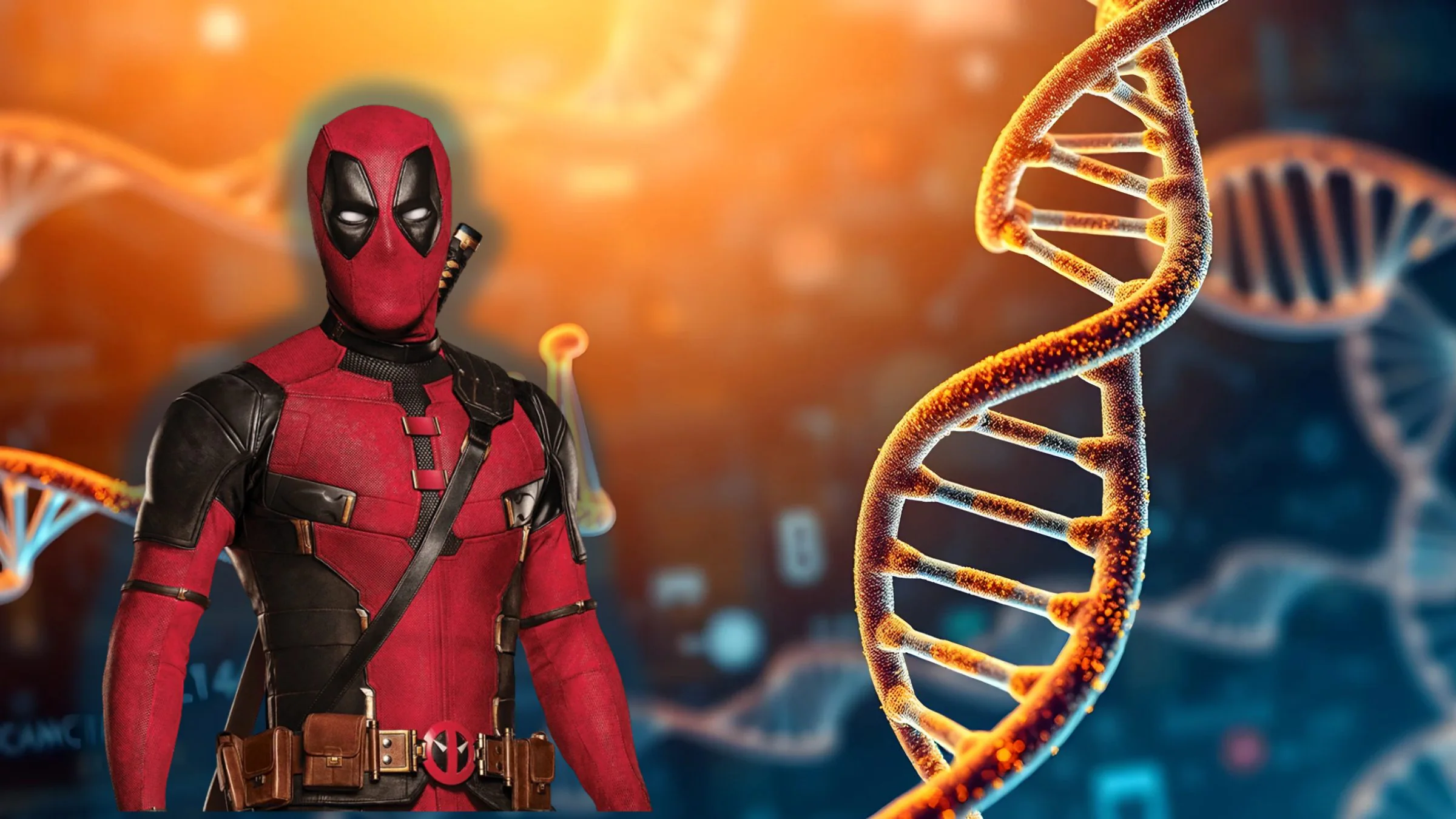
Unlike the X-Men, Deadpool gains his powers after being locked in a chamber with almost no oxygen. In reality, hypoxia doesn’t rewrite DNA: it changes which genes are read, activating HIF-1α and changing the structure around which the DNA is wrapped.
In the Marvel Universe, not all characters with superpowers are born with their destiny written in their genetic code. There are those who acquire them through the bite of a radioactive animal, those who build them piece by piece and those who are literally tortured in the hope of “awakening” a hidden biological potential. If on the one hand there are the X-Menin which Gene X is a mutation present from birth that only waits for puberty to express itself, on the other we have Wade Wilson. Deadpool he was not born with Gene X, but is the result of one mutagenesis forced obtained through inhumane experiments and torture with the promise of curing his terminal cancer but with the real, decidedly less noble aim of transforming him into an expendable super-soldier. Leaving aside the fiction in the service of a plot full of super-villains, anti-heroes and questionable decisions, what really happens when we try to mutate DNA under stress?
There are two types of mutations: spontaneous and induced
There are two macro categories of mutations that can affect our DNA. On the one hand there are the spontaneous mutationsgenerated by small physiological typing errors that occur during the cell’s normal biological activities (such as DNA replication). On the other there are the induced mutationsthat is, permanent changes caused by external factors coming from the surrounding environment or intentionally generated in the laboratory. These external factors capable of altering the genome are called mutagens and also in this case we can distinguish two main categories: chemical mutagens and physical mutagens.
THE chemical mutagens they are substances that exploit their affinity or similarity with the components of DNA to cause damage in different ways, and are divided into:
- Base analogueschemical compounds that are so similar to nitrogenous bases (the four letters that form the basic building blocks of DNA: A, T, C, G) that they are able to be incorporated into DNA in their place. These, pairing differently, can cause mutations.
- Base altering agentswhich are not incorporated but are able to directly modify a basis, pushing it to form an incorrect pairing.
- Intercalating agentsmolecules that mimic base pairs and that manage to fit into the double helix causing the addition or elimination of a pair of nucleotides, the fundamental units that make up DNA.
THE physical mutagenshowever, mainly include radiation, in particular:
- Ultraviolet lightwhich generally causes damage in most organisms by producing numerous types of alterations in DNA.
- Ionizing radiationwhich can damage DNA by leading to the formation of ionized and excited (therefore high energy) molecules, or in a more direct way by breaking the bonds of the double strand structure itself.
Can stress change DNA and cause mutations?
In the laboratory it is possible to induce mutations through the use of certain chemicals or radiation. Deadpool wasn’t subjected to this type of experimentation, but he was put in one deprivation chamber in which he was provided the minimum amount of oxygen (hypoxia) to survive. This extreme stress led to the activation of the gene responsible for his regenerating factor, which cured him of cancer, but also disfigured him.
But what happens at the molecular level during hypoxia? The answer lies inepigeneticsi.e. the set of modifications that alter the expression of genes, but without modifying their sequence. When an organism is subjected to acute stress, such as hypoxia, the cell activates transcription factors (proteins that regulate the expression of genes) to ensure their survival. The main protagonist of this answer is theHypoxia-Inducible Factor 1-alpha (HIF-1α). Under normal oxygenation conditions, this factor is rapidly degraded. In oxygen deficiency, however, it is able to stabilize and migrate towards the nucleus where it promotes the expression of genes responsible for metabolic adaptation and survival. Simply put: the DNA sequence always remains the same, but its expression is altered.
Stress is not a mutagen. Bringing an organism to the limit of physiological tolerance can therefore push cells to reorganize their priorities so as not to succumb, but it does not have the power to rewrite the genome (or give superpowers). Epigenetics regulates the reading of our genes, but does not alter their text. To transform an ordinary person into an indestructible antihero, the laws of biochemistry give way to the pen of the screenwriters of the Marvel Cinematic Universe.
