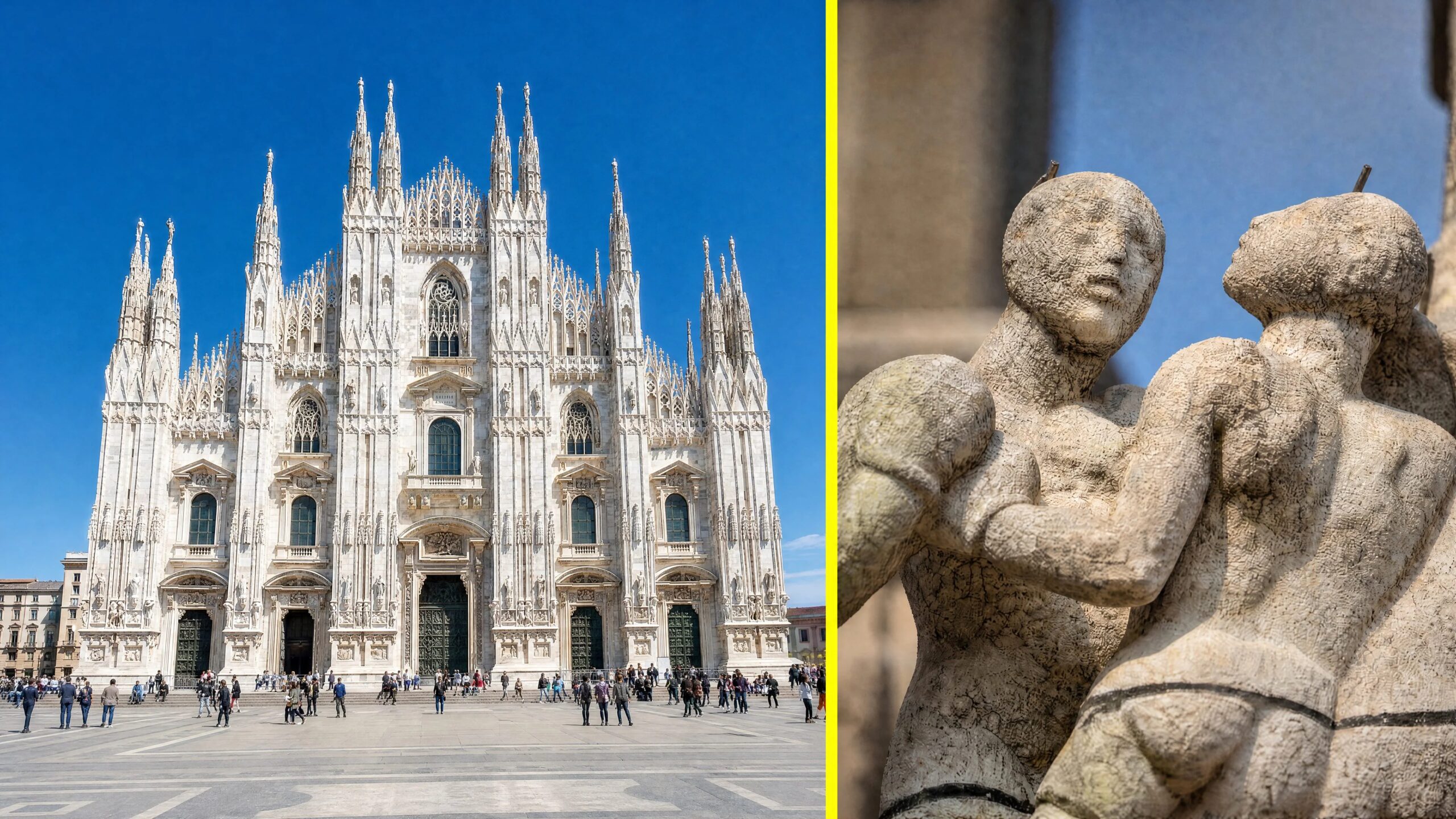
It’s no joke: there are also two heavyweights among the saints and gargoyles of the Milan Cathedral. This is how the unusual work of art desired by fascist propaganda to promote the cult of sport was born.
Climbing among the spiers and pinnacles of the Milan Cathedral one would hardly expect to see them, but they are there two truly curious statues: those of the boxers Primo Carnera and Erminio Spallasculpted complete with boxing gloves and shorts.
The figures of the two famous Italian heavyweight champions of the 1930s – which are found, precisely, on the walkway of the high terraces (south side, towards the Gallery) – were created around 1937 by the sculptor Paolo Mezzanotte on orders of the Fascist Party to celebrate the cult of sport.
Carnera and Spalla, in fact, perfectly embodied the sportsmen from whom to draw inspiration, being considered by Mussolini and the party fanatics as powerful symbols of physical strength, athletic vigor and prestige for the nation.
Who were the two boxers Primo Carnera and Erminio Spalla
Friulian Primo Carnera (1906-1967), also known as “the Gentle Giant” or “the Walking Mountain” due to his height (1.97 meters tall and weighing over 120 kilos), after his early adolescence spent working as a laborer in France, he became part of the circus world as a sideshow phenomenon, given his enormous size. Precisely in that period he was noticed by a former French boxing champion, who trained him and helped him move on to actual boxing.
In June 1933, it became the first Italian to win the world heavyweight titlebeating American Jack Sharkey in New York. The triumph consecrated him as a popular hero and the fascist regime made it one of the greatest symbols of propaganda (although his son Umberto reported to the press that his father was a simple man, completely uninterested in politics and exploited by power).
After the war he remained in the United States, where he was also successful in wrestlingand cultivated his artistic passions (literature, art and opera first and foremost), which brought him closer to the world of cinema and led him to become a actor.
The other pioneer of Italian boxing, the Piedmontese Erminio Spalla (1897–1971), became famous for having won the European heavyweight title (he was the first Italian to do so, in the queen category). Spalla, however, as an eclectic personality that he was, did not limit himself only to boxing: he studied art at the Brera Academy, establishing himself as sculptor with works at the Monumentale in Milan, he sang at a professional level as lyrical baritone and acted in more than fifty moviealso working with directors such as Victor De Sica And Pietro Germi.
The strange statuettes of the Cathedral: why they are there
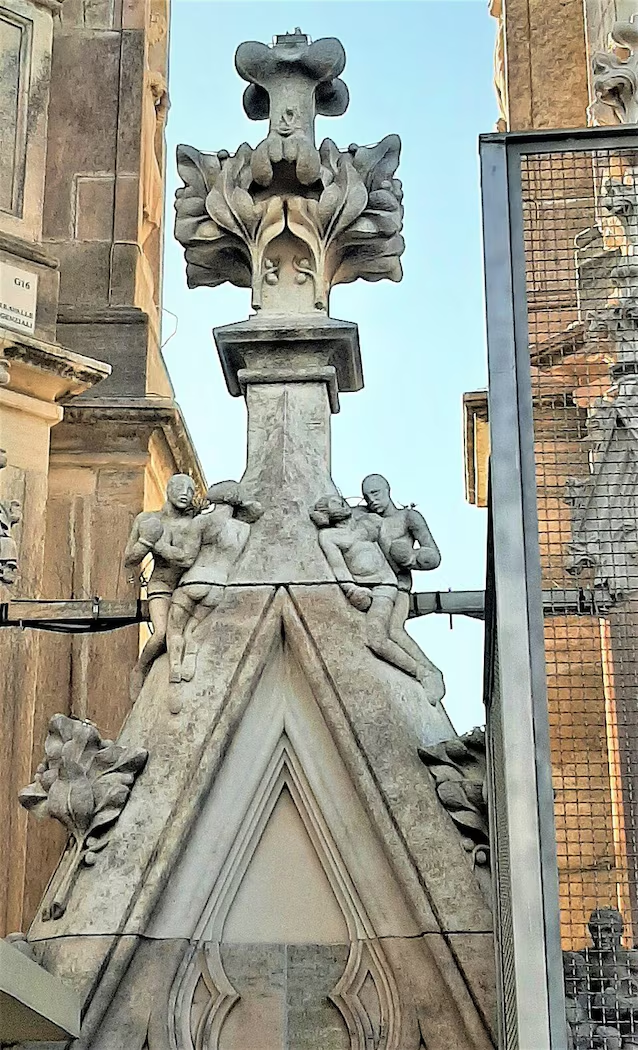
These two statuettes might seem like an isolated case, but this is not the case. Since the origins of the construction site (1389), in fact, the Veneranda Fabbrica del Duomo he had left the sculptors and stonemasons a certain creative freedom for the smaller figures, the gargoyles and the decorations of the terraces.
Over the centuries, therefore, craftsmen often created sculptures that referenced the daily life, professions, contemporary characters and even profane or bizarre elements.
Precisely in the same years in which the statuettes of the two boxers were sculpted, others were also created sports themed giveaways (such as a tennis racket, dumbbells and other exercise equipment) and the faces of some figures of the time, such as the king Victor Emmanuel III And Mussolini. After the fall of the fascist regime, however, the stonemasons intervened on the Duce’s face to disguise it and make it less recognisable, adding a turban to his head and a hint of a beard. Now, to casual eyes, he might seem like an anonymous oriental dignitary.
