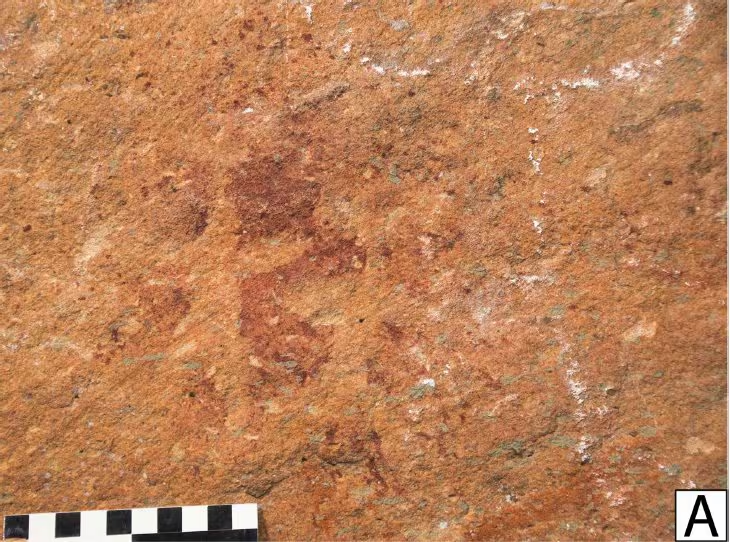
In the rock shelter of La Rochelle, in South Africa, two anthropomorphic figures created with the stencil technique, previously never documented in the rock art of Southern Africa, have been identified. Their chronology and authors remain unknown.
Two small anthropomorphic figuresmade with one technique never previously documented in southern Africawere identified in the rock shelter of La Rochellenear the city of Carolinain the South African province of Mpumalangain the north-eastern part of the country. The discovery was described by David G. Pearcedel Rock Art Research Institute from the University of the Witwatersrand, South Africa, e Kiah Johnsonfrom the British University of Cambridge, in a new study published in South African Archaeological Bulletin. The La Rochelle site is already known for the presence of others rock paintings. However, it should be clarified that at the moment Neither the chronology of these figures nor who created them is known; the exceptional nature of those new discoveries is the technique with which they were made, lo stencilsunreleased in South Africa to date.
The images, approximately tall nine centimetresthey are distinguished from the other paintings present in the shelter for the particular procedure with which they would have been made. The figures they are not painted directly on the rock: they appear as spaces devoid of pigmentsurrounded by a red trace. According to the researchers, these are indeed stencils, obtained by placing a template on the wall and blowing or spraying the pigment around it. Once the shape was removed, the underlying surface remained colorless, thus restoring the side of the figure. This is a very technique ancient: it is documented in prehistoric art in fact as early as 35,000 years ago.
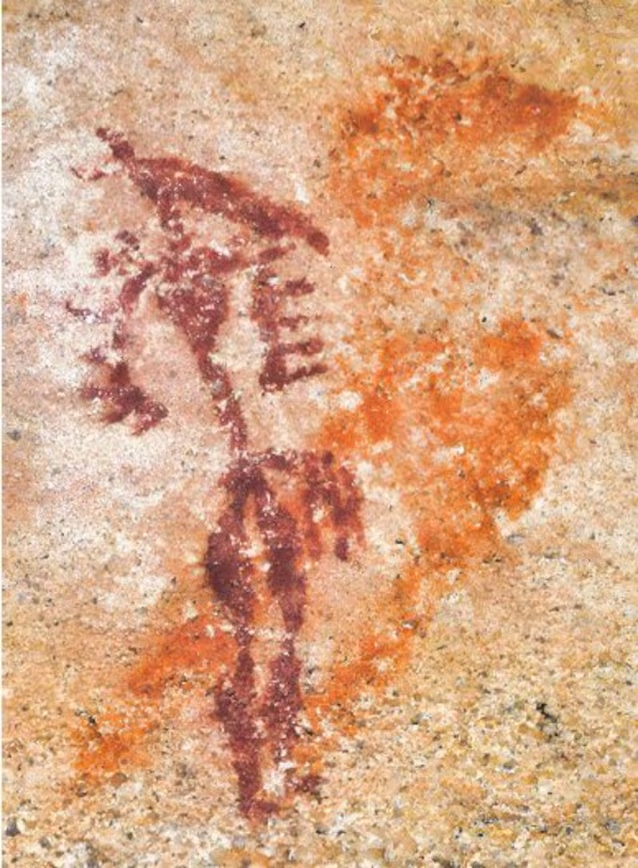
This interpretation is based above all on distribution of the pigment: the concentration is greater between the two shapes and decreases progressively outwards, where a halo of small spots. THE’absence of clear contourstypical of paintings made with brushes or fingers, constitutes a further indication in favor of the stencil technique. It is not possible to establish which one material was used to create the templates. The authors consider several possibilities, including beeswax, clay, wood, bone, fiber or leatherbut they point out that there is no evidence to support a specific hypothesis. The identity of those who created the images also remains unknown.
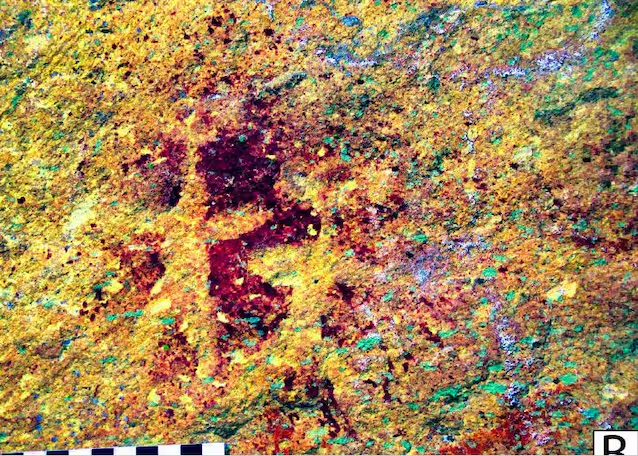
The figures they cannot be dated based on the relationships with the other paintings of the shelter: they do not overlap with other reasons already known and do not present relationships that allow establishing a chronological sequence. Their importance therefore lies above all in technique used. Although the anthropomorphic silhouette stencil technique is known in different regions of the world, this it is the first documented case in the rock art of Southern Africa. The authors hope that new investigations can identify other examplesuseful for better understanding the diffusion of this particular mode of image production.
